
Certainties: Death and Taxes
If you want to hurt your family today, don’t pay your taxes. If you want to make life miserable for them, make certain they don’t understand your tax situation, the pieces that make up your situation, and the things that you do to manage and minimize income taxes. Since this is a somber topic, I thought some humor might lighten things up a bit. Here are bits from the web.
The difference between death and taxes is death doesn’t get worse every time Congress meets.
A fool and his money are soon parted. The rest of us wait until income tax time (or death.)
Death and taxes are inevitable, but death doesn’t repeat itself.
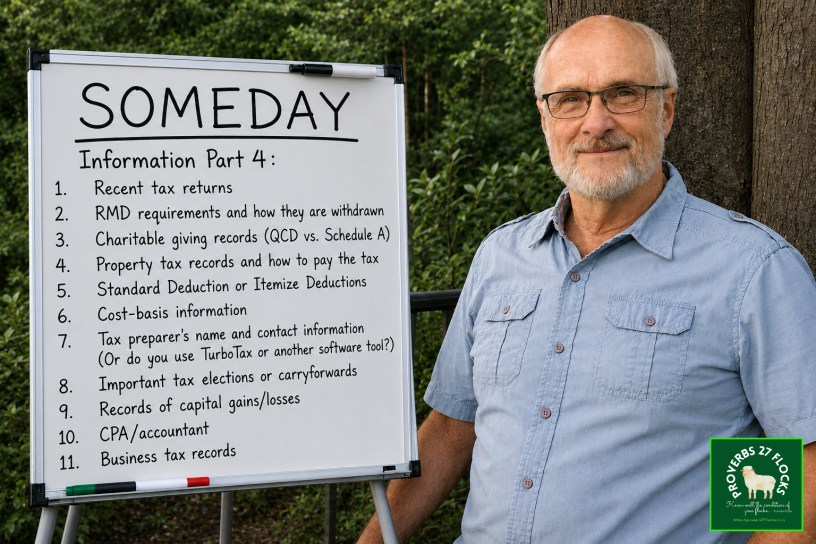
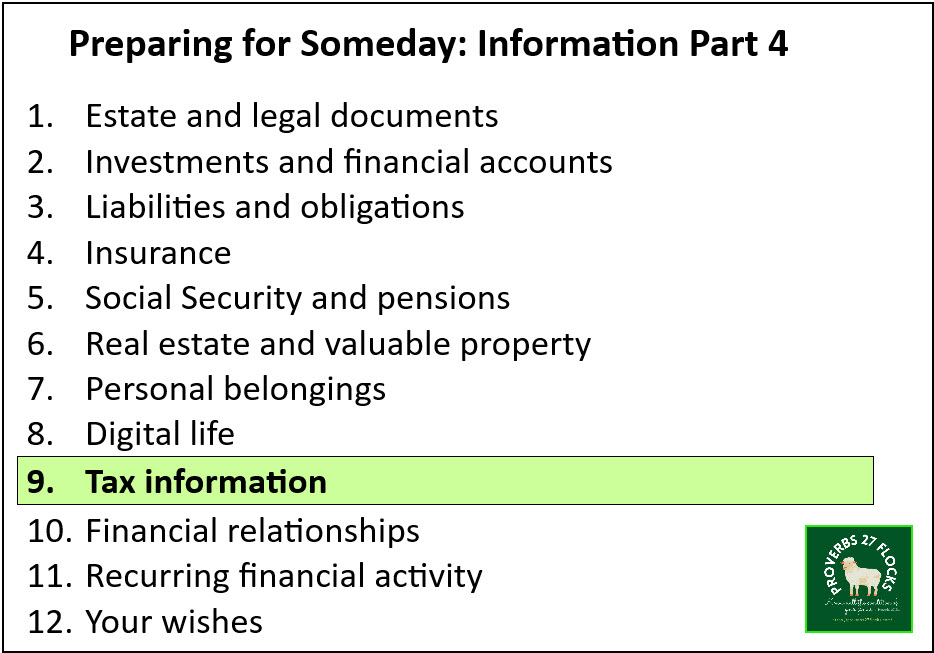
Some things to consider in preparing for someday include total income, types of income, potential deductions, the timing of payments, record keeping, and how taxes are prepared and filed. I think the following cover most of the important pieces of the tax burdens one can face.
Recent tax returns: The opinions vary about the length of time you should keep returns, but I think seven years is best. If you have paper copies, that is good. I also have copies on my computer in a folder that is sorted by year. So, for example, the documents and returns for 2026 are being and will be stored in a folder on my laptop called: Financial Information\TAX Planning and Returns\2026 Taxes. There are separate folders in the “TAX Planning and Returns” folder for each year. Because I use TurboTax, there is also a master TurboTax folder: D:\DOCUMENTS\TurboTax. This folder contains the unique TurboTax files and the PDF files of the returns.
RMD requirements and how they are withdrawn: It is necessary to have a plan for taking your RMD (Required Minimum Distribution) once you reach age 73. (The required minimum distribution age is 73 for individuals who turn 73 in 2026. This age will increase to 75 for those born in 1960 or later, effective in the early 2030s.) Heirs should know that required minimum distributions (RMDs) must be taken from inherited retirement accounts, and the rules vary based on the relationship to the deceased and whether the original owner had begun taking RMDs. Generally, most beneficiaries must withdraw the entire balance within 10 years of the owner’s death, while surviving spouses have more flexible options.
Beneficiaries of inherited Roth IRAs must follow the 10-year rule, meaning they must fully distribute the account within ten years of the original owner’s death, but there are no annual required minimum distributions (RMDs) during that period. However, eligible designated beneficiaries can choose to take RMDs over their life expectancy instead. Surviving spouse are considered to be eligible designated beneficiaries.
Charitable giving records (QCD vs. Schedule A): There can be more than one way to reduce income taxes. If you are the right age you may be able to satisfy your RMD using QCD’s. To make a Qualified Charitable Distribution (QCD), you must be at least 70½ years old. This age requirement applies to individuals wishing to donate directly from their IRA to a qualified charity. Bear in mind that these gifts are not deductible on the Schedule A. They reduce your taxable income because they don’t count as income. However, it pays to keep track of all giving because additional giving might help if you can itemize your deductions in addition to the QCD gifts.
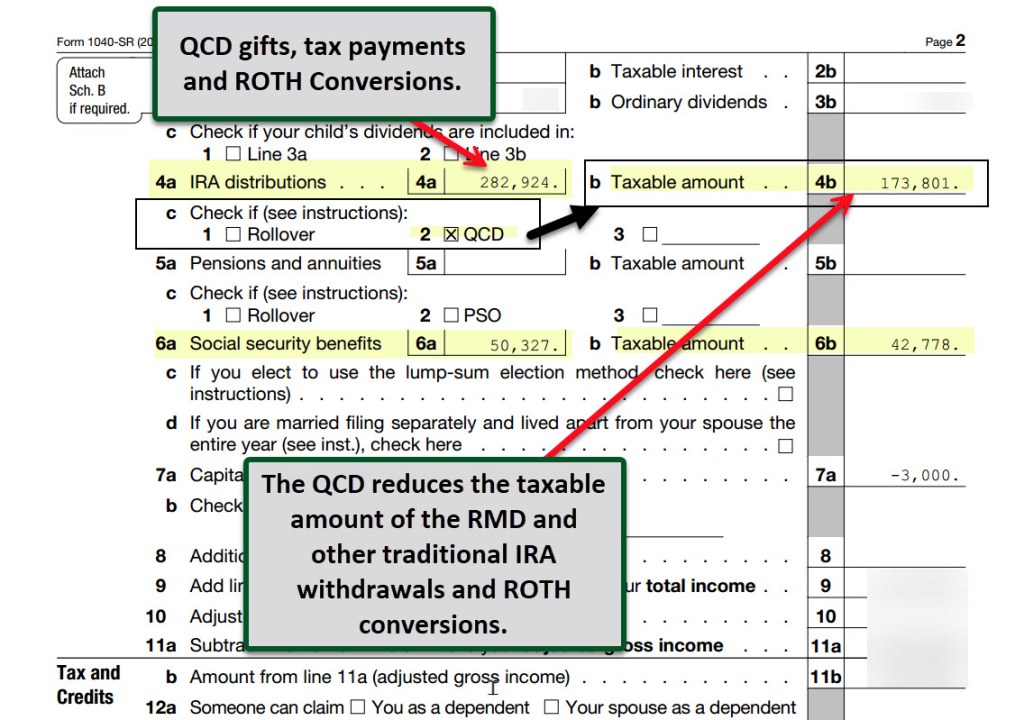
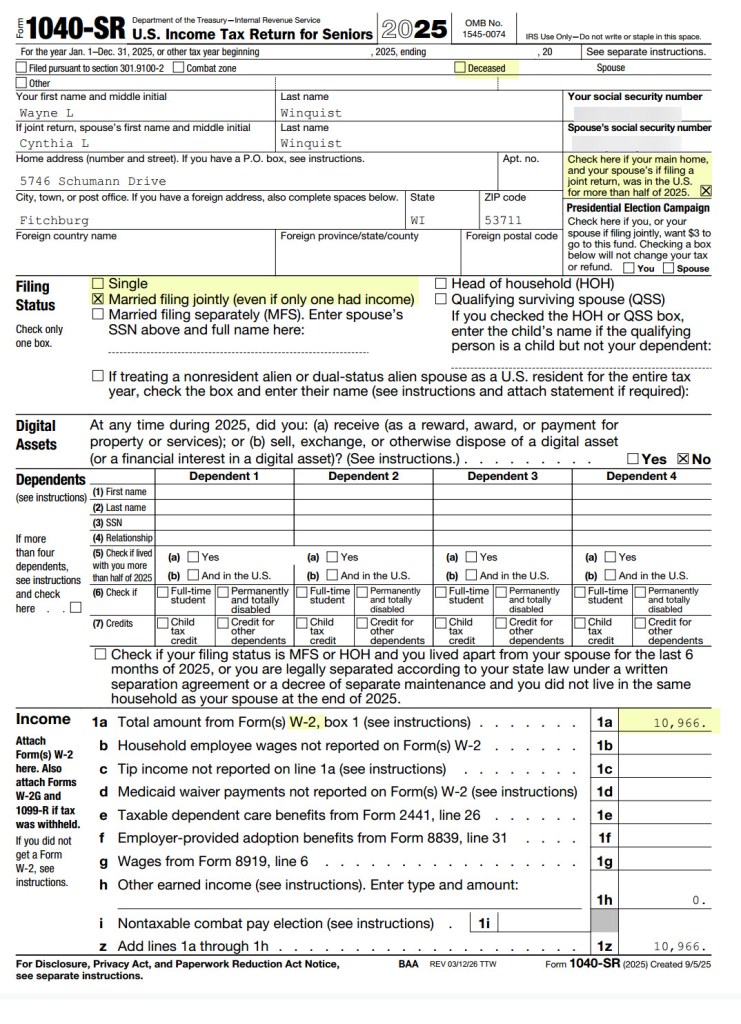
Standard Deduction or Itemize Deductions: This can be a killer. If you are married and file jointly, the standard deduction is greater. If you are single or widowed, the standard deduction drops. Decisions you make today about ROTH conversions and reducing your traditional IRA can have a big impact on the income taxes your loved one(s) may have to pay in the future.
For 2026, the standard deduction is $16,100 for single filers and married filing separately, and $32,200 for married filing jointly and qualifying surviving spouses. So if the withdrawals from the traditional IRA’s are big, the income taxes could increase significantly after your death.
NOTE: For married couples over 65 filing jointly in 2026, the standard deduction is more. For 2026, the standard deduction for married couples filing jointly is $32,200, and if both spouses are 65 or older, they can claim an additional $1,650 each, totaling $35,500. If your AGI is appropriate, there may be an additional deduction of up to $6,000.
Property tax records and how to pay the tax: Our Fitchburg property tax shows up in the mailbox each year. I pay the first installment at the Fitchburg City Hall in January, and the balance is mailed to the Dane County Treasurer in July. This is an efficient way for us to do this today, because our itemized deductions typically fall under the standard deduction. That might not be true going forward. Sometimes it is better from a tax perspective to pay the property taxes in December so that they can be included as an itemized deduction on Schedule A. This is especially true if giving and medical costs are high.
Cost-basis information: The “cost basis” is the price you paid for an investment. The reason I use TurboTax is that TurboTax automatically downloads our investment sales. This minimizes the amount of data entry and increases the accuracy of the income tax return. The thing to know is that the sale of investments in taxable accounts can have an impact on your income tax return.
Tax preparer’s name and contact information (Or do you use TurboTax or another software tool?): If you do use a tax preparer, do your heirs know who that is? They should. Also, if you have a CPA/accountant, they should have that information as well.
Important tax elections or carry forwards: Again, because I use TurboTax, this isn’t a major concern for me. However, it should be known that I elect to pay our estimated income taxes to the Federal government and Wisconsin Department of Revenue quarterly. Therefore, Cindie needs to know when payments are due. The answer is quite simple using 2026 as an example: Estimated tax payments in 2026 are due on April 15, June 15, September 15, and January 15, 2027.
A tax carry forward allows individuals or companies to apply unused tax allowances or losses from previous years to reduce taxable income or gains in future years. This can include losses from trading, capital gains, or unused pension contributions
Records of capital gains/losses: Again, because we use TurboTax, this is automatic when the Fidelity Investments information is imported into the tax software.
Business tax records: While this doesn’t apply to many retirees, it does apply if you have a business and die before your sell your stake in the business. The heirs need to know about this piece of the estate and the related taxes.
In most marriages I would guess that someone is the person who takes care of the annual obligation to file income tax returns. It is probably the same person who takes care of the investment decisions. That person should be kind and make these information pieces known before death makes the path more taxing.
Action Items
- Do you have a good filing system for previous year tax returns and for related supporting documentation?
- If you have RMD’s, does your spouse know what they are and if you have completed the year’s RMD for your traditional IRA?
- What online accounts are most important and how would someone access them if you are incapacitated or deceased?
- Determine who needs to know the pieces of the puzzle.
- Start sharing information now and be open to answering questions.
 Know Your Flocks & Herds