
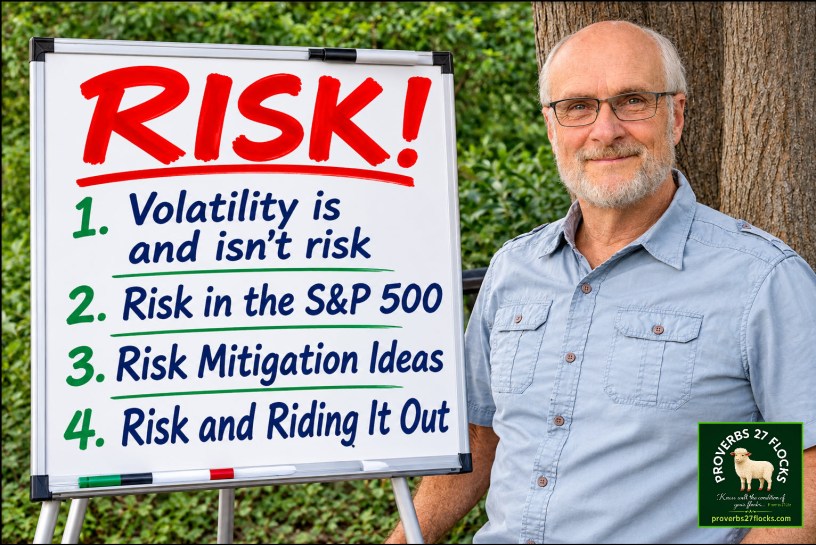
Where Do You Stand?
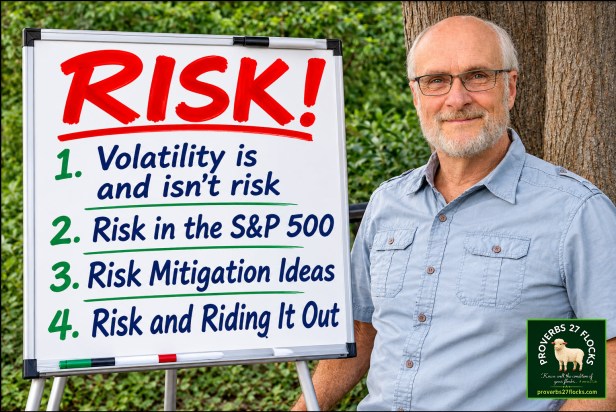
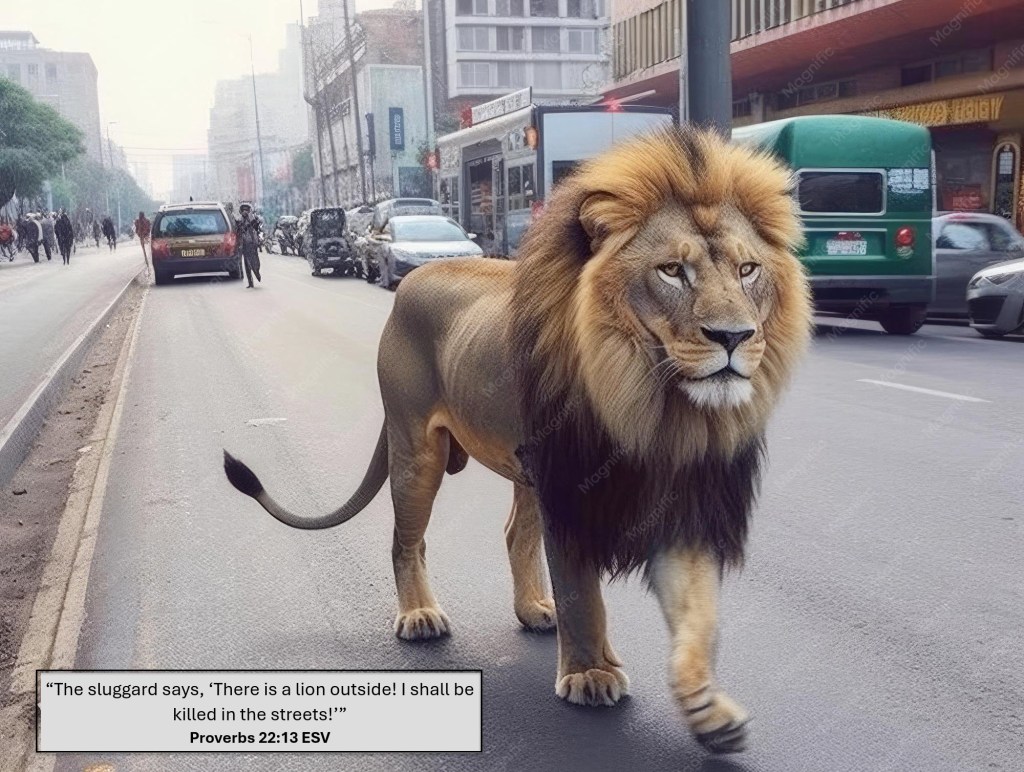
When it comes to investing, are you a lion, or are you afraid of lions? The book of Proverbs offers some contrasts about different mindsets and behaviors that lead to fear or courage. Both of these proverbs acknowledge there are risks. The difference is the view of the supposed risks.
Proverbs 22:13 “The sluggard says, ‘There is a lion outside! I shall be killed in the streets!’”
Proverbs 28:1 “The wicked flee when no one pursues, but the righteous are bold as a lion.”
It has been some time since I wrote about investment risks. During times of extreme volatility many start to equate volatility with risk. They are separate and distinct, but they can overlap. In this series of articles I want to discuss the nature of risk and volatility, the potential magnitude of the risk in the S&P 500, risk mitigation, and risk factors associated with dividend growth investing.
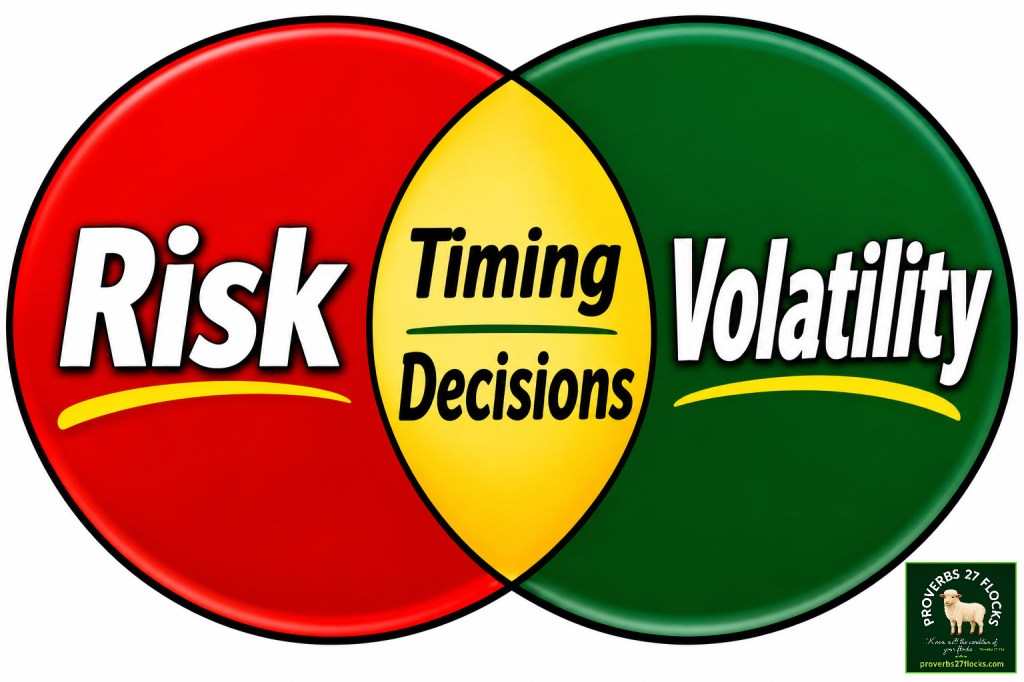
To keep risk and volatility separate, I had ChatGPT create the following image. Risk is what most people think of when they think of investing in individual stocks or even mutual funds and ETFs. Volatility is often viewed as risk, but it doesn’t have to be viewed that way if you think about what volatility does and the opportunities it provides.
There is an overlap. The overlap is where we should stand. There are questions of timing (long-term and short-term needs), and there are decisions that should be made and decisions or reactions that should be avoided.
Past Articles on Risk
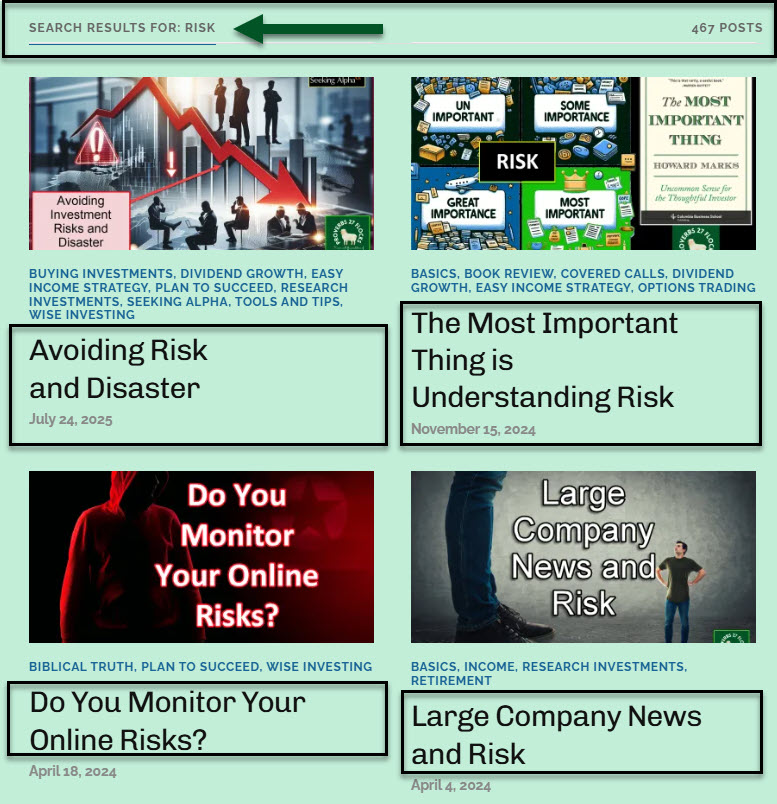
I hope you realize you can use the magnifying glass on the main Proverbs27Flocks page to look up just about anything in my blog. As an example, I entered the word “Risk” and got some of my most recent posts that included this word. Topics included risk avoidance, the importance of understanding risk, monitoring and minimizing online risks, and large company news and risk. You could do the same thing to find out about “covered call options” or even individual stocks by entering “SPCX.”
What Has Risk?
The list is endless. Marriage has risks, as does having children. Crossing the street, boarding a passenger jet, driving across town, walking down (or up) stairs all have elements of risk. Big things like bank loans, and buying a home are full of risk., Every time you eat at a restaurant you are taking a risk.
As I mentioned in a previous piece, “When I drive somewhere I am facing a risk. The risk includes my own poor judgment, weather conditions, and the behaviors of other drivers.” Just about every time you drive somewhere there will be inattentive drivers using their smart phone while driving. I call that high risk. You should stay home. Oh wait, you could get hurt at home or the gas hot water heater could cause a huge explosion and fireball.
Lets be honest. You face risk all the time. Even if you “shelter in place” you face risks. The thing we forget is that risk doesn’t mean something bad will have to happen. In Howard Marks’ book THE MOST IMPORTANT THING, Chapter 5 is about Understanding Risk. I thought this was a helpful reminder: “Risk means more things can happen than will happen.” Elroy Dimson, p.31
I like this quote because it is a reminder that we tend to worry about too many things. The list of risks a company faces must be in their company reports. They include many unlikely issues or events. However, the point is that there are many risks every business faces.
Volatility isn’t risk unless you make it risk
What Market Volatility Really Is and How to Navigate It (AAII)
“In its simplest form, volatility is measured as the percentage change in an asset, index or portfolio’s price. A daily change of greater than 2% in the S&P 500 is considered a volatile move because it doesn’t frequently occur.” – AAII
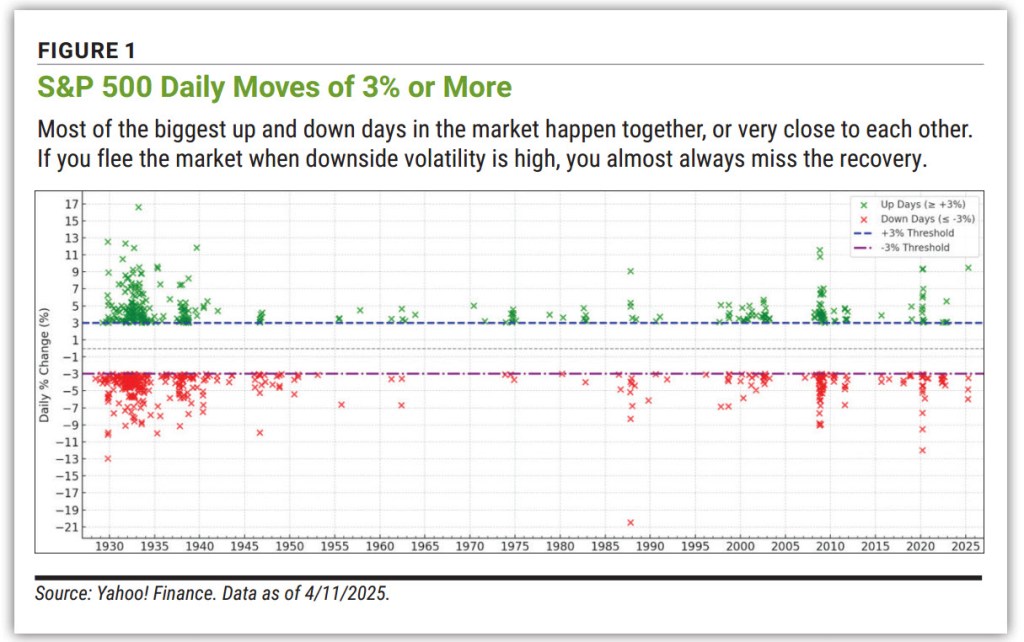
Just because a roller-coaster goes up doesn’t mean it won’t go down. In fact, you are counting on a return to the point of entry. During the ride, however, there are vast differences in the speed of the ride, the incline and the heights and depths of the ride. That is volatility. It is change and we pay to ride out the changes.

Just like roller coaster ride, which is generally fairly brief, “A volatile stock, market or other financial instrument is one that incurs a big change in its value over a short period of time. The change in value can either represent a gain (upside volatility) or a loss (downside volatility). The value can also swing back and forth in a significant manner—just like the S&P 500 has done so far in 2025.” – AAII
The problems an investor faces are that risk can overlap with volatility. When there is a large downward price move, you might be in a situation that requires a large withdrawal to fund a purchase or unexpected life situations. If you sell low, you aren’t selling at the optimal time. Therefore, a sudden fall in asset prices can unnerve the novice investor.
“Since volatility refers to the magnitude of movement instead of a single direction, AAII founder James Cloonan encouraged investors to focus on ‘real risk.’ ‘My view of real risk is not short-term volatility but rather the possibility that the assets we expected to have for consumption will not be there when we need them,’ wrote Cloonan in his final book, “Investing at Level3” (AAII, 2016).
The Seat Belt for Reducing Risk
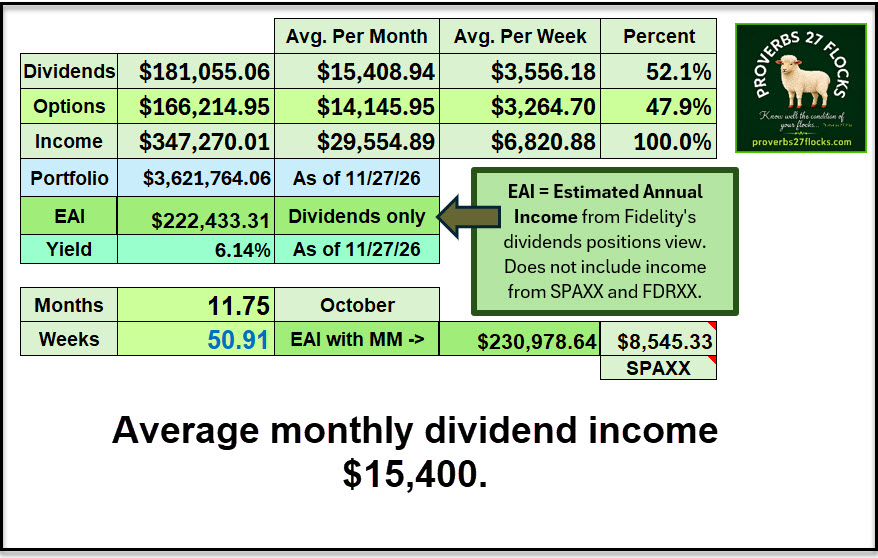
No matter how you invest, you should be thinking about at least two things. One is your source of cash and the amount you need as an emergency fund. As a simple illustration, if you are receiving regular dividends of $5,000 per month from your investments, the size of the emergency fund might shrink from $50,000 to $5,000. In our case, the emergency fund is very small because the average monthly dividends from our investments is around $15,400. A significant portion of these dividends are tax-free because they come from our ROTH IRA accounts.
The second thing is diversification. If you think investing in the S&P 500 makes you sufficiently diversified, then you are greatly mistaken. You would do well to focus on stocks that are growth stocks and value stocks. Your investments should produce income. You should include mid-cap and small-cap investments. You should diversify by sector (energy, technology, healthcare) and by industry (insurance, mortgage lenders, BDCs, and soft drinks.)
If you feel compelled to review your holdings and the stock market every day, then you may have added too much risk into your portfolio. Your emotions can be significantly disturbed by rapid, short-term changes in the prices of individual investments or the market at large. My recommendation for the faint-of-heart? Review your investments no more than monthly. Perhaps quarterly would be more appropriate. The lion in the street may just pass by so there is no need to run away from the market.
Next Time
In my next post I want to explore the “hidden” risk in the S&P 500 companies. Even large, profitable companies aren’t necessarily low-risk investments. Even the largest S&P 500 companies can experience substantial declines. Some even go out of business. For those with short memories, here are some examples:
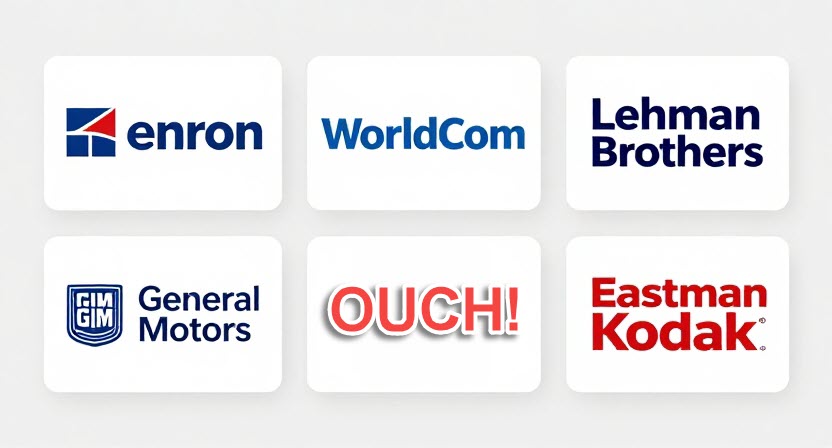
Enron — filed for Chapter 11 in December 2001 after an accounting scandal; it had more than $60 billion in assets.
WorldCom — filed in July 2002 after disclosing accounting fraud. It was a major telecom company, and its filing listed more than $107 billion in assets. It later emerged as MCI. MCI was a U.S. telecommunications company best known for long-distance phone service and business networks. After WorldCom went bankrupt, it reorganized under the MCI name; Verizon acquired it in 2006. So MCI is no longer an independent company—its network assets and business operations became part of Verizon Business.
Lehman Brothers — filed in September 2008 amid the financial crisis, with about $639 billion in assets reported in its bankruptcy petition.
General Motors — filed in June 2009; a new company bought key operating assets and continued the business after the reorganization. (Investors and bond holders were hurt considerably when this happened.)
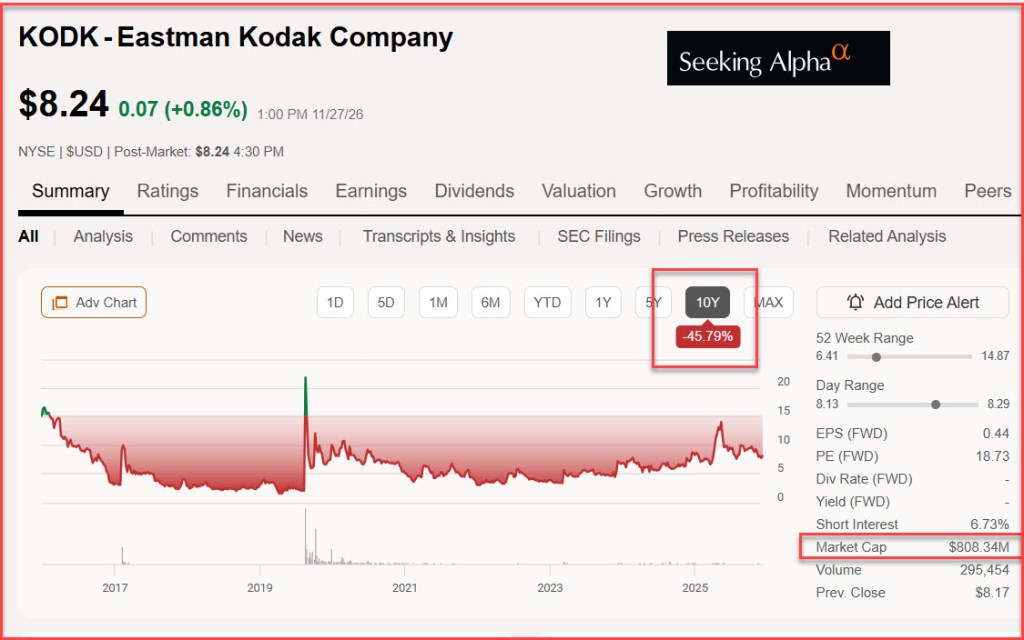
Eastman Kodak — filed in January 2012 as film photography’s decline strained the business; it reorganized and continued operating. I wouldn’t buy shares unless I wanted to gamble.
All scripture passages are from the English Standard Version except as otherwise noted.
Seeking Alpha Subscription Information
Of all of the resources I use, the most helpful is Seeking Alpha Premium. The Seeking Alpha QUANT rating is a huge factor in my investment success. If you decide to explore a Seeking Alpha subscription, please use the following link. Seeking Alpha

SEEKING ALPHA INFORMATION AND Types of SUBSCRIPTIONS
There are several ways to subscribe to Seeking Alpha services. I use the “Seeking Alpha Premium” service. The other ones are 1) Alpha Picks, 2) Bundle Premium and Alpha Picks, and 3) Quant Growth and Income. The links for the promotions are on each of these four choices. I highly recommend “Seeking Alpha Premium” as a place to start.
You can also scan this QR Code to get the same information about Seeking Alpha Premium.

Past performance does not guarantee future results, Seeking Alpha does not provide personalized advice, and it is not a registered investment adviser.
We accept advertising compensation from companies that appear on our site. This website represents my opinions, which may not reflect those of Seeking Alpha, and does not constitute an investment recommendation or advice.
If you have any questions or problems getting connected to Seeking Alpha, reach out to them with this email address: subscriptions@seekingalpha.com

