
Thankful Hearts and Grateful Dispositions
There are many positives that flow from a thankful heart and a thankful disposition. Many of these result from a changed perspective about things others find burdensome or frightening. This includes every aspect of life, including one’s view of eternity and appreciation for the grace of God that brings salvation for those who believe. Your view of eternity will impact your relationships, your priorities, and your finances. Thankful investors have a much different perspective than the “make my barns bigger” investors.
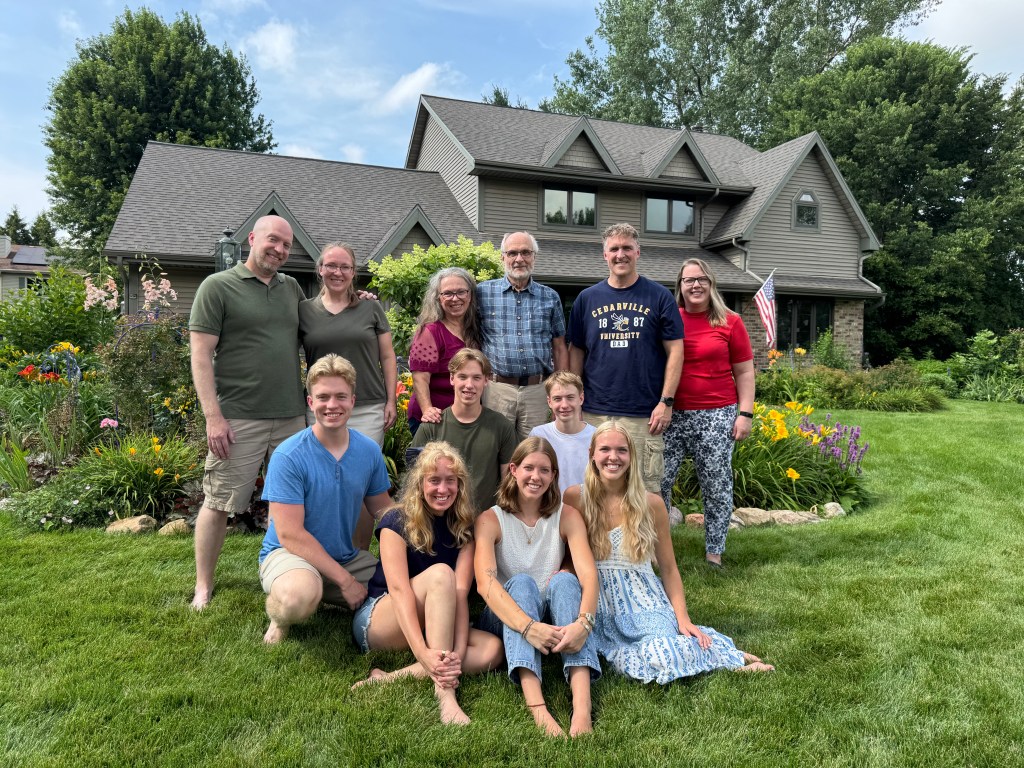
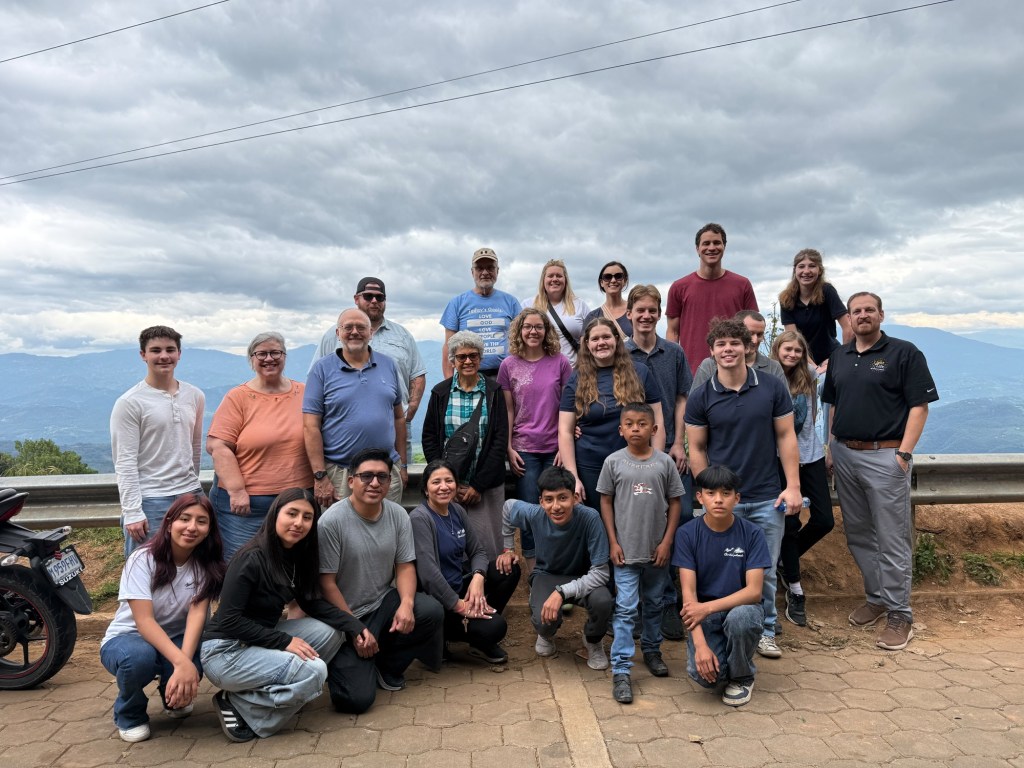
Some of our key investments this year included taking our youngest granddaughter to Costa Rica to celebrate her graduation from high school. I also appreciated the opportunity to go to Guatemala with a team from Memorial Baptist Church to serve with a church in the community that needs to hear the truth about Living Water and to receive water filter systems for clean drinking water. Perhaps the greatest blessing this year was celebrating 50 years of marriage (and today is our 50th Thanksgiving together) to a godly woman. Wise men are thankful for their wives.

Those investments will last. Other investments, like those at Fidelity Investments, will fade in significance when all of eternity is considered. Nevertheless, we are to be good stewards. To that end, let me suggest four things you can thank God for on this Thanksgiving Day.
Four Big-Picture Thankful Investor Qualities
Here are four for you to consider.
- Be thankful that you have funds you can invest. I have friends in other countries, especially in India, who live what most of us would consider at the poverty level. They are poor in the world’s perspective, but rich from heaven’s perspective.
- Be thankful that investing makes it possible to share more with others. This includes, of course, the UTMA accounts and Fidelity Youth Accounts we created and funded for our six grandchildren. But it also includes contributing to our local church, and caring for the homeless with donations to the Milwaukee Rescue Mission, Camp Fairwood, Light of Life, and the CareNet Pregnancy Center of Dane Country.
- Be thankful for markets that go up, but especially for those that go down (bear markets). Wise investors know that the market goes up and down. When it is going up it can be profitable to buy more dividend growth investments. However, when it goes down it is a grand opportunity to buy more shares at a lower cost per share.
- Finally, be thankful for your mistakes (and learn from them) and “losses.” Losses can be temporary. Prudent investors know that it is wise to average your cost basis. If you can add shares at a lower cost, your average cost for all of your shares decreases. This is best done when a long-term holding is on a downward trend. Of course, if you have doubts about the position, adding more shares may only increase your eventual losses. However, much of what happens in the market, including the price of shares of great companies, is the result of short-term thinking, unfounded fears about the “future”, and a news story that may or may not have any long-term implications for the company in question.
How Does Gratitude Help?
Gratitude acknowledges that we have been blessed. When you feel blessed you are more patient and you understand that waiting and a long-term investing horizon is a wise way to look at the future potential of actions you take today. CBS News says, “Grateful investors (are) willing to wait for rewards.” Here is a quote from that article:
“But what makes one investor patient and another impatient? The old school answer was willpower. But researchers were flummoxed when trying to explain why one investor had it and another didn’t. Now, new research from a team of academics at Northeastern University, Harvard and the University of California at Riverside, says it has found the key: Gratitude.”
The article goes on to say, “Grateful investors were willing to wait for rewards. Those who were merely happy or neutral were more likely to live for today, according to the paper. Researchers came to this conclusion by asking 75 individuals to write about a personal experience before being presented with an economic choice. One group wrote about a happy experience; one group wrote about experiences that were emotionally neutral; and the third group wrote about and experience likely to generate emotions of gratitude.” – CBS News “Gratitude is Good for Your Wealth”
Be thankful, save more: Study says gratitude helps us reach financial goals
“A sizable body of research shows that people tend to discount the value of future rewards in favor of short-term gratification, but a new paper in the June issue of “Psychological Science” finds that thankfulness triggers patience and a willingness to hold out for greater monetary gain.” – www.today.com
Are you a thankful investor or neurotic investor?
At Thanksgiving the main idea is that we are to be thankful. We are to be grateful. There is a gladness in grateful living. There is joy to be found when we are grateful. There are times in life where it may seem difficult to be thankful for some of the things that come our way. This is a matter of perspective. We tend to take the short-term view of far too much of life. But looking back helps us put today’s difficulties and disappointments in perspective. What God has done in the past has significance for the present and our futures.
Emotions act as immediate triggers that can distort a person’s “psychic reality,” leading them to ignore logical data in favor of their current feelings. This often manifests as specific behavioral biases. They are neurotic. This is displayed in the following ways:
- Loss aversion is a powerful emotional motivator where the pain of a loss is felt nearly twice as strongly as the joy of an equivalent gain. This can lead investors to hold onto losing assets for too long to avoid “realizing” the loss or to sell during market dips and miss subsequent recoveries.
- Trend chasing occurs when investors overweight recent experiences, often driven by greed during bull markets and fear during crashes. This emotional cycle frequently leads to buying at market peaks and liquidating assets at market bottoms.
- Ego-involvement occurs when investors develop an illogical emotional attachment to a specific holding, treating the investment as an extension of their identity. This “sentimental value” can prevent them from selling a failing asset even when the financial data clearly suggests doing so.
Far too many investors are neurotics and they are not as thankful as they think they are. Here is what a recent AAII Journal article with the title: Identifying the Personality Traits That Can Impact Investing Decisions said…
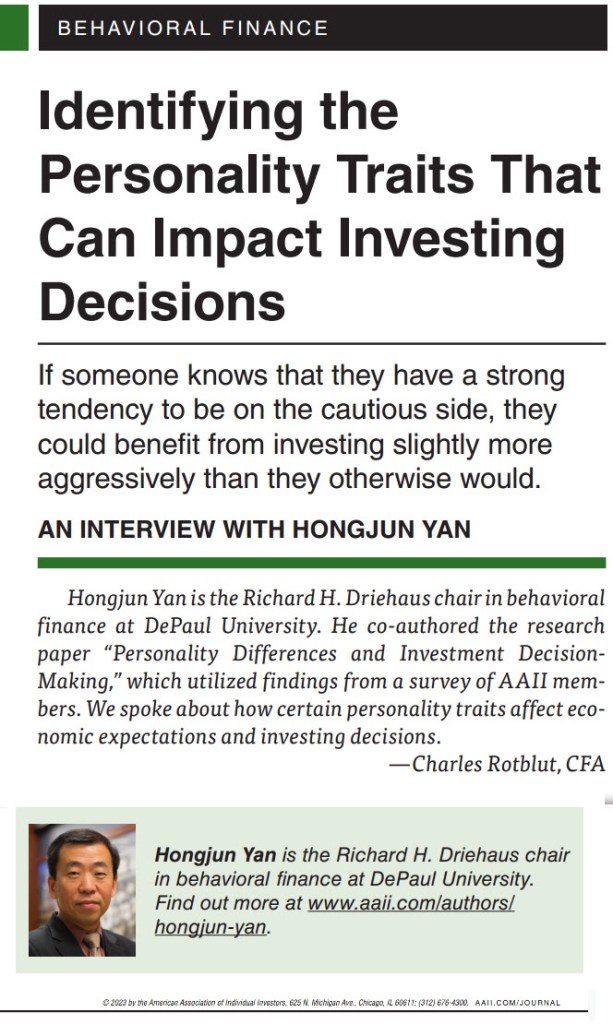
“If someone knows that they have a strong tendency to be on the cautious side, they could benefit from investing slightly more aggressively than they otherwise would.” – AAII – An interview with Hongjun Yan
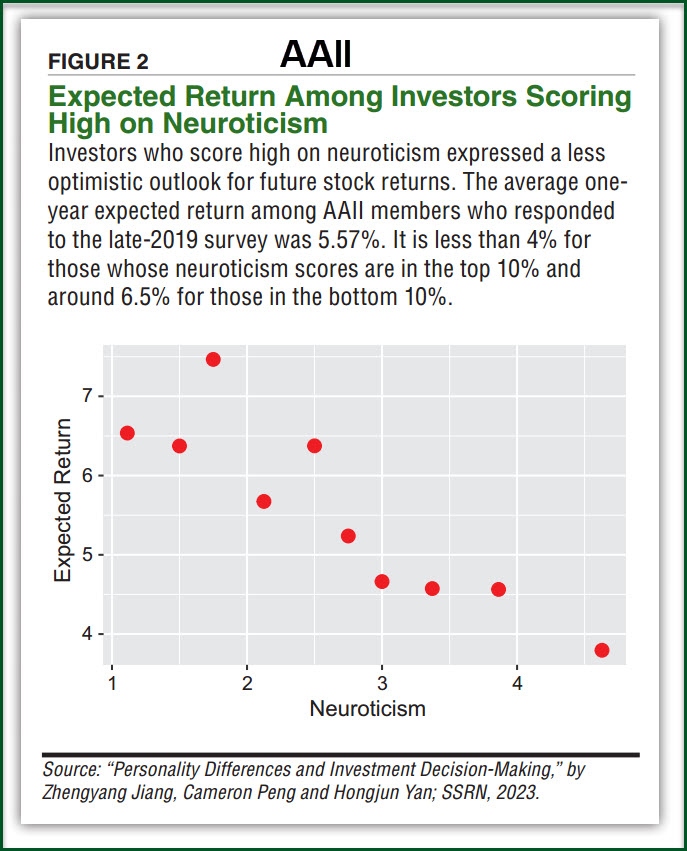
“If someone has stronger traits of neuroticism, do they tend to be more pessimistic about, say, the economy? – For neuroticism, yes. Overall, their level of optimism will be lower. They will expect lower economic growth and lower stock returns, and if you ask them to forecast their own wealth growth rate, they tend to forecast it at a lower level as well (Figure 2). Basically, they are pessimistic across the board.”
“Neuroticism: A chronic level of emotional instability and proneness to psychological distress. More neurotic people are less predictable and less consistent in their emotional reactions. They tend to be flippant in the way they express emotion and are more likely to interpret ordinary situations as threatening and minor frustrations as difficult.” Source: “Personality Differences and Investment Decision-Making,” by Zhengyang Jiang, Cameron Peng and Hongjun Yan; SSRN, 2023.
The Apostle Paul was not Neurotic.
He understood that the Lord is near and that our finances are not something that should create anxiety. We can ask God to help us and make those requests “with thanksgiving.”
Philippians 4:5-7 “Let your reasonableness be known to everyone. The Lord is at hand; do not be anxious about anything, but in everything by prayer and supplication with thanksgiving let your requests be made known to God. And the peace of God, which surpasses all understanding, will guard your hearts and your minds in Christ Jesus.”
Paul also understood that the most important things are not things. He knew what it was like to have a life of comfort and a life devoid of comforts. Philippians 4:11-13 “Not that I am speaking of being in need, for I have learned, in whatever situation I am, to be content. I know how to be brought low, and I know how to abound. In any and every circumstance, I have learned the secret of facing plenty and hunger, abundance and need. I can do all things through him who strengthens me.”
Key Take-Aways for Thanksgiving
We would also do well to consider Job’s perspectives about life. The book of Job starts with Job as a wealthy and “blameless” man in God’s eyes. He trusted God, and his faith was counted as righteousness. Then, everything of value was stripped away: his wealth and his sons and daughters. That did not change his evaluation of God. At the end of the book, it says God blessed Job more than he had in the beginning. Job’s view of God was not dependent on Job’s circumstances.
Job 1:1-3 “There was a man in the land of Uz whose name was Job, and that man was blameless and upright, one who feared God and turned away from evil. There were born to him seven sons and three daughters. He possessed 7,000 sheep, 3,000 camels, 500 yoke of oxen, and 500 female donkeys, and very many servants, so that this man was the greatest of all the people of the east.”
Job 1:20-22 “Then Job arose and tore his robe and shaved his head and fell on the ground and worshiped. And he said, ‘Naked I came from my mother’s womb, and naked shall I return. The Lord gave, and the Lord has taken away; blessed be the name of the Lord.’ In all this Job did not sin or charge God with wrong.”
Job 42:12-17 “And the Lord blessed the latter days of Job more than his beginning. And he had 14,000 sheep, 6,000 camels, 1,000 yoke of oxen, and 1,000 female donkeys. He had also seven sons and three daughters. And he called the name of the first daughter Jemimah, and the name of the second Keziah, and the name of the third Keren-happuch. And in all the land there were no women so beautiful as Job’s daughters. And their father gave them an inheritance among their brothers. And after this Job lived 140 years, and saw his sons, and his sons’ sons, four generations. And Job died, an old man, and full of days.”
All scripture passages are from the English Standard Version except as otherwise noted.

