

Bad Choices for Asset Diversification

During turbulent times all kinds of crazy “assets” are suggested for investment diversification. I cannot tell you the number of times I see various sources recommending questionable assets for retirement accounts. The top four that spring immediately to mind are gold, bitcoins (cryptocurrencies), annuities and bonds. It would be wise to consider the real returns of these assets with inflation in mind.
The reality is that two of these four are more like a casino than a true investment. You might buy low and sell high, but you might also buy very high and sell very low. Here are the four questionable “assets.”
Gold
Gold does not produce income unless you use an ETF that creates income from gold miners or other profit-producing sources. Of course you can sell your gold to create income. That assumes you can sell at a profit. There has always been significant fluctuation in the price of gold. In addition, in taxable accounts, the income tax on the profit from selling gold, assuming you make a profit, is probably more than many realize.
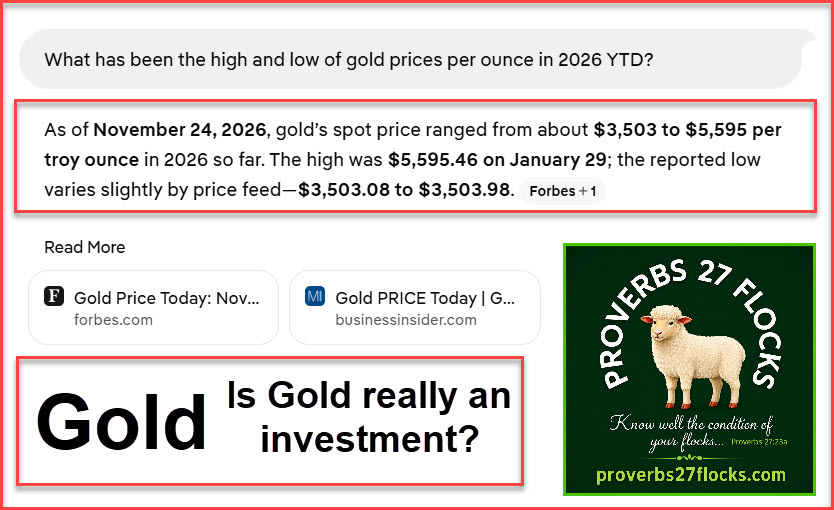
For U.S. federal income tax, physical gold held as an investment is generally a capital asset, but the IRS treats long-term gains on gold bullion and coins as collectibles.
- Held one year or less: Profit is generally taxed at your ordinary income tax rate.
- Held more than one year: The special collectibles rate applies, with a maximum federal rate of 28%. That’s a ceiling, not a flat rate; your actual rate may be lower.
Your taxable gain is generally the sale proceeds minus your adjusted cost basis. You normally owe tax when you sell or exchange the gold, not just because its market price rises while you hold it.
The investment’s structure matters: some physically backed gold funds may receive collectibles treatment, while gold-mining stocks are generally taxed like other stocks.
Bitcoins
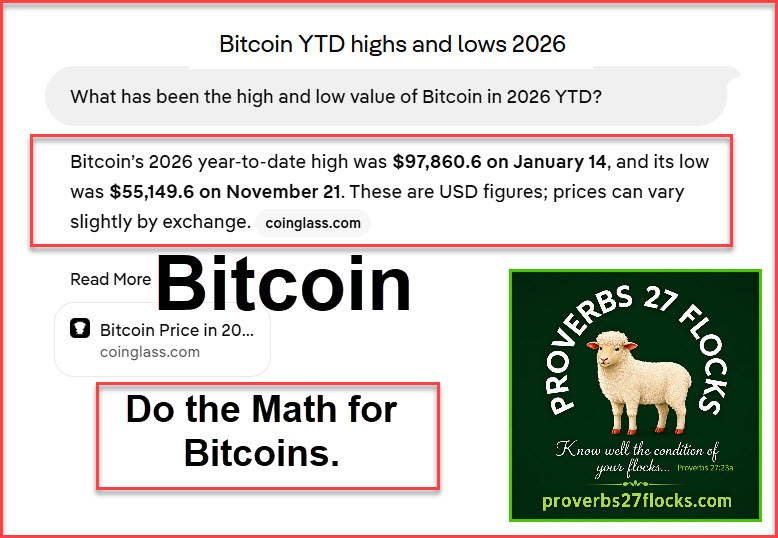
Bitcoins do not produce income. The idea for investing is to buy low and sell high to make a profit. The idea for a gambler is to invest $100 to make $10,000. A bitcoin might be worth more if you sit at the blackjack table long enough, but you might need to leave the table at the worst possible time.
Bonds
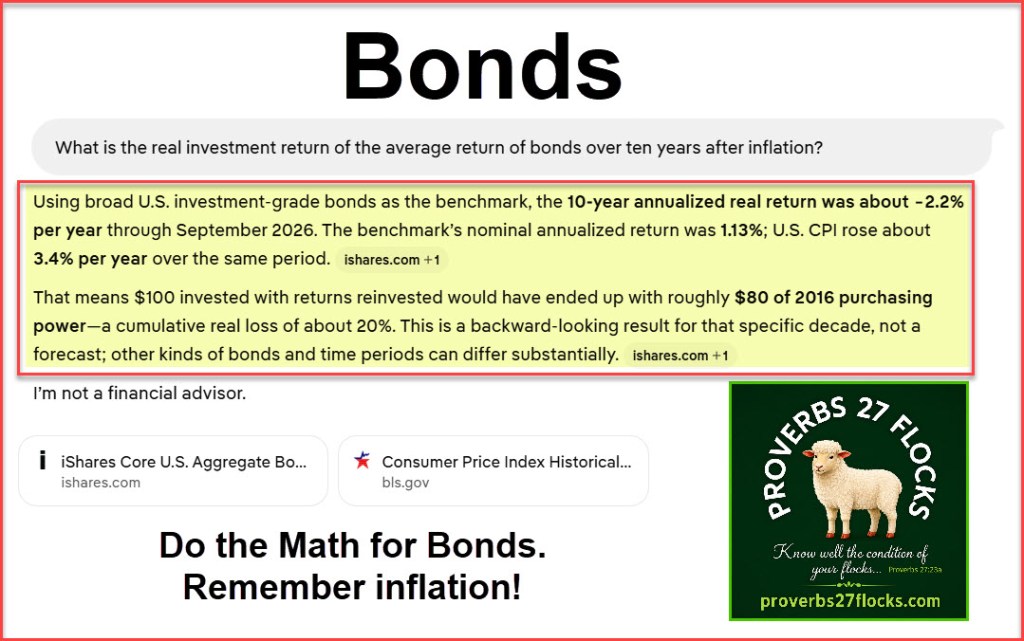
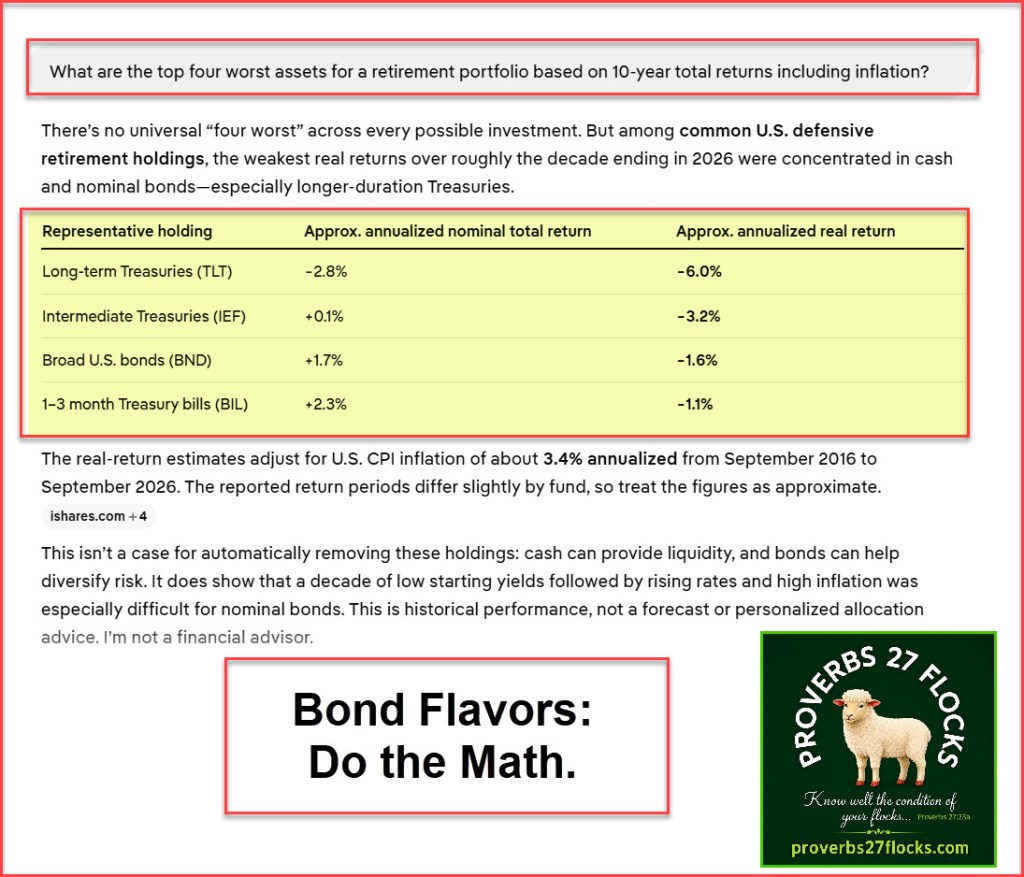
On the plus side, bonds produce income. But the income is worse than the income you probably get on your savings and checking account balances. There is no way to paint a rosy picture for bonds when you factor inflation into the equation. Sadly, retirement date and target date mutual funds make matters worse when you factor in the never-ending inflation we experience over twenty years.
Annuities
Annuities are complicated insurance contracts. If you are willing to pay the insurance company more for an inflation-protected annuity, rest assured that the insurance company has done the math. They hope you haven’t. The reality is that any annuity without inflation protection is a very poor life insurance policy and very poor source of income.
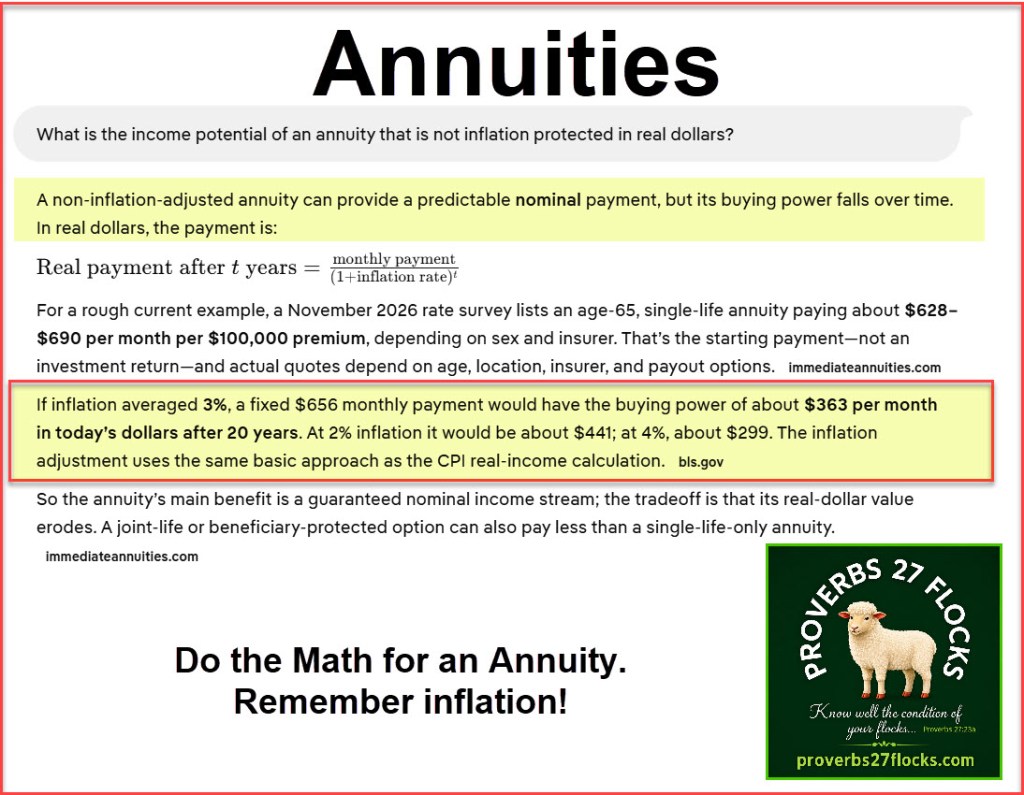
Annuities are insurance contracts that can turn savings into income. They’re easiest to understand along two separate dimensions: when payments begin, and how the contract’s value grows.
- Immediate vs. deferred: An immediate annuity starts paying soon after you buy it; a deferred annuity starts later. Either can be fixed or variable. A life-income option can protect against outliving your savings, but exchanging a lump sum for lifetime income usually means giving up access to that money.
- Fixed: The insurer guarantees a stated interest rate or payment under the contract. It’s predictable, but a fixed payment generally doesn’t rise with living costs, so inflation can steadily reduce what it buys.
- Variable: Your money is invested in market-based subaccounts, so its value can rise or fall. These contracts can layer insurance, administrative, investment and optional-rider charges on top of each other, reducing returns; they don’t guarantee investment gains.
- Fixed indexed: Interest is linked to an index, but formulas, caps, participation rates or spreads determine how much of any index gain is credited. They may limit direct market losses under the contract terms, but the complexity can make it hard to judge the likely return or compare products.
When is an annuity a poor choice?
A variable annuity may be a poor fit if its total costs are high, you don’t need its insurance or income guarantees, or you may need the money during a surrender-charge period. A fixed-indexed annuity may disappoint someone expecting stock-market-like returns without limits: the crediting rules can constrain gains, and early withdrawals may have consequences.
A fixed annuity—or a fixed lifetime payout—may be a poor fit if you need income that keeps pace with inflation. Inflation-adjusted options exist, but they generally start with lower payments or cost more.
Before buying, compare the full cost—including rider and investment fees, commissions where applicable, surrender charges, and any limits on withdrawals—and ask for the guaranteed payout alongside a realistic inflation-adjusted comparison. Also consider the insurer’s ability to pay; annuities aren’t FDIC-insured.
Recommendation
Diversification is a good idea. However, you can load up on many different questionable assets for retirement. A better approach is to look for ways to have increasing income with minimal effort. You owe it to yourself to choose wisely. I recommend that you avoid gold, bitcoins, bonds and annuities. If you choose them, recognize that they come with some serious risks.
Seeking Alpha Subscription Information
Of all of the resources I use, the most helpful is Seeking Alpha Premium. The Seeking Alpha QUANT rating is a huge factor in my investment success. If you decide to explore a Seeking Alpha subscription, please use the following link. Seeking Alpha

SEEKING ALPHA INFORMATION AND Types of SUBSCRIPTIONS
There are several ways to subscribe to Seeking Alpha services. I use the “Seeking Alpha Premium” service. The other ones are 1) Alpha Picks, 2) Bundle Premium and Alpha Picks, and 3) Quant Growth and Income. The links for the promotions are on each of these four choices. I highly recommend “Seeking Alpha Premium” as a place to start.
You can also scan this QR Code to get the same information about Seeking Alpha Premium.

Past performance does not guarantee future results, Seeking Alpha does not provide personalized advice, and it is not a registered investment adviser.
We accept advertising compensation from companies that appear on our site. This website represents my opinions, which may not reflect those of Seeking Alpha, and does not constitute an investment recommendation or advice.
If you have any questions or problems getting connected to Seeking Alpha, reach out to them with this email address: subscriptions@seekingalpha.com

