
Bucking the Trend (Going Against the Norms)
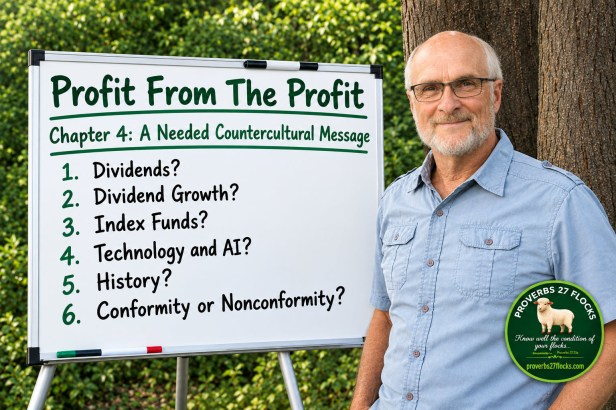
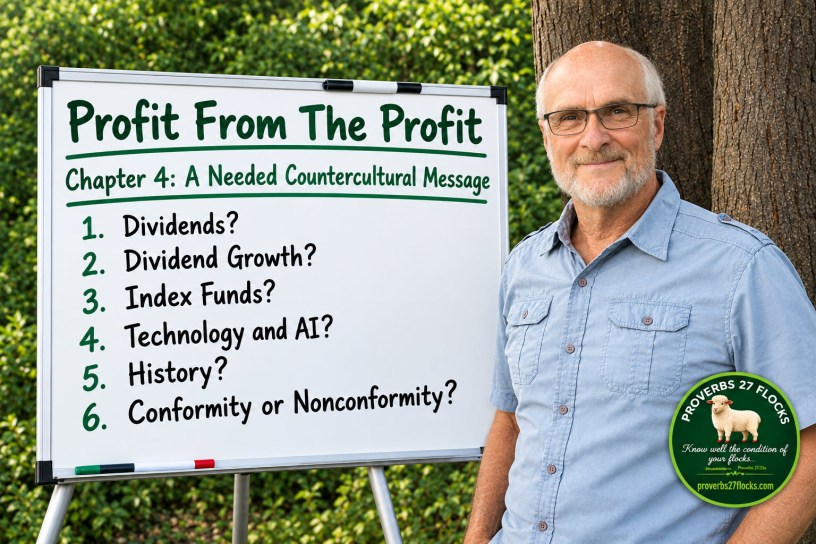
“Bucking the trend” means going against what is generally happening or expected. It is often going against some “culture.” This happens based on belief. So “if everyone is doing it” the alternative is do something different. David L. Bahnsen called chapter 4 of Profit From the Profit “A Needed Countercultural Message.”
He begins the chapters with quotes from two of the legends of investing: Warren Buffett and Benjamin Graham. Many want to leap to great results. Warren Buffett suggests his approach is quite different. He said, “To the extent we have been successful, it is because we concentrated on identifying one-foot hurdles that we could step over rather than because we acquired any ability to clear seven-footers.” Benjamin Graham is quoted as well: “The investor’s chief problem – and even his worst enemy – is likely to be himself.” I believe both were countercultural in their approaches to investing.
Is Dividend Growth Investing Mainstream?
Based on everything I have seen, and the investment statements I have seen from many who have come to me for advice, the generic financial advisors do not subscribe to dividend growth investing. This appears in many ways. It appears in the choices made for mutual funds and ETFs. It appears in adding bonds to the mix. It also creeps in when you add “retirement date” funds to your portfolio. Those funds are just another anti-dividend growth model for mediocre returns.
Bahnsen starts this chapter by clarifying the goal. “Being countercultural does not mean being anti-technology. It means being anti-wishful thinking. It means believing that risk management matters. It means that history has lessons to teach us. It means understanding the basic grown-up reality that big gains that come easily can be lost easily. It means seeing the world for how it is and not how we want it to be.” – Profit From The Profit
This is extremely evident in several ways in today’s market. The first is the crypto currency craze. The second is the all-things AI craze. It also shows up in the top ten assets of the S&P 500 index. There is a misguided belief that expensive stocks will only get more expensive. But there must be an exit point. Bear markets happen when the herd rushes for the exits, and when that happens the prices of the speculative “cultural” assets plummet. The author points out that “…the cultural norm is to believe that what has done abundantly well, above an beyond historical averages, will continue doing just that.”
The Rules Don’t Change
If you think “this time it is different” then you don’t learn from history. The “this time it is different” approach is cultural at the base. That is the very thing that creates booms that are followed by busts. The author rightly states this road has been traveled before there was AI and crypto.
Big Successes Are Rarely Volcanos
The problem most have with dividend growth is that it takes time. It requires patience and discipline. It means you know that growing income is a need in any economy that has inflation and higher taxes. Most investors want explosive growth. Most of them lack patience and discipline. I don’t belong to that group. I like to make a lot of small decisions that culminate in success.
Dividend growth investing is more like an army of ants that gradually builds something amazing that can grow to incredible colonies. The ant’s success is based on a lot of little things that they do consistently well. That is why King Solomon said we should look at the ants. There are far more anthills than volcanos. In the investing world, everyone wants the volcano (which can be very destructive) without seeing the power of the multiple ant hills. (Yes, I realize ants can be destructive too!)

I agree with the author that “the biggest problem our culture has with dividend growth investing is that huge things happen over time and in small increments. Most successful businesses grow and succeed over a long period of time.” It takes decades, not months or minutes. If you look at our investment in ABBV (AbbVie Inc.) the ten-year price return is 396%. However, the total return over that same period, including dividends, is 645%. ABBV is not tech and it is not AI. However, ABBV is a dividend growth investment.
ABBV also appears in the top ten investments in the VYM ETF. It also appears in the top ten holdings of DGRO. However, it is not in the top ten holdings of SCHD. However, SCHD has other great investments like MRK and AMGN.
Unrealized Gains Are NOT Income
Perhaps the price of your S&P 500 index funds or ETFs are up dramatically. Congratulations. You have the potential for a lot of future gain. But you also have significant potential for significant pain. You don’t have a gain until you sell. AMD (Advanced Micro Devices, Inc.)is a great company. The shares closed on Friday at $516.79. YTD the shares are up 141%. They might continue to shine, but you really don’t have a profit of 141%. You have that added to your account value, which can change dramatically in very unexpected and unsettling ways.
Some investment advisors focus on a portfolio’s total return—income plus price growth—and use dividends as one component rather than the main goal. I fit into that category. Dividends by themselves don’t guarantee success. There are pitfalls to avoid, and I have discussed those in previous posts. You need to understand the dividend payout ratio and the history of sustainable dividend growth.
You Can Spend, Give, or Reinvest Dividends
The reason dividend growth investments are different (but not necessarily better) is that they are not tied to a future value. When the board of directors declares the dividend and the announces the date that matters for getting the dividend, you will receive the cash. You don’t have to do anything to get it, other than own the shares before the ex-dividend date.
The secret is to consider the things that drive the dividend. Dividends should come from real earnings, profits, and revenue growth. Those things happen over time and generally are not volcanic in nature.
Action Steps for Consideration
- Have you read your investment statement(s)? If not, how do you know if you are achieving your goals?
- Examine your beliefs about the S&P 500 and related mutual funds and ETFs. Are you fully aware of the risks associated with having too many dollars allocated to this strategy?
- What portion of your current investment income is tax-free? What portion is taxable? Think about what that really means for retirement.
Additional Income
As I said in the previous post in this series, there is another piece to the puzzle. There are some growth stocks that do not pay a dividend, but you can get significant “synthetic” dividends by trading options on blocks of 100 shares. I trade options all growth stocks and dividend-growth investments.
Spiritual Countercultural Bucking the Trend
Any time I write any piece, including those about investing, I think about the really big picture. The Apostle Paul brings clarity to this part of non-conformist living. In Romans 12:1-2, he says, “I appeal to you therefore, brothers, by the mercies of God, to present your bodies as a living sacrifice, holy and acceptable to God, which is your spiritual worship. Do not be conformed to this world, but be transformed by the renewal of your mind, that by testing you may discern what is the will of God, what is good and acceptable and perfect.”
Seeking Alpha Subscription Information
Of all of the resources I use, the most helpful is Seeking Alpha Premium. The Seeking Alpha QUANT rating is a huge factor in my investment success. If you decide to explore a Seeking Alpha subscription, please use the following link. Seeking Alpha

SEEKING ALPHA INFORMATION AND Types of SUBSCRIPTIONS
There are several ways to subscribe to Seeking Alpha services. I use the “Seeking Alpha Premium” service. The other ones are 1) Alpha Picks, 2) Bundle Premium and Alpha Picks, and 3) Quant Growth and Income. The links for the promotions are on each of these four choices. I highly recommend “Seeking Alpha Premium” as a place to start.
You can also scan this QR Code to get the same information about Seeking Alpha Premium.

Past performance does not guarantee future results, Seeking Alpha does not provide personalized advice, and it is not a registered investment adviser.
We accept advertising compensation from companies that appear on our site. This website represents my opinions, which may not reflect those of Seeking Alpha, and does not constitute an investment recommendation or advice.
If you have any questions or problems getting connected to Seeking Alpha, reach out to them with this email address: subscriptions@seekingalpha.com

