
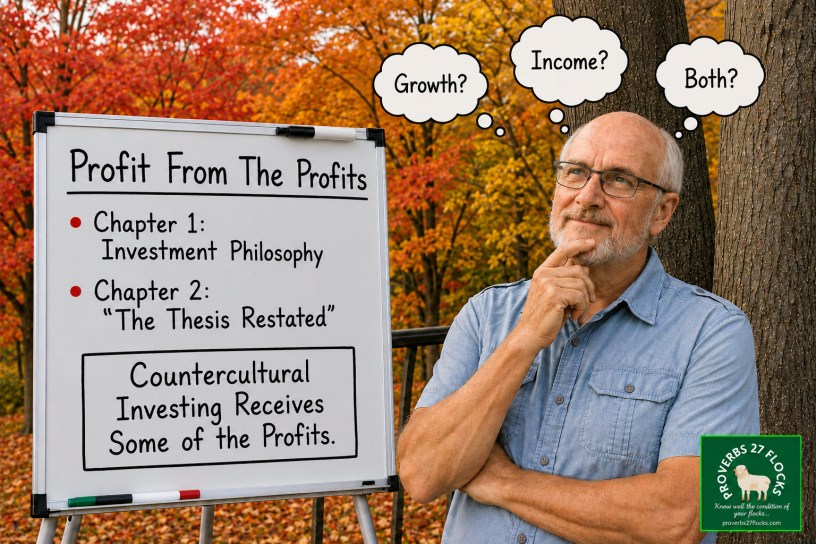
Countercultural Investing is Receiving Some Profit
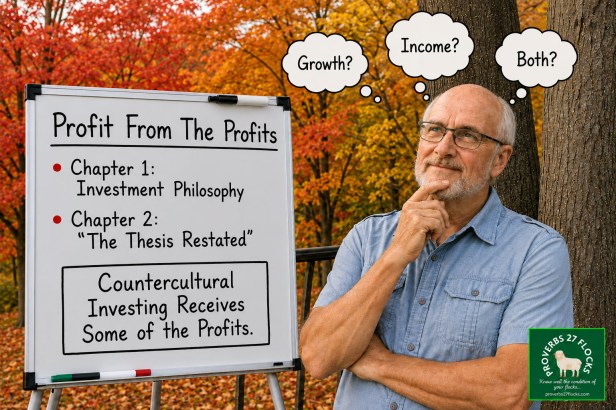
Chapter two of David L. Bahnsen’s book Profit From The Profit (PFTP) is titled “The Thesis Restated.” He begins the chapter with this: “I remain surprised, two and a half decades into my professional investing career, that dividend growth is known, understood, and implemented by very few. Selfishly, this works out well for me: the more this approach to equity investing remains a niche, the better for me, I suppose.” – Profit From The Profits
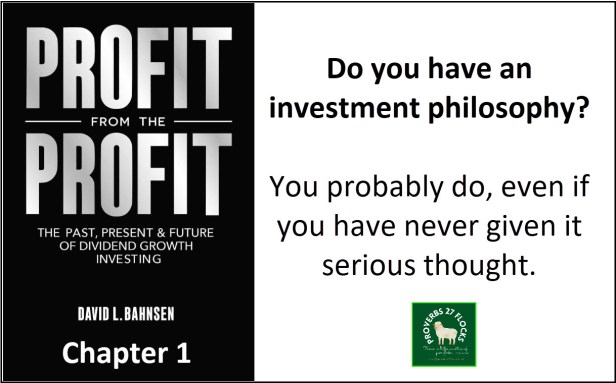
The number of investors who think dividend growth investing is a mediocre (or dumb) solution is huge. If I were to guess, I would say 99.99% of investors don’t know what it is, and if they did they would assume that it is for old guys like me. I have learned that ignorance is not bliss. I rarely find an investor who even knows what the “Rule of 72” is. Therefore, it isn’t surprising that most don’t understand the basics of dividend growth investing.
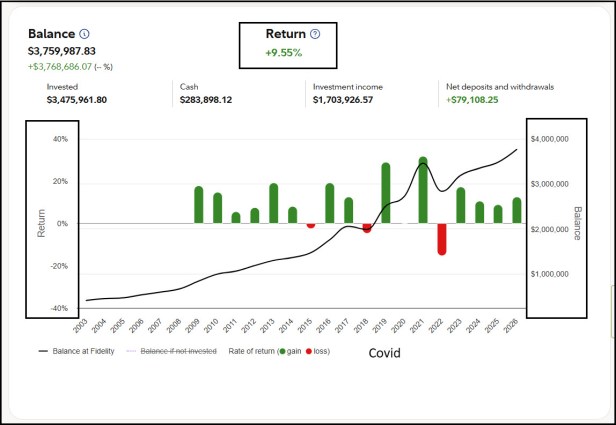
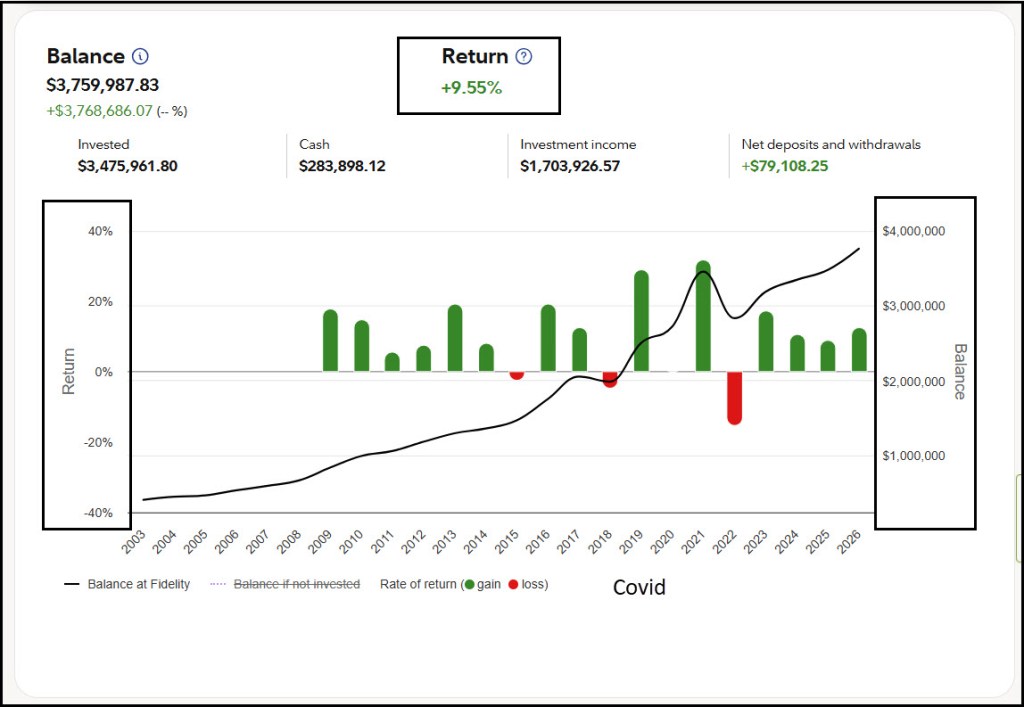
By way of reminder, the Rule of 72 is a formula. Our average annual returns are about 9.5% as seen in the following image. Using the Rule of 72 his means that our total mix of investments should double in value every 7.6 years. However, I have been withdrawing funds from our investments as well. Withdrawals were made for charitable purposes, income taxes, large purchases, travel with three of our six grandchildren, not to mention the ebb and flow of normal living expenses.
Dividend Growth or Bonds?
Bahnsen then clarifies what dividend growth investing is not. It is not like or a substitute for bond investing. (I abhor bonds as an investment, but that is a different discussion.) Both bonds and dividend-paying stocks produce income. However, bonds have a maturity date, a consistent cash flow, and minimal volatility in the price of the bond. That feels “safe” to many investors.
Dividend-growth investing is none of those. He says that you don’t have to give up long-term rewards for the other benefits you gain using this approach. “Dividend growth is not a way to sacrifice innovation and profit growth for boredom and mediocrity.” – PFTP
What is Dividend Growth Investing?
Essentially it is a return of the profits. I own shares of many different companies. Most of them pay a dividend. A larger percentage pay an increased dividend each year. As a minority shareholder, I don’t get any say in the decisions that management makes. Sometimes management keeps all of the profits to “reinvest in the business.” On the surface that sounds prudent and perhaps even noble.
I believe that businesses are wise to reinvest in the business. In fact, dividend growth companies do that too. That is why I pay attention to the dividend payout ratio. If a company earns $1.00 of profit per share in a year, and they have a dividend payout ratio of 43%, I am receiving $0.43 of the profit per share. The company still has $0.57 per share to reinvest in the business.
Why Should I Care?
First of all, lets say I own 100 shares of the ABC company and 100 shares of the XYZ company. XYZ doesn’t pay a dividend. Therefore, the only way I can really have a gain on my investment of the XYZ company is to sell some or all of my shares. Investors, as a rule, don’t like to do that unless they are day trading. So the long-term hope is that the investment will continue the steady upward increase in value.

ABC, on the other hand, is a dividend growth company. In the first year they give me $0.10 per share of the profits, in the second year perhaps $0.12 per share, in the third year it increases to $0.15 per share, in the fourth year to $0.21 per share and then in the fifth year to $0.25 per share. Therefore, during those five years, I have received $0.83 per share. Those pennies multiplied by 100 shares are $83.00 of income. But wait, that isn’t the only piece of the investing puzzle. Because I received cash without having to sell my shares, I could put those dollars, and the dollars from many other dividend growth investments to work buying more shares of dividend growth stocks and ETFs. This is the income snowball. It gets bigger as time rolls on.
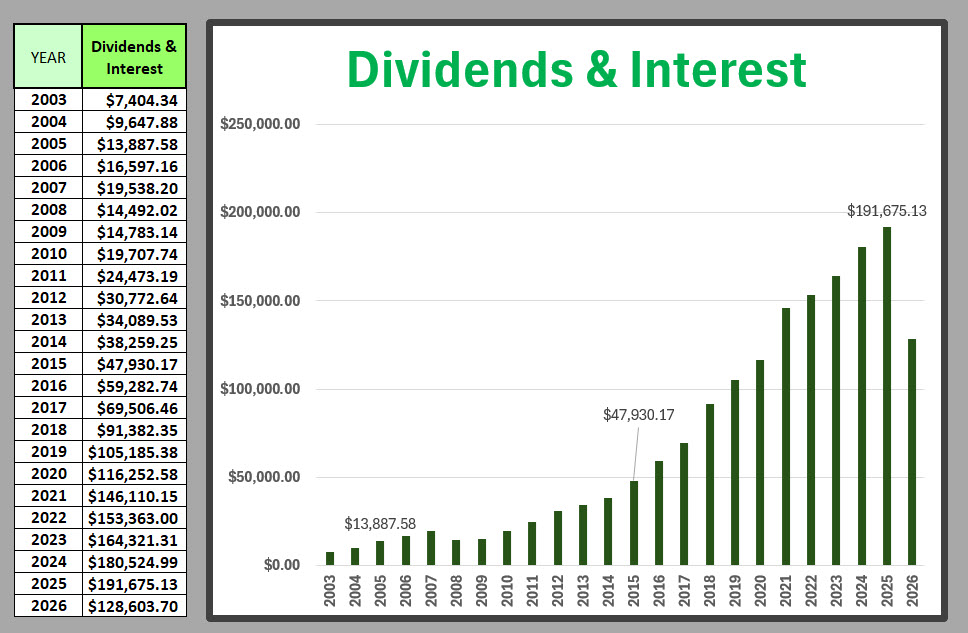
To illustrate this, consider the following graphs I created from our investment accounts from 2003-2026. The snowball is working in a marvelous way!
Management’s Commitment
Companies that pay a dividend, and those that have a dividend growth history, are generally committed to that model. As Bahnsen correctly says, “There are plenty of companies whose management teams can do quite well for themselves not returning profits to the owners, instead utilizing stock buybacks (perfectly legal and moral), guidance gamesmanship (less moral and potentially less legal), or financial engineering (even less moral and legal).” He and I don’t think this is the norm, but focusing on stock price is not in any way a “contract.” While dividends are not a contract either, the receipt of the dividend “de-risks the investor every quarter.”
Let me state that in a different way. There have been some investments that I bought for (for example purposes) $25 that I sold later for $25. The average person looks at that and thinks, “at least you broke even.” But the reality is that for a dividend growth investment, I made money every year, and that income was greater than the flat payment from a bond investment. There have been times, in fact, where I sold the investment for less than I paid for it and still made a very nice profit from the dividends.
I Don’t Need the Dividend
Many think they don’t need the dividend. Others think they are young and can be more aggressive in their investing by avoiding the dividend paying investments. However, as you get closer to retirement you will start to realize that having no dividends means you have no income from your investments unless you sell some of them. Here is a potential problem: you might have to sell when the stock market is in a big downturn. That means you may have to sell at a loss and you are reducing the ownership of shares that can provide an ROI in future years.
Two Types of Investors
There are investors who are accumulating and there are investors who are accumulating and spending. I fall into the later category. My investments are like chickens laying eggs. I can eat some of the eggs, but I can also let many of the eggs hatch into new chickens that produce even more eggs. The accumulating investors can certainly buy more chickens that don’t lay eggs, but the source of the cash for the new chickens has to come from outside of the investment portfolio unless you kill one flock of chickens to buy a different flock. That is time-consuming and risky. That is also why “rebalancing” is practiced by many (another practice I dislike.)
The Conclusion is?
I like the conclusion to Chapter 2. Here are some nuggets worthy of reflection taken from the image I took of the book’s chapter 2 conclusion.
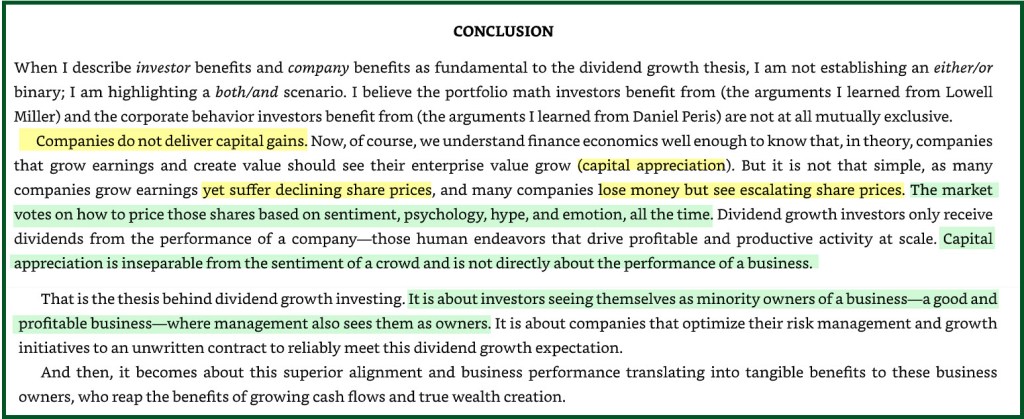
- “Companies do not deliver capital gains.”
- “Many companies grow earnings yet suffer declining share prices, and many companies lose money but see escalating share prices.”
- In the end, the market is voting but the votes cast are not necessarily based on wisdom or reality. In the Covid era that was certainly very evident.
Action Steps for Consideration
- Evaluate your investment holdings. What is the total estimated annual income from the investments if you don’t sell any of them during the year?
- Examine your beliefs about growth, value, and income investments. Will you have to change your beliefs in retirement to get real income? What risks may increase as a result of that approach or the timing of that approach?
- Do you really know the returns of your investments? For example, many love Tesla as an investment. However, the five-year total returns for TSLA are only about 46%. The five-year PRICE returns of my ABBV shares (a dividend growth investment) are 132%. Be careful what you believe.
Additional Income
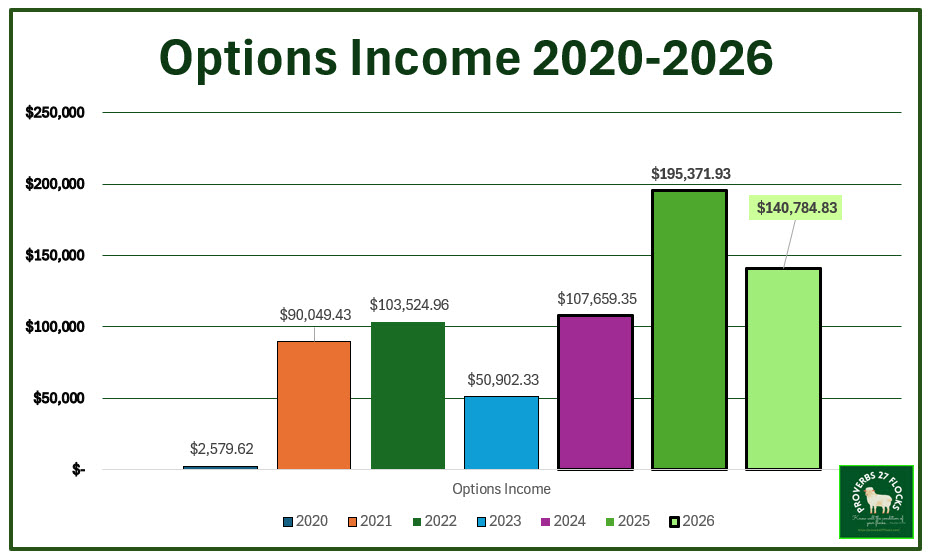
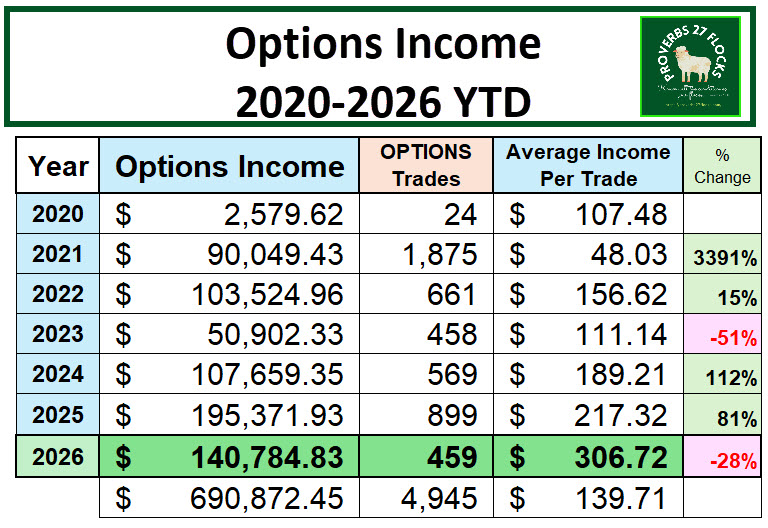
There is one other piece to the puzzle. There are some growth stocks that do not pay a dividend, but you can get significant “synthetic” dividends by trading options on blocks of 100 shares. I trade options all growth stocks and dividend-growth investments. The following images illustrate the results of that approach.
Seeking Alpha Subscription Information
Of all of the resources I use, the most helpful is Seeking Alpha Premium. The Seeking Alpha QUANT rating is a huge factor in my investment success. If you decide to explore a Seeking Alpha subscription, please use the following link. Seeking Alpha

SEEKING ALPHA INFORMATION AND Types of SUBSCRIPTIONS
There are several ways to subscribe to Seeking Alpha services. I use the “Seeking Alpha Premium” service. The other ones are 1) Alpha Picks, 2) Bundle Premium and Alpha Picks, and 3) Quant Growth and Income. The links for the promotions are on each of these four choices. I highly recommend “Seeking Alpha Premium” as a place to start.
You can also scan this QR Code to get the same information about Seeking Alpha Premium.

Past performance does not guarantee future results, Seeking Alpha does not provide personalized advice, and it is not a registered investment adviser.
We accept advertising compensation from companies that appear on our site. This website represents my opinions, which may not reflect those of Seeking Alpha, and does not constitute an investment recommendation or advice.
If you have any questions or problems getting connected to Seeking Alpha, reach out to them with this email address: subscriptions@seekingalpha.com

