
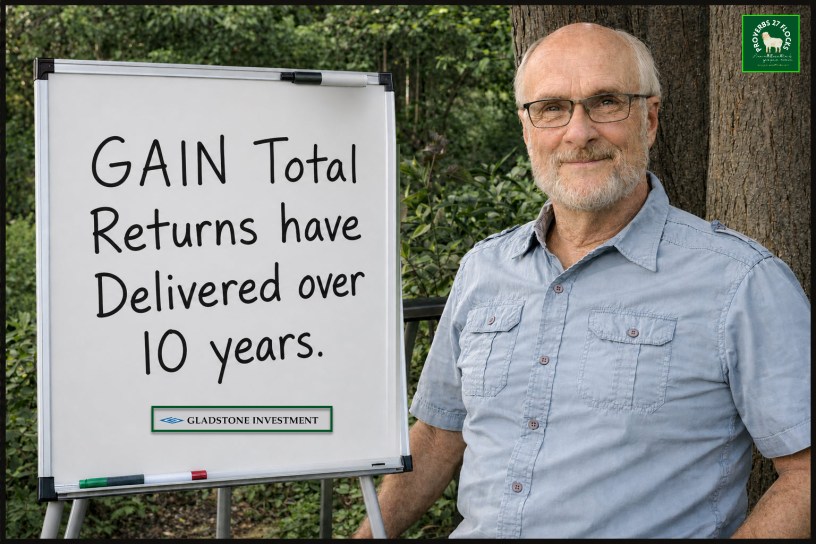
What Investment Returns Do You Really Get?
There are significant dangers in relying on price returns for an investment. Most people don’t think clearly about this. Later in this piece I will list eight key dangers so that you make better investment decisions. This becomes more important as you are near your retirement or in retirement. You don’t want to sell investments to raise income during the retirement years, if you can avoid doing so.
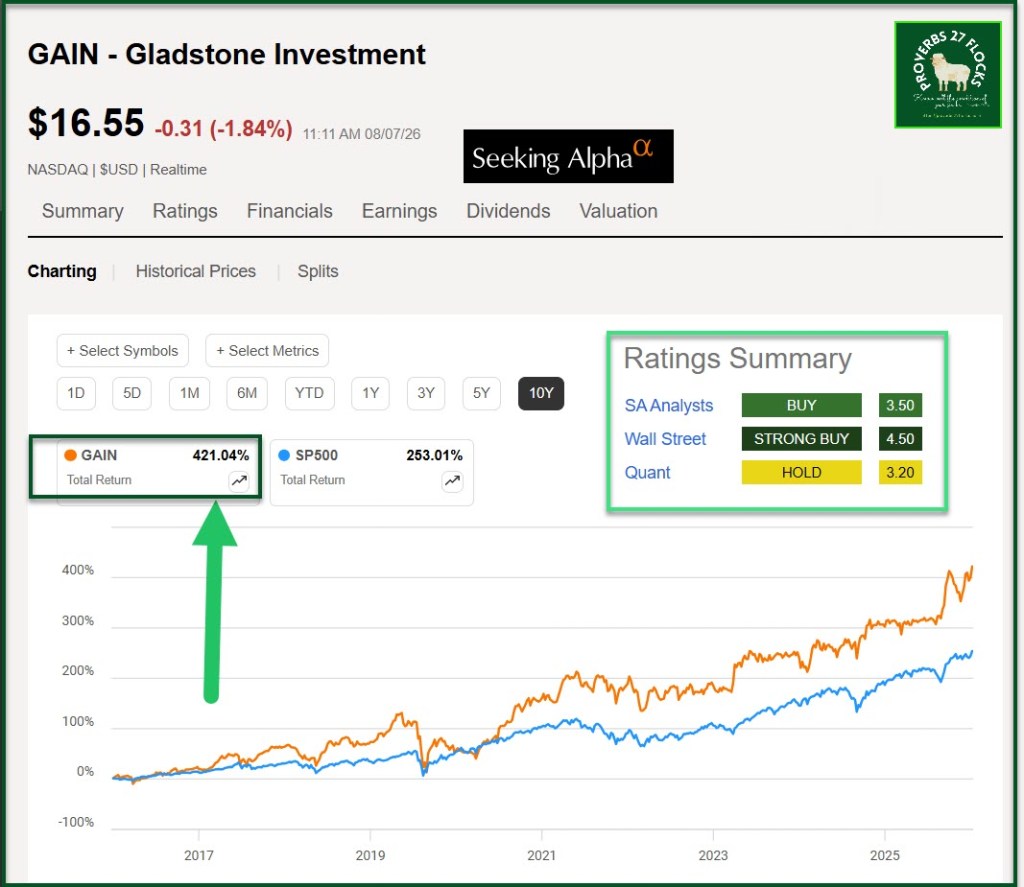
I’ve written about GAIN and other BDC (Business Development Company) investments in the past. However, you may be new to my blog, so a refresher course about total returns and price returns is warranted. GAIN is Gladstone Investment. This stock pays a monthly dividend with a current yield of 5.69%. In my opinion, a long-term investment in a BDC like GAIN is a good addition to the buy-and-hold investment portfolio.
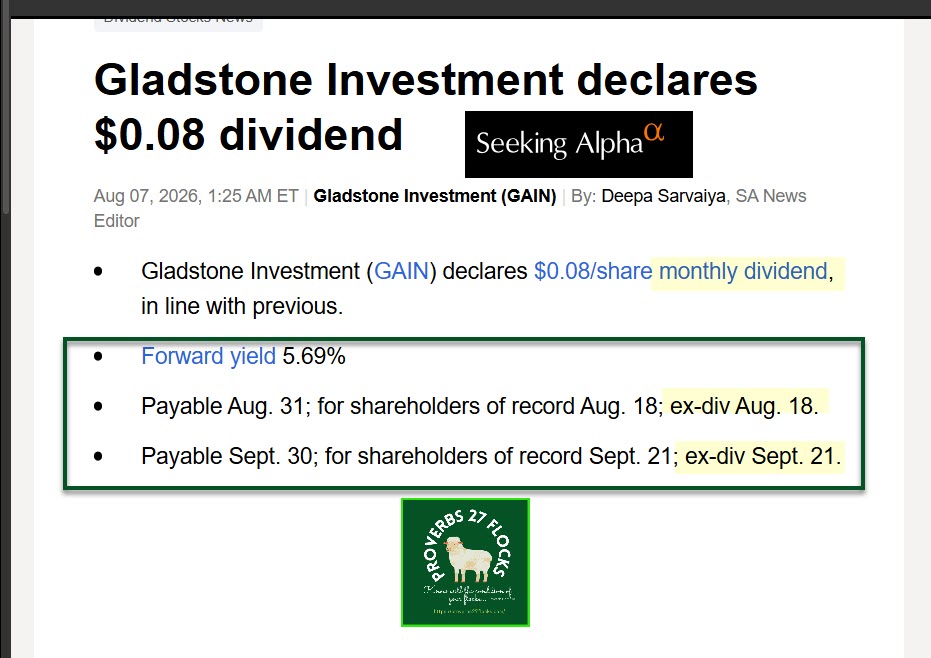
GAIN’s Total Returns
The following helps illustrate the power of total returns. GAIN beats the S&P 500 over the last ten years.
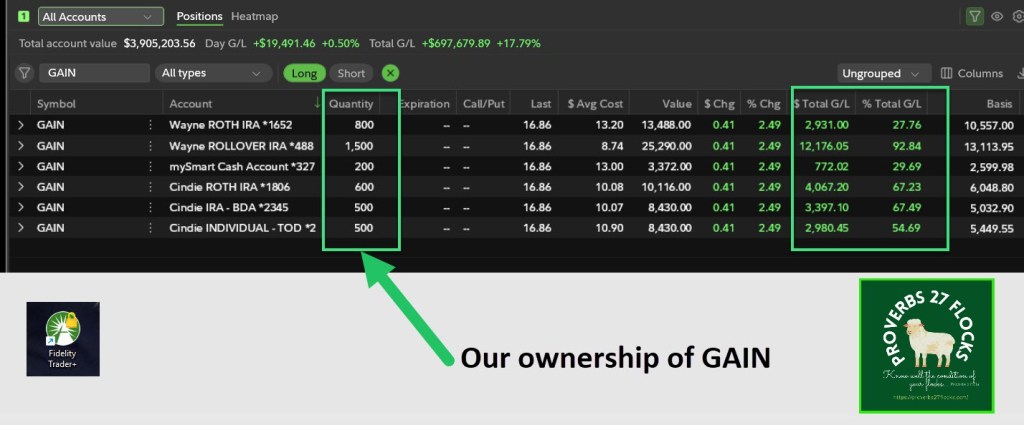
Our Ownership of GAIN
We have a significant stake in GAIN shares. We currently hold 4,100 shares. That means every month we receive $328 in monthly dividends. GAIN, however, is not a dividend growth investment. The $0.08 per share dividend isn’t likely to increase.
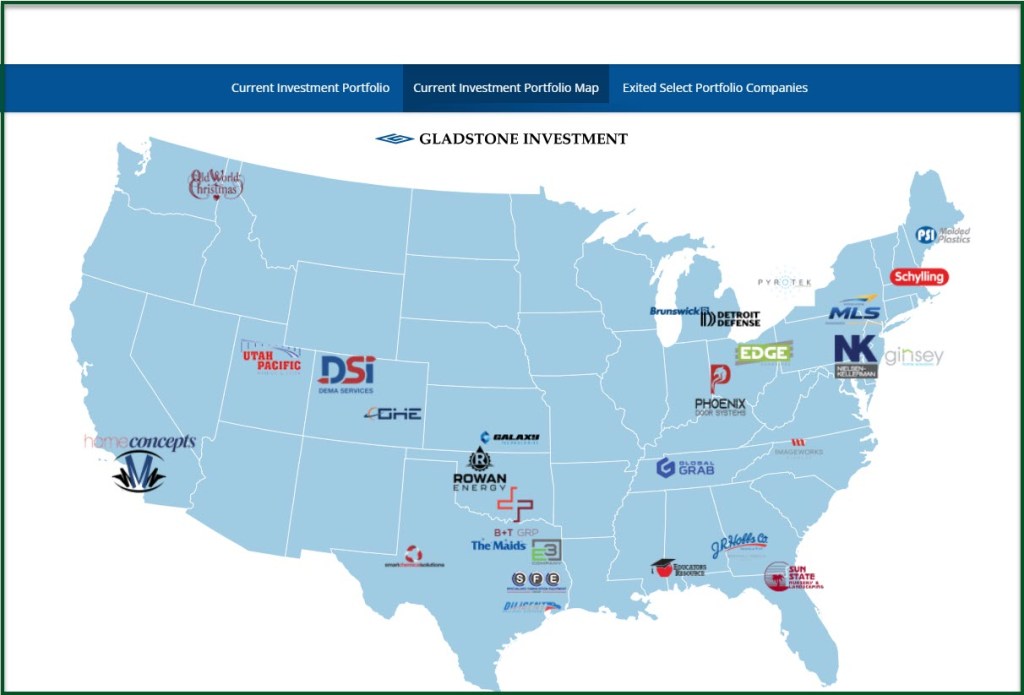
Where and What is included?
GAIN is a company that invests in other companies. The images here help illustrate the geographical and business diversification. This is a partial view of the companies in the GAIN family of investments.

What Are TOTAL Investment Returns?
“Total investment return” is the overall change in your investment’s value over a period, including both the price gain and income. Sadly, many think price returns are the only important piece. As a result, they don’t really get what they think they are getting. Part of the problem is that you don’t really get the price return until you SELL the investment.
The two pieces are:
Price return: gains/losses from the investment’s market value going up or down
Income return: cash you receive along the way (e.g., dividends, interest, or coupon payments).
You can spend, reinvest or give income returns to a charity. Price returns are somewhat fickle and can be very uncertain.
“Price returns” are only the gain/loss from how the market price of an investment moves (ignoring dividends/interest and other cash flows). The dangers come from the fact that price can move sharply and for reasons that don’t reflect your long-term needs.
A “Safer” Way to think about Investment Performance
Use total return (price + dividends/interest, and reinvestment assumptions) and consider your time horizon and need for withdrawals. By the way, this is one reason that bonds are a terrible investment. The total returns for bonds are awful.
Eight Key dangers of relying on Price Returns

- Volatility (big swings in the market): Price returns can drop quickly even if the investment hasn’t “failed.” If you judge performance using price alone, you may panic or sell at the worst time.
- Negative returns with temporary news: Prices often react to headlines, rates, or sentiment. That can cause short-term losses that later recover (or sometimes don’t).
- Timing risk (sequence-of-returns): If you need to withdraw money during a downturn, temporary price losses can permanently harm your outcome.
- Ignoring cash income: Many investments (stocks with dividends, bonds/coupon funds, REITs) can generate income while prices may be flat or down. Using price return alone can make a strategy look worse than it really is.
- Reinvestment risk is missed in price-only thinking: Even if income exists, price-only measures don’t capture whether that income can be reinvested to compound your results.
- Benchmark/measurement distortion: Different assets are measured differently (e.g., price vs “total return” indexes). Comparing yourself using price returns can mislead you about how well you’re really doing.
- Overconfidence and churn: People may chase recent winners based on price returns and sell losers too late or too early, increasing trading costs and behavioral risk.
- Inflation and real return blindness: Price return ignores whether your purchasing power increased. A price gain could still be a real loss if inflation is higher.
GAIN Company Profile
Gladstone Investment Corporation is business development company, specializes in lower middle market, mature stage, buyouts; refinancing existing debt; senior debt securities such as senior loans, senior term loans, lines of credit, and senior notes; senior subordinated debt securities such as senior subordinated loans and senior subordinated notes; junior subordinated debt securities such as subordinated notes and mezzanine loans; limited liability company interests, and warrants or options. The fund does not invest in start-ups. The fund seeks to invest in manufacturing, consumer products and business/consumer services sector. It seeks to invest in small and mid-sized companies based in the United States. The fund prefers to make debt investments between $5 million and $30 million and equity investments between $10 million and $40 million in companies. The fund invests in companies with EBITDA from $4 million to $15 million. It seeks minority equity ownership and prefers to hold a board seat in its portfolio companies. It also prefers to take majority stake in its portfolio companies. The fund typically holds the investments for seven years and exits via sale or recapitalization, initial public offering, or sale to third party.
Recommendation
Don’t buy shares of GAIN if you don’t understand the nature of the investment. In my opinion there are no good ETFs that focus on the BDC set of companies. There are many BDCs that are terrible investments.
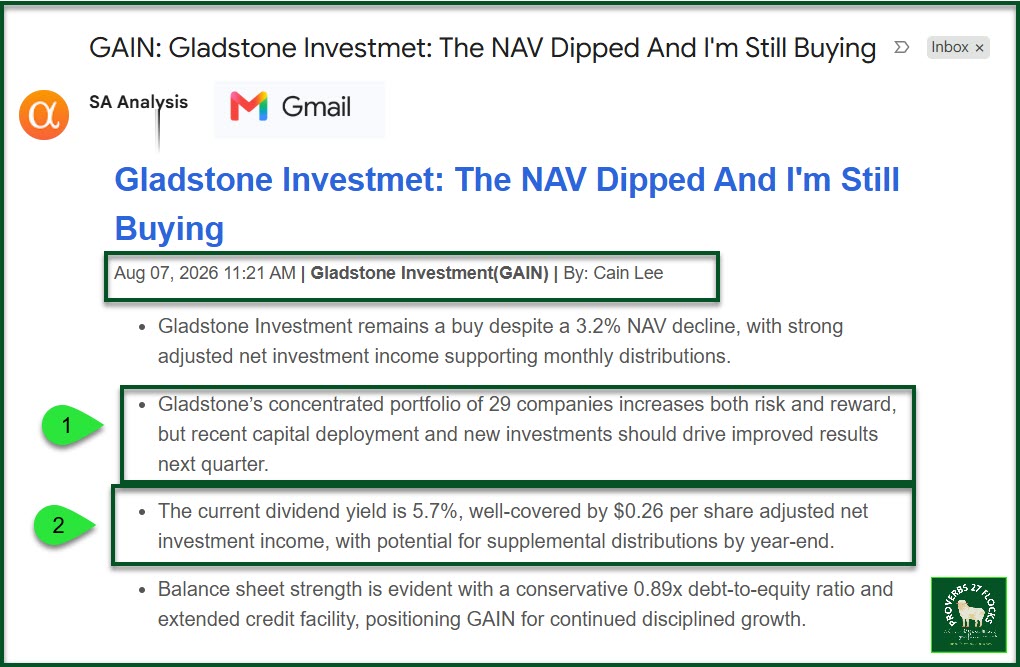
Seeking Alpha Subscription Information
Of all of the resources I use, the most helpful is Seeking Alpha. The Seeking Alpha QUANT rating is a huge factor in my investment success. If you decide to explore a Seeking Alpha subscription, please use the following link. Seeking Alpha
SEEKING ALPHA INFORMATION AND SUBSCRIPTION

You can also scan this QR Code to get the same information.

Past performance does not guarantee future results, Seeking Alpha does not provide personalized advice, and it is not a registered investment adviser.
We accept advertising compensation from companies that appear on our site. This website represents my opinions, which may not reflect those of Seeking Alpha, and does not constitute an investment recommendation or advice.

