

Or Perhaps Level 2 or Level 3?

Today I am in the hospital shown on the cover image for this post. I’m fine, but Cindie is having a painful knee replaced by an artificial knee. During the first part of the morning I was in the preparation room with her. The nurse, who was delightful, got the ball rolling. Questions about various risks were discussed. I believe the next person was a medical student (resident?) with a focus on eliminating and managing pain. She talked about options and various risks for each choice. Then the anesthesiologist came and there were more questions and various conversations about risk. The surgeon arrived and he marked the knee he would be replacing.
Even pain is measured at levels. Level one isn’t too bad, level five is difficult, and level ten is excruciating. We are used to “levels.”
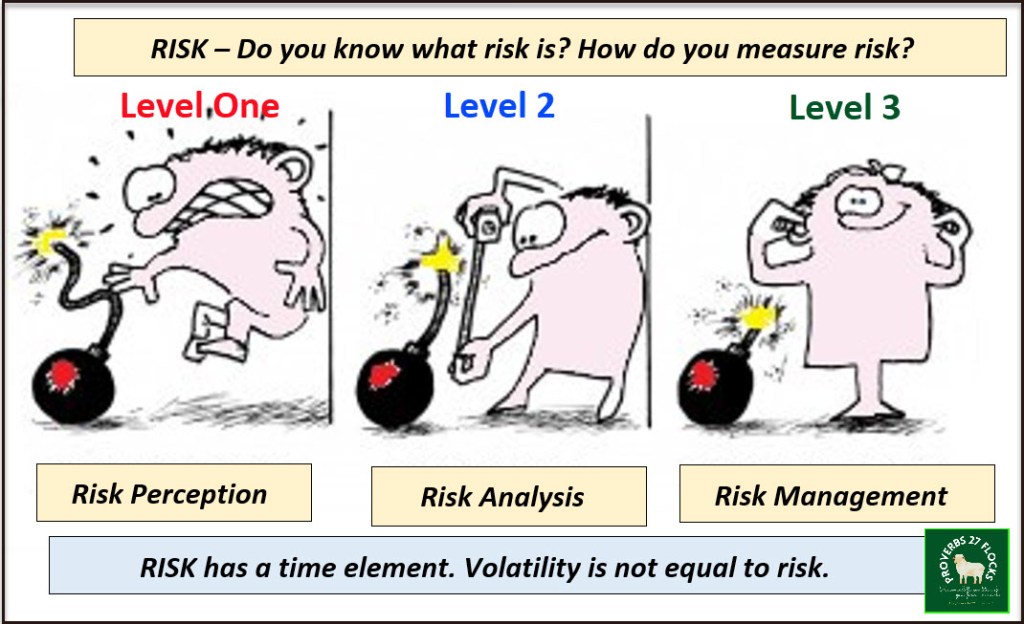
The Same True is Investing
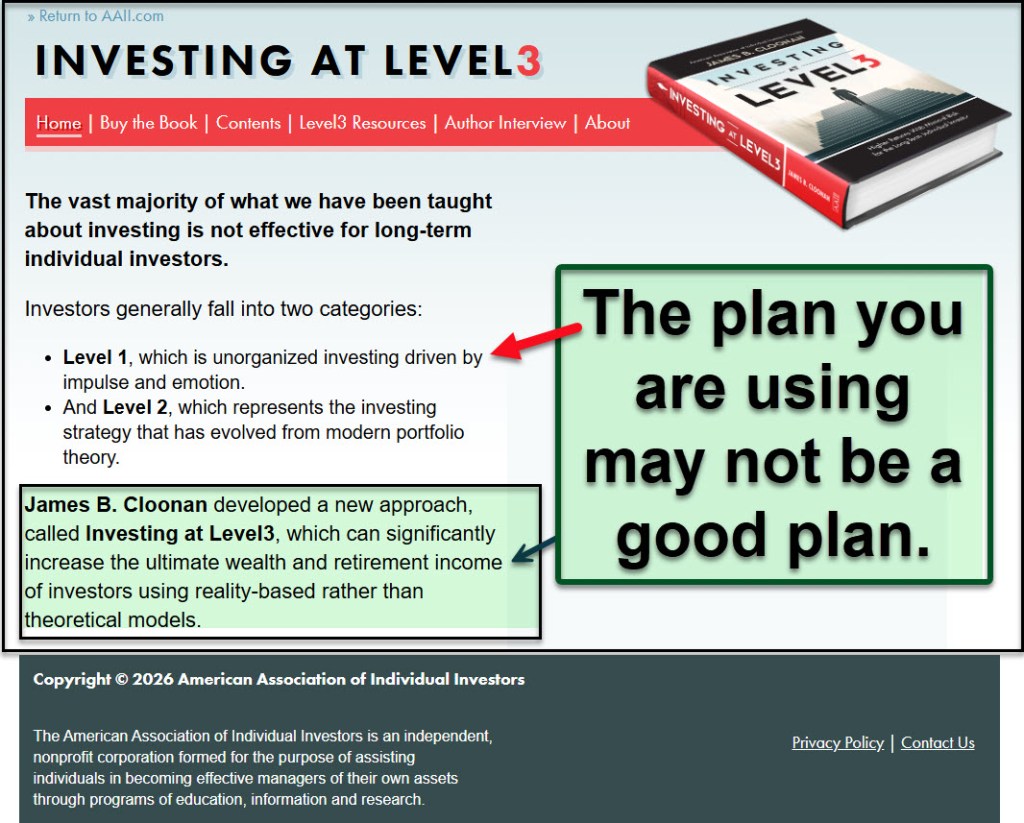
Most people fit into Level One when it comes to investing. Level one has a lack of organization, and it starts with failing to set goals or define results. Much of this level is characterized by emotional impulse decisions. Sometimes it is characterized by a lack of any meaningful decisios.
Level two is better. This level would be one that is often practiced by many in the mainstream financial and investment industry. It is known as “modern portfolio theory.”
Modern Portfolio Theory (MPT) is a framework in finance for building a portfolio of assets (like stocks or bonds) to maximize expected return for a given level of risk, or equivalently minimize risk for a given expected return.
Modern Portfolio Theory: Risk and Returns
The thinking is that risk comes from how assets move together, not just how risky each asset is on its own. Diversification matters because correlations can reduce portfolio volatility. But I would suggest that not all volatility is bad or undesirable.
Return and risk are treated probabilistically. Assets have expected returns and variances (volatility), and the portfolio’s overall risk depends on the mix and the covariance between assets. This is what causes many advisors and models to include bonds in a portfolio. It also causes advisors to allocate more-and-more to bond holdings as you get older. This, I believe, is a very dangerous path.
James B. Cloonan
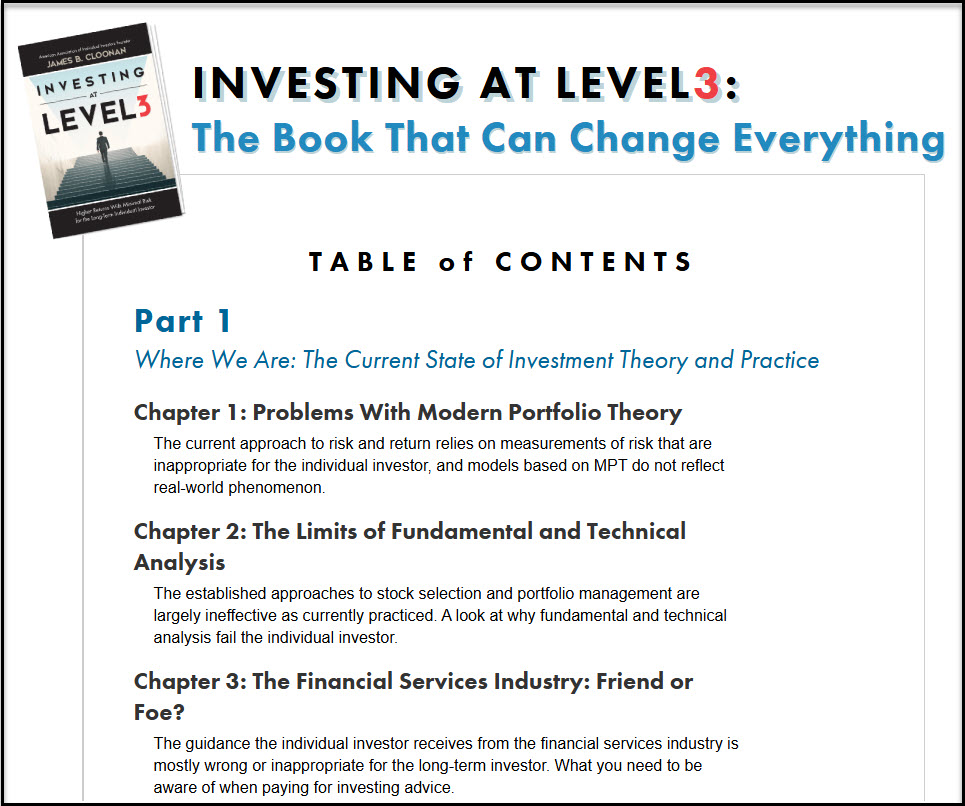
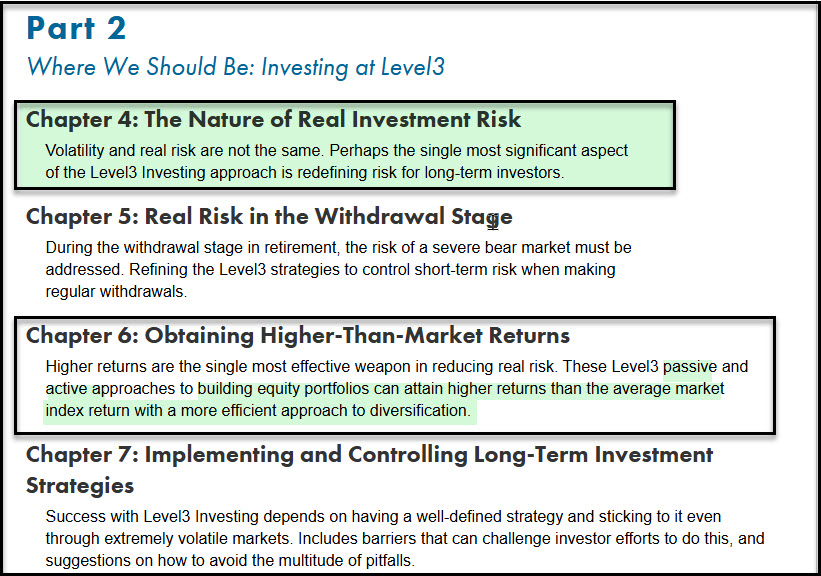
The founder of the American Association of Individual Investors (AAII) wrote a book: INVESTING at LEVEL 3.” His approach doesn’t disregard the realities of the market. He takes an honest look at things like “The Nature of Real Investment Risk” and “Implementing and Controlling Long-Term Investment Strategies.” I have a copy of his book, and it is a book I often recommend to anyone who gets serious about their investments and the next steps for wise investing. Level 3 investors work a bit more than the average person, and considerably more than the Level 1 and Level 2 investors.
How Seeking Alpha Helps Minimize Investment Risk
Seeking Alpha can help reduce investment risk indirectly by improving the quality of your information and analysis—but it doesn’t eliminate risk (especially market/valuation risk). Here are the main ways it can be useful:
More research signals, faster: You can find company-specific coverage, earnings analysis, and thesis updates, which can reduce “blind spots” and help you avoid obvious issues you might miss.
Crowdsourced viewpoints: Author write-ups often include bull/base/bear arguments. Comparing differing theses can help you pressure-test your assumptions (a key risk reducer).
Earnings & estimate tracking: Many pieces focus on guidance, revenue/earnings trends, and changes in analyst expectations—useful for spotting deteriorating fundamentals early.
Valuation frameworks: Authors frequently discuss valuation metrics (multiples, DCF-style reasoning, margin assumptions), which helps you check whether you’re paying an unusually high price for the risk you’re taking.
Quant/quality screens (when used): If you use any built-in or article-linked screening/metrics approaches, you can steer away from companies that fail certain profitability, leverage, or growth-quality criteria.
Red flags & catalyst monitoring: Some articles highlight regulatory, competitive, balance-sheet, or industry headwinds—reducing the chance you’re surprised by negative catalysts.
How To Use Risk Minimizing Tools
First of all, it is best to separate facts from opinions: Treat reported numbers as facts; treat conclusions as hypotheses. Always ask this question: “what would make this wrong?” Prefer bearish evidence or sensitivities (margin compression, dilution, demand slowdown, etc.). Don’t always assume the optimist’s position or view.
Cross-check key claims: Especially for revenue drivers, segment changes, and accounting-related points.
Use position sizing rules: Even strong research won’t make an asset risk-free—limit exposure to single names/sectors.
Build diversification on purpose: Use Seeking Alpha research to decide which risks you’re taking, then spread across uncorrelated opportunities.
Some Good News
I will end with some good news. I received a text that Cindie’s knee has been replaced and she is now in the recovery room. God is good.
Seeking Alpha Subscription Information

Of all of the resources I use, the most helpful is Seeking Alpha. The Seeking Alpha QUANT rating is a huge factor in my investment success. If you decide to explore a Seeking Alpha subscription, please use the following link. Seeking Alpha
SEEKING ALPHA INFORMATION AND SUBSCRIPTION
You can also scan this QR Code to get the same information.

Past performance does not guarantee future results, Seeking Alpha does not provide personalized advice, and it is not a registered investment adviser.
We accept advertising compensation from companies that appear on our site. This website represents my opinions, which may not reflect those of Seeking Alpha, and does not constitute an investment recommendation or advice.
If you have any questions or problems getting connected to Seeking Alpha, reach out to them with this email address: subscriptions@seekingalpha.com

