
A Pivot Table
A pivot table is a thing. When I am working on a complex spreadsheet, it is often difficult to see the most important things. One of the tools I use in Excel is called the “pivot table.” When there are 200 rows of information, it is likely that some of the information is easier to understand in a summary format. A pivot table helps me see important things. It summarizes large sets of data, allowing for analysis: to easily see comparisons, patterns, and trends.
As a result, I might act. I could pivot in my investing if I am looking at our investment holdings. I might change course or my current course might be confirmed.
Pivotal Points in God’s Revelation
Those who read the Bible should be looking for the pivotal points. Recognizing them can help me make changes in my thinking, priorities and even in my understanding of my purpose in this life.
Some key pivotal events in the book of Genesis are the accounts of the creation, the fall of man, and covenant beginnings. God makes promises in the book of Genesis. Some of those promises are to Adam, some are to Noah, and some are to Abraham. Each of these promises is pivotal for understanding the rest of the Bible.
For example, we learn that our good works are NOT the basis of righteousness. Rather, Abraham’s faith was “counted as righteousness.” The Passover (recorded in the book of Exodus) was an important reminder of God’s provision and protection. The ten commandments in that same book make it clear that we do not keep God’s righteous law. We learn we are sinners and are not righteous when we read the law.
The Pivots in Paul’s Letter to the Church in Rome
Paul makes it clear that the account in Genesis is still in force. Romans 3:21-26 makes it clear that justification is by faith. We cannot please God with good works apart from faith in the work of the Lord Jesus Christ. Having faith is a pivotal moment. In fact, it is so pivotal it is noted as a point where we pivot to having peace with God through Christ (Romans 5:6-11).
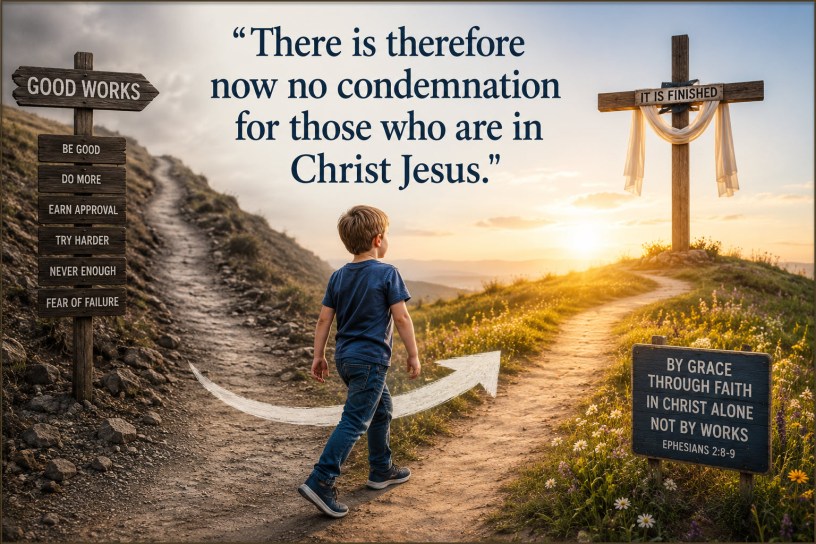
The big pivot in Romans is found in chapter eight. Romans 8:1-8 makes this abundantly clear.
“There is therefore now no condemnation for those who are in Christ Jesus. For the law of the Spirit of life has set you free in Christ Jesus from the law of sin and death. For God has done what the law, weakened by the flesh, could not do. By sending his own Son in the likeness of sinful flesh and for sin, he condemned sin in the flesh, in order that the righteous requirement of the law might be fulfilled in us, who walk not according to the flesh but according to the Spirit. For those who live according to the flesh set their minds on the things of the flesh, but those who live according to the Spirit set their minds on the things of the Spirit. For to set the mind on the flesh is death, but to set the mind on the Spirit is life and peace. For the mind that is set on the flesh is hostile to God, for it does not submit to God’s law; indeed, it cannot. Those who are in the flesh cannot please God.”
How to Identify a Follower of Jesus
Ephesians 5:1-3 expresses what a life of faith in Christ’s sacrifice looks like.
“Therefore be imitators of God, as beloved children. And walk in love, as Christ loved us and gave himself up for us, a fragrant offering and sacrifice to God. But sexual immorality and all impurity or covetousness must not even be named among you, as is proper among saints.”
Five Minute Friday
This post is part of the weekly Five-Minute Friday link-up.
All scripture passages are from the English Standard Version except as otherwise noted.

