
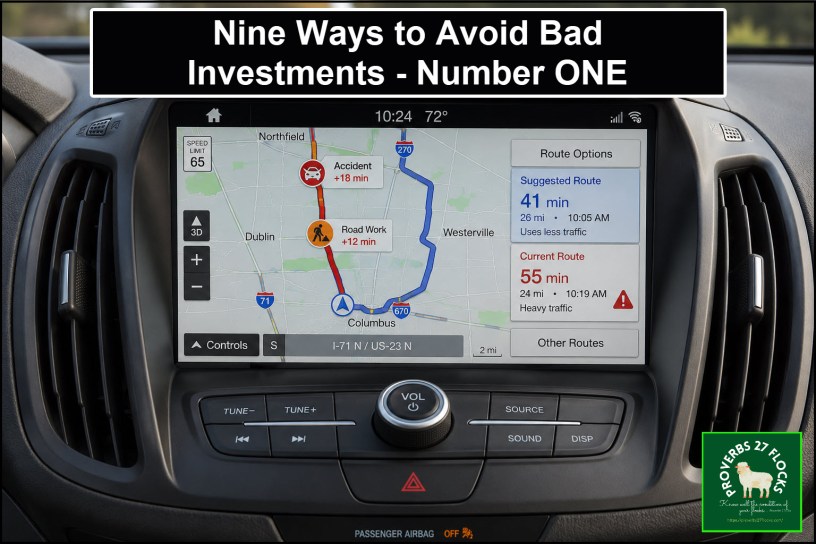
Where Is the Congestion or the Problems?
Investing is like choosing a route from one city to another. You can pick certain roads. Multiple routes might work, but they vary in speed and distance. Most drivers want a safe route that doesn’t delay reaching the goal. In this nine-part series I hope to shed light on the best route for success.
Look at the Data: Get Information
How does your GPS know about problems down the road? I asked AI this question, and here are some of the things it told me, and they boil down to one theme: It is about the known data. Systems are collecting, aggregating, and analyzing real-time location and speed data from many devices and other sensors, then comparing that to expected travel times. Key components include crowd sourced data (smartphones, navigation units, and connected vehicles that send GPS locations and speeds; large slowdowns in an area signal congestion).
Infrastructure sources lend a hand. This includes traffic sensors, road-loop detectors, cameras, and Bluetooth/Wi‑Fi beacons that provide counts and speeds. In addition, information can come from third‑party feeds like incident reports from police, road authorities, and traffic data providers that supply crash information, construction in the road ahead, and lane closures.
Nine Tips for Traveling the Investment Road
What I find interesting about the GPS model is that the data comes from multiple sources with varied perspectives. Some of them are historical (expected travel times) and some are a current view. Investors should have a similar set of basic information sources. Here is the first of the nine. The other eight will be discussed in future posts. These are not necessarily in order of importance.
Number One: Second Opinions (or third opinions!)
The GPS uses multiple information sources. As an investor you should too. While I am a fan of the Seeking Alpha Quant rating, I also see value in Fidelity’s Equity Summary Score as well. I have used other sources in the past, including Weiss Ratings, Wallmine and StockRover.
Fidelity and Seeking Alpha keep it simple. I will start with two key images.
Fidelity Investments
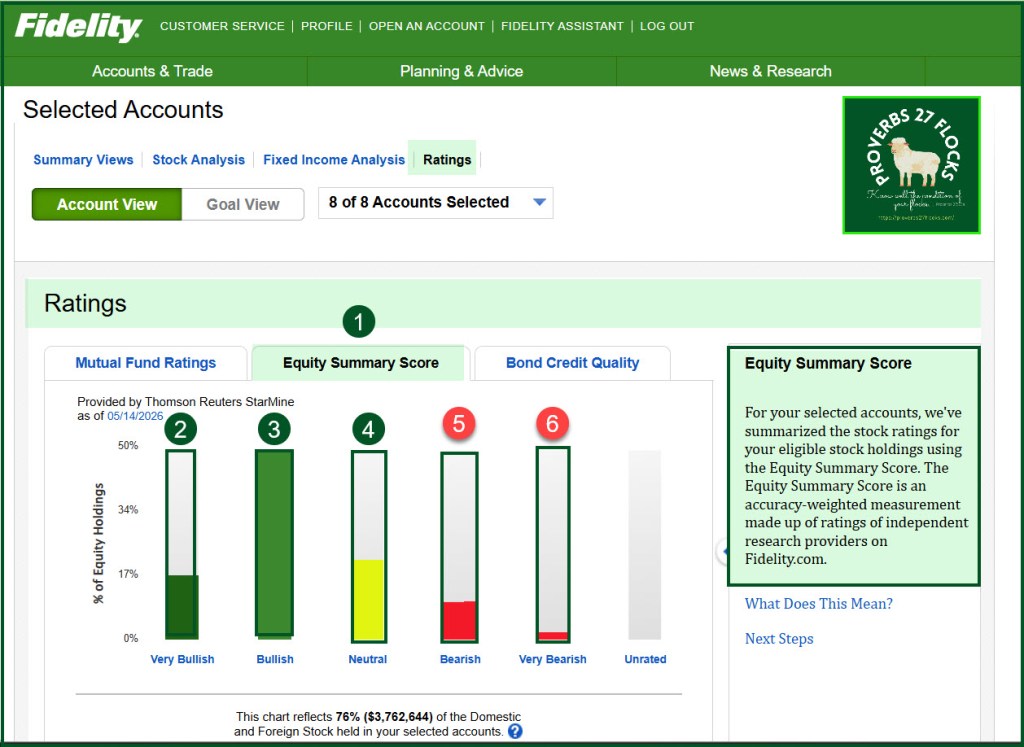
The first is Fidelity’s Equity Summary Score (ESS) for our eight investment accounts at Fidelity. Note that the vast majority of our investments are currently rated as “Very Bullish” and “Bullish.” While some are “Neutral” that doesn’t mean they are necessarily bad investments. However, any investment that is “Bearish” or “Very Bearish” bears (pun intended) watching.
Seeking Alpha
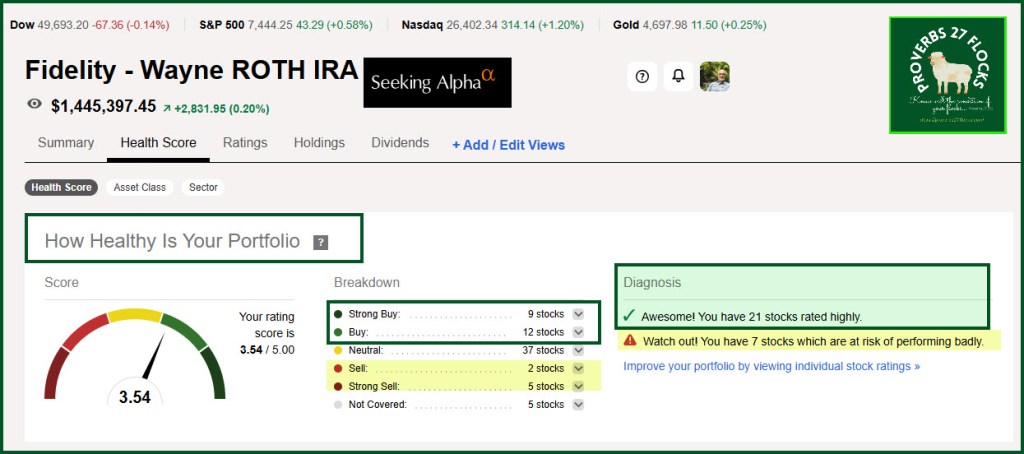
I have connected our eight accounts to my paid Seeking Alpha subscription. This gives me a lot of useful information, including a high-level view of the quality of our investments by account. Because my ROTH IRA is one of our largest accounts in total dollars, I chose that one for this illustration.
This resource helps me see “How Healthy is Your Portfolio.” The ratings are being provided for information purposes only. Strong Buy, Buy, Hold, Sell, Strong Sell ratings do not constitute a specific call to action or advice for any individual to buy, hold, or sell a certain stock. However, they can be informative.
How You Compare: This module compares your Portfolio Health Check score to the scores of all other Seeking Alpha Portfolios. In other words, are you a leader, just average, or a laggard compared to other (hopefully) wise investors?
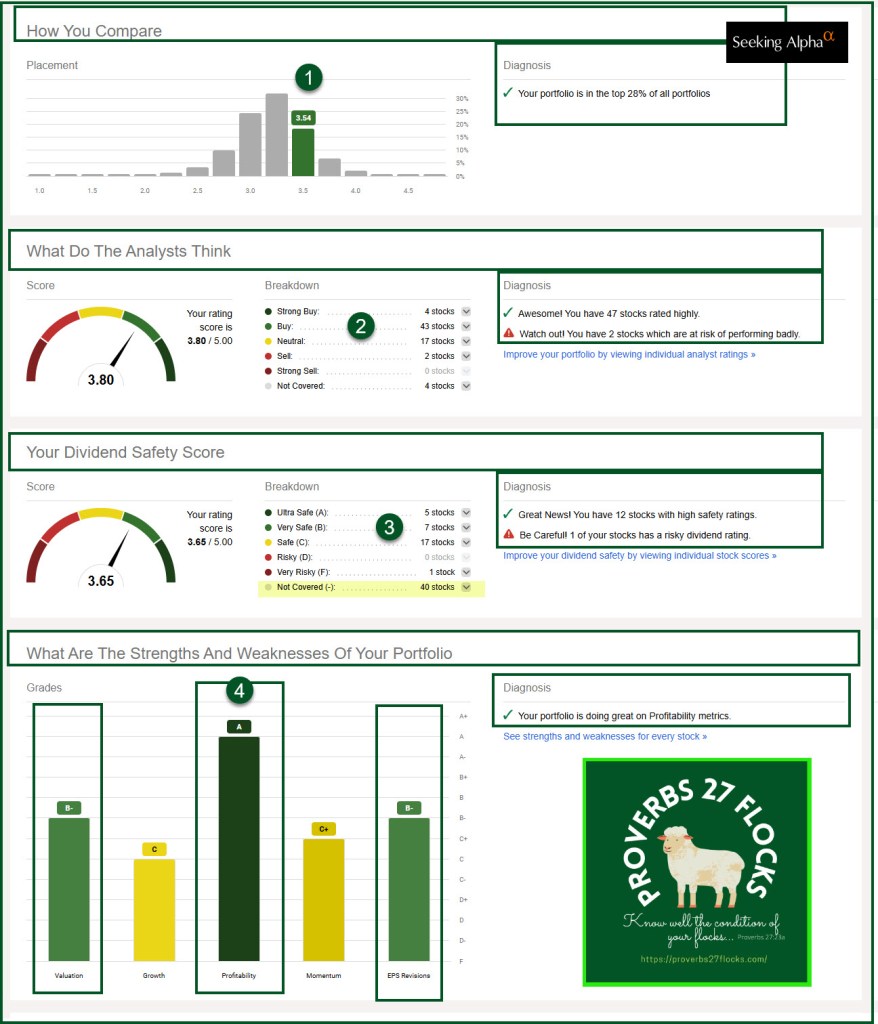
What Do The Analysts Think? The analyst opinions are in addition to the QUANT rating. It is like having another opinion, within the Seeking Alpha world.
Your Dividend Safety Score: These ratings provide information that can help you know if your income stream from dividends is at risk. Are your dividends Ultra Safe, Very Safe, Safe, Risky, or Very Risky? It is like asking, “will my employer be able to pay me this year?”
What Are The Strengths And Weaknesses Of Your Portfolio? The ratings are provided for information purposes only. Valuation, Growth, Profitability, Momentum, EPS Revision ratings ranging from A-F do not constitute a specific call to action or advice for any individual to buy, hold, or sell a certain stock. However, if an investment is not profitable or has a ridiculous valuation, then you should consider avoiding that investment.
Two Other Pieces
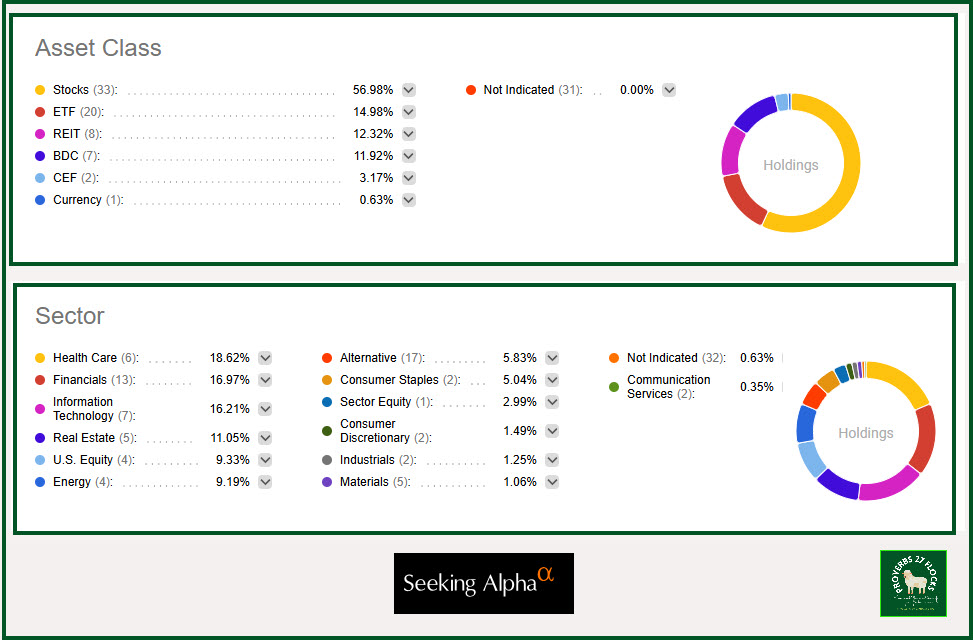
Seeking Alpha also provides a high-level view of your investments by “Asset Class” and “Sector.” Always watch your investments for diversification and for focus.
Summary
Do you just let a “professional” manage your retirement investments? They may have a rather limited view and may also have biases that are not in your favor. When Cindie’s mom asked me to start managing her investment accounts it became quite clear that one of her advisors was not a wise person. I fired him and moved her account to Fidelity Investments. Her mix of investments was changed. Sadly, the mismanagement had cost her dearly. However, I was able to prevent further degradation of her accounts by taking control of her investment portfolio.
Seeking Alpha Subscription Information
Of all of the resources I use, the most helpful is Seeking Alpha. The Seeking Alpha QUANT rating is a huge factor in my investment success. If you decide to explore a Seeking Alpha subscription, please use the following link. Seeking Alpha
SEEKING ALPHA INFORMATION AND SUBSCRIPTION
You can also scan this QR Code to get the same information.

Past performance does not guarantee future results, Seeking Alpha does not provide personalized advice, and it is not a registered investment adviser.
We accept advertising compensation from companies that appear on our site. This website represents my opinions, which may not reflect those of Seeking Alpha, and does not constitute an investment recommendation or advice.
If you have any questions or problems getting connected to Seeking Alpha, reach out to them with this email address: subscriptions@seekingalpha.com

