

Social Security Minus Taxes

Never delude yourself into thinking that the government is looking for ways to reduce your income taxes. They don’t call it that, but they have multiple steams of income. Consider filling your tank at the pump. In the U.S., the federal fuel tax is 18.4¢ per gallon of regular gasoline and 24.4¢ per gallon of diesel. Those totals include a 0.1¢-per-gallon underground-storage-tank fee. State and local taxes are additional. You don’t have to be “wealthy” to pay these taxes. I doubt most consumers really understand the “price at the pump” includes a huge tax.
We live in Wisconsin. Wisconsin’s motor-fuel excise tax is 30.9¢ per gallon for both gasoline and diesel. There’s also a 2¢-per-gallon petroleum inspection fee, bringing the Wisconsin state charges to 32.9¢ per gallon for each fuel. Including the federal taxes I mentioned earlier, that’s 51.3¢ per gallon for gasoline and 57.3¢ per gallon for diesel—before any other applicable charges.

According to the U.S. Department of Energy, a reasonable estimate for annual fuel purchases is about 450–660 gallons per year per personal vehicle, depending on whether it’s a car or a light truck/SUV. The U.S. Department of Energy’s latest figures show annual fuel use of 447 gallons for a car and 663 gallons for a light truck/van (2023 data). These are per vehicle. So, if you buy 600 gallons of fuel in Wisconsin, you are paying over $300 in “hidden” taxes.
Other “Hidden” or Surprise Taxes
When a young person first starts working, most of them are a bit shocked to see a big chunk of their pay withheld. It isn’t uncommon for there to be disappointment when they see their first payday. This is due to the way we fund Social Security and Medicare.
The main one most workers pay is Social Security and Medicare payroll tax (FICA), usually withheld from each paycheck. In 2026, employees pay 6.2% for Social Security on wages up to $184,500, plus 1.45% for Medicare on all covered wages—a combined 7.65%. Employers pay a matching share. Self-employed people generally pay both shares.
Most people also pay some federal excise taxes indirectly when buying certain things, especially fuel, airline tickets, and—if they buy them—alcohol and tobacco. These taxes are often built into the price rather than itemized on a receipt.
Some taxes apply only in particular situations—for example, an additional Medicare tax for higher earners, or estate and gift taxes for certain transfers of wealth.
The 2027 Medicare Tax Increases
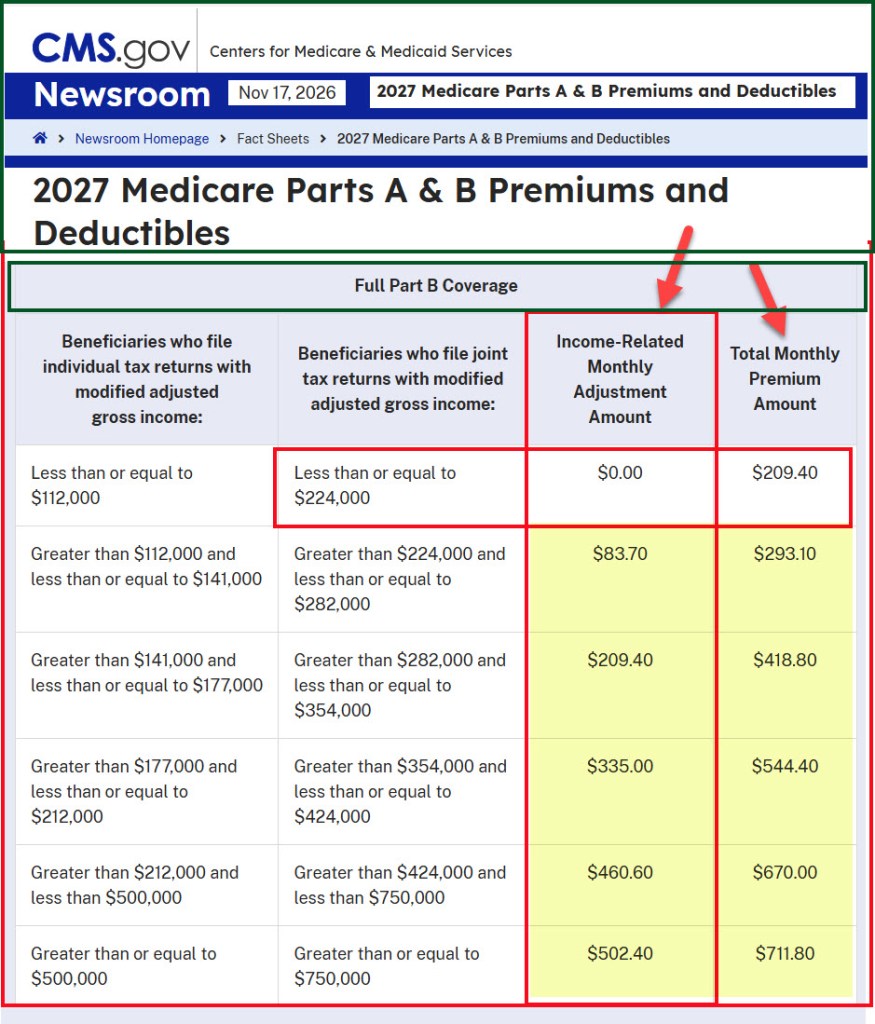
Never assume the Social Security’s estimate of your monthly income is what you will receive. Most will be paying for Medicare Part B and Medicare Part D coverage. It can become quite ugly. Even the 3.0% “cost of living adjustment” is going to be eaten by increases in Medicare premiums.
“On November 17, 2026, the Centers for Medicare & Medicaid Services (CMS) released the 2027 Medicare Part A and Part B programs premiums, deductibles, and coinsurance, and the 2027 Medicare Part D income-related monthly adjustment amounts.” – CMS.gov
“Each year, the Medicare Part B premium, deductible, and coinsurance rates are determined according to provisions of the Social Security Act. The standard monthly premium for Medicare Part B enrollees will be $209.40 for 2027, an increase of $6.50 from $202.90 in 2026. The annual deductible for all Medicare Part B beneficiaries will be $292 in 2027, an increase of $9 from the annual deductible of $283 in 2026.” – CMS.gov
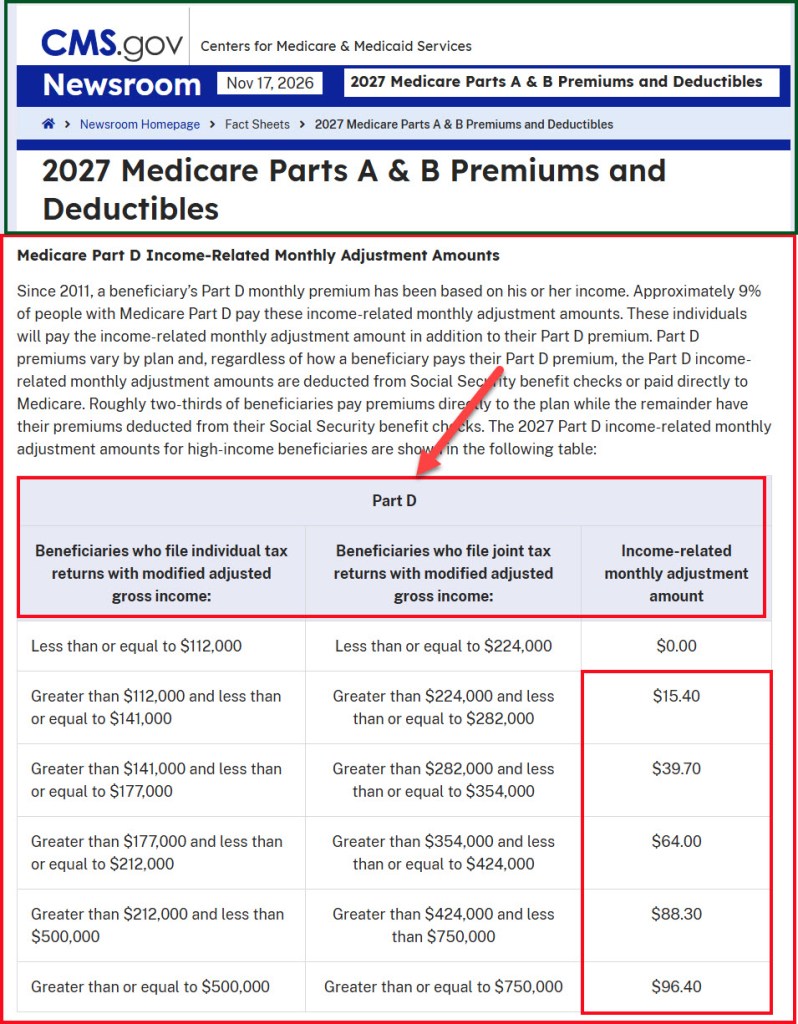
Medicare Part D Income-Related Monthly Adjustment Amounts
“Since 2011, a beneficiary’s Part D monthly premium has been based on his or her income. Approximately 9% of people with Medicare Part D pay these income-related monthly adjustment amounts. These individuals will pay the income-related monthly adjustment amount in addition to their Part D premium.” – CMS.gov
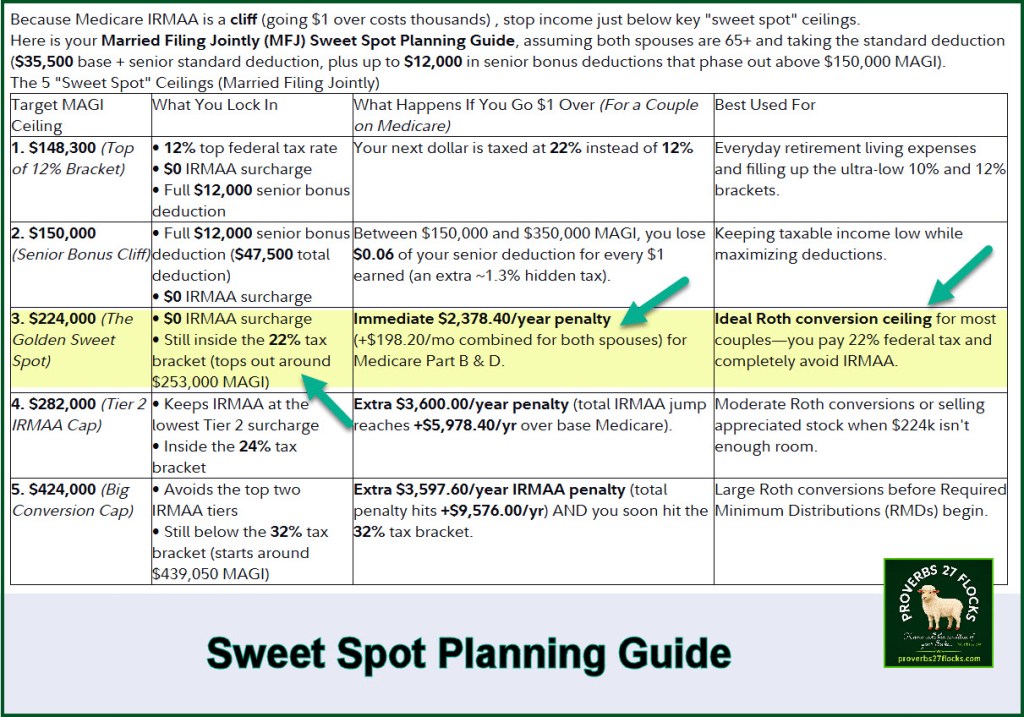
Sweet Spot Planning Guide
One of the participants in the Fidelity Investments community forum provided the following helpful guide for those with high incomes. Remember, you might wind up being “high income” due to your RMD’s from taxable traditional IRA and 401(k) accounts!
Tax Planning To-Do List
You don’t have to enter retirement ignorant. Start by knowing what your projected Social Security monthly payment will be. Then add in income from taxable investments, including the RMDs you will be withdrawing from traditional retirement accounts. Then start subtracting the government’s portion and the things you aren’t thinking about. The following image provides some guidance. It is only a piece of the equation, so be prepared to be surprised.

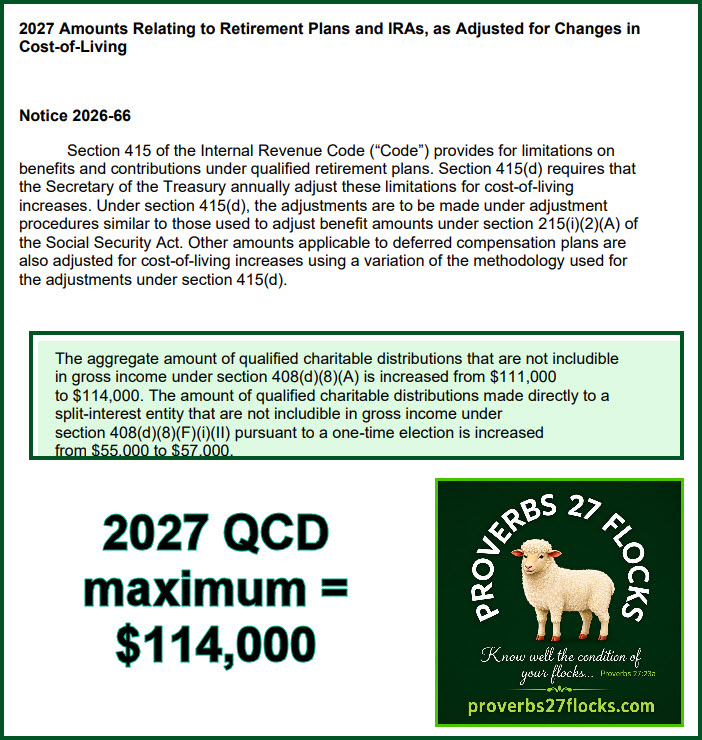
Also, don’t forget that ROTH conversions add to your taxable income, but QCD giving from a taxable IRA can help keep your income in check. For 2027 the QCD limit has been raised to $114,000.
Seeking Alpha Subscription Information
Of all of the resources I use, the most helpful is Seeking Alpha Premium. The Seeking Alpha QUANT rating is a huge factor in my investment success. If you decide to explore a Seeking Alpha subscription, please use the following link. Seeking Alpha

SEEKING ALPHA INFORMATION AND Types of SUBSCRIPTIONS
There are several ways to subscribe to Seeking Alpha services. I use the “Seeking Alpha Premium” service. The other ones are 1) Alpha Picks, 2) Bundle Premium and Alpha Picks, and 3) Quant Growth and Income. The links for the promotions are on each of these four choices. I highly recommend “Seeking Alpha Premium” as a place to start.
You can also scan this QR Code to get the same information about Seeking Alpha Premium.

Past performance does not guarantee future results, Seeking Alpha does not provide personalized advice, and it is not a registered investment adviser.
We accept advertising compensation from companies that appear on our site. This website represents my opinions, which may not reflect those of Seeking Alpha, and does not constitute an investment recommendation or advice.
If you have any questions or problems getting connected to Seeking Alpha, reach out to them with this email address: subscriptions@seekingalpha.com

