

Financial Sector Investments

My portfolio has changed since my last post in this series. I sold our shares of CAG (Conagra). However, that change hasn’t significantly altered the overall allocation of our investment dollars. One section of our portfolio that remains unchanged over time is focused on the financial stocks.
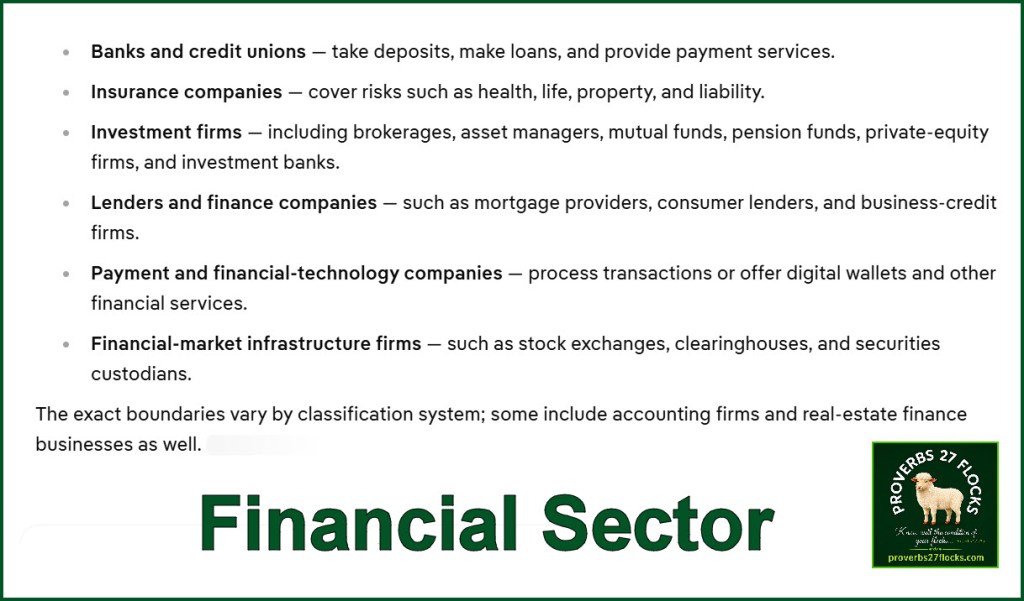
The financial sector includes several different types of companies that are classified by “Industry” and by “Industry Group.” The financial sector includes companies that manage money, move payments, provide credit, or help people and businesses manage financial risks. In other words, it includes banks and credit unions, insurance companies, investment firms, lenders and finance companies, payment and financial-technology companies and financial-market infrastructure firms.
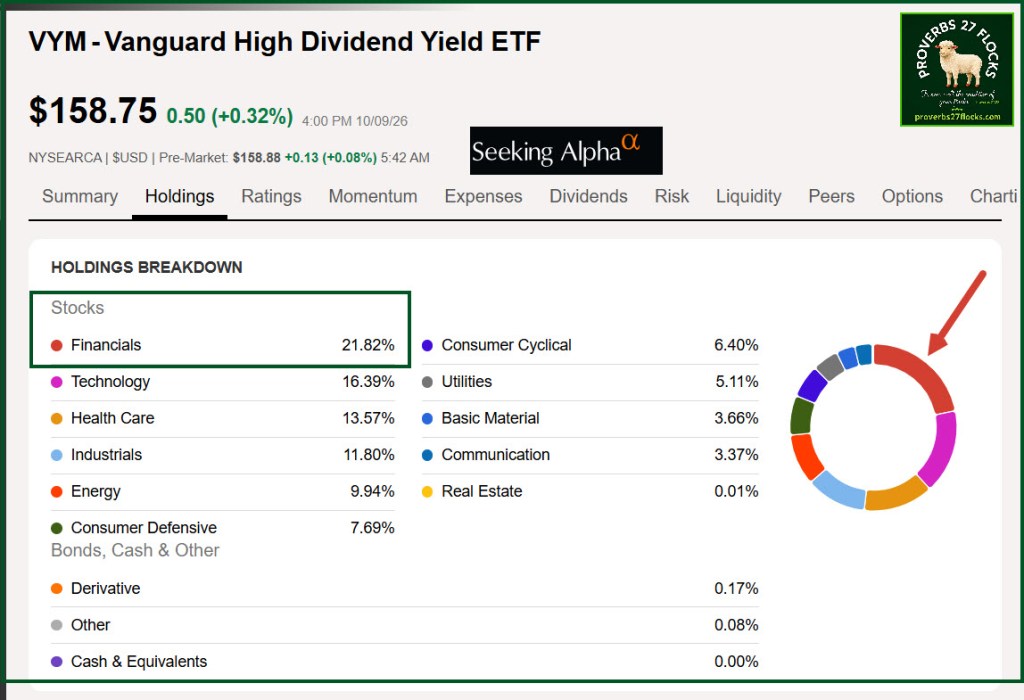
One way to get exposure to the Financial sector is to buy ETFs or low-cost mutual funds that hold financial-focused investments. For example, the Vanguard High Dividend Yield ETF (VYM) has over 21% of the fund’s assets in the financial sector. By way of contrast, the S&P 500 (SPY) only has 11.4% of the total assets in that same sector. If you buy a sector-focused ETF like FNCL (Fidelity MSCI Financials Index ETF) you get 100% focus on this sector. However, you also get a diluted dividend yield of 1.67%. That is fine pre-retirement, but not very attractive in retirement if you want regular income from your investments.
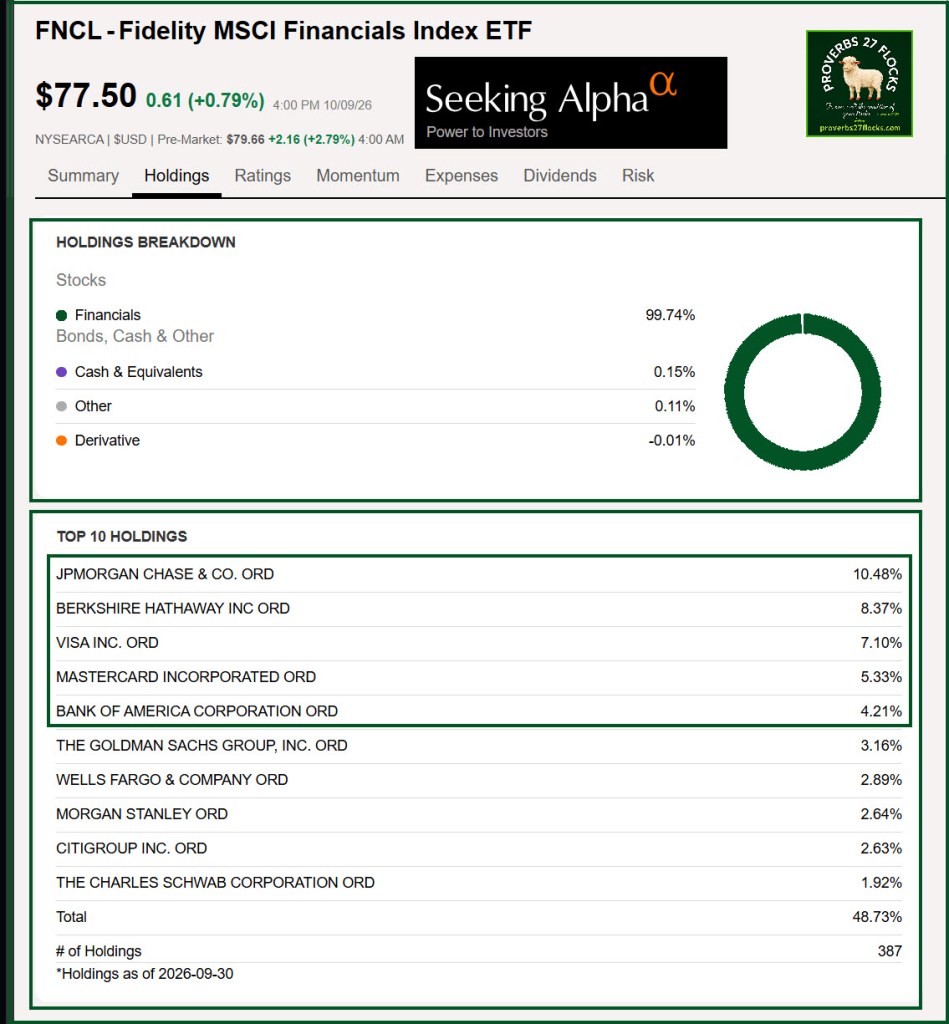
FNCL has investments like JPMorgan Chase Berkshire Hathaway, VISA INC., MASTERCARD, and Bank of America. Those make up about 35% of the ETF.
My Spreadsheet
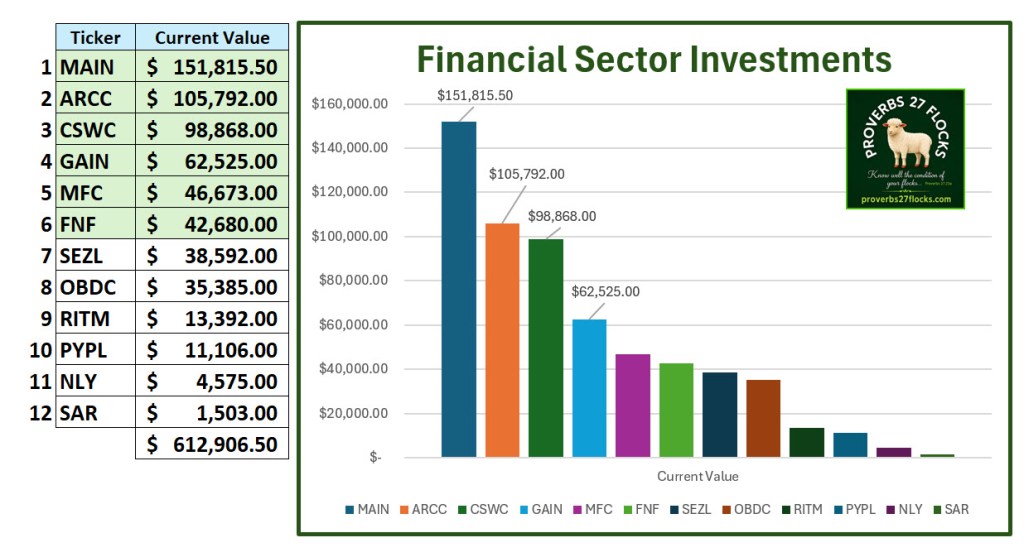
The following spreadsheet image shows all of our current “Financial Sector” dividend investments. As you can see, the total dollars invested in the sector is about $612.9K and that is currently about 16.6% of our total holdings. If you have a smaller account balance, more of your total holdings should be in low-cost mutual funds and/or low-cost ETFs, not in these stocks. When choosing financial stocks, always look at the QUANT rating.
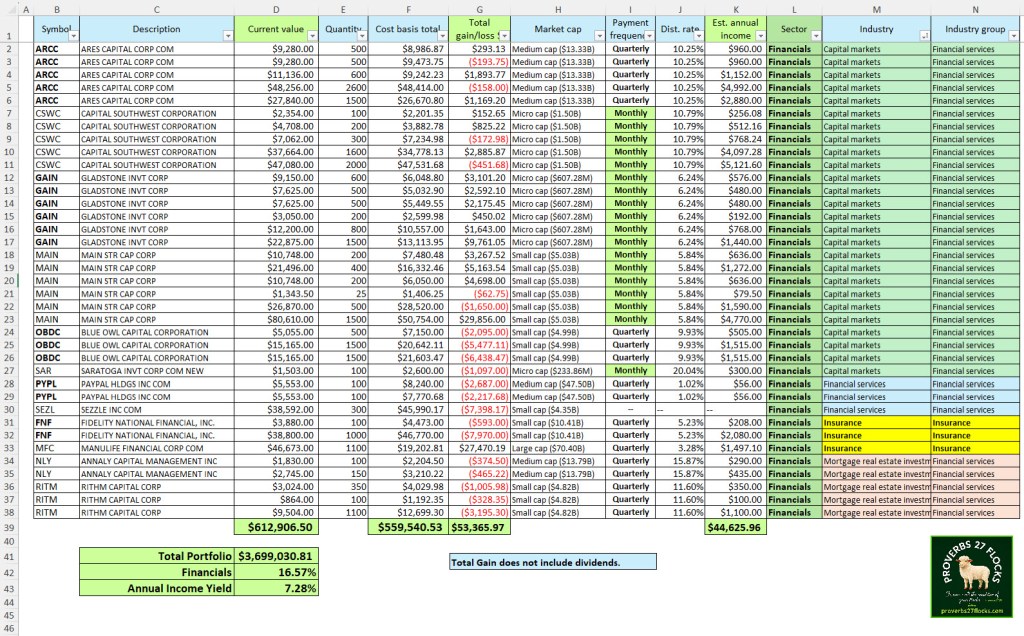
As a reminder, total returns matter. Therefore, remember that the holdings that show a “loss” are really not a loss. That is due to the fact that I have already received considerable dividends from these investments. Also, remember that our ETF holdings, like VYM, DGRO, and SCHD, all contain financial sector investments. Those are not reflected in this analysis.
The Financial Pivot Table Summary
The next image moved the positions into an Excel pivot table to summarize by ticker symbol. It should be obvious that I have a significant investment in BDCs like MAIN, ARCC, CSWC, and GAIN. Investments 7 through 12 are far more speculative and I cannot recommend them for the average investor or the faint of heart. In fact, if you look at the current QUANT ratings for all of these investments, you probably should be extra cautious about allocating more than a couple percentage points of your total dollars to my top six.
Summary
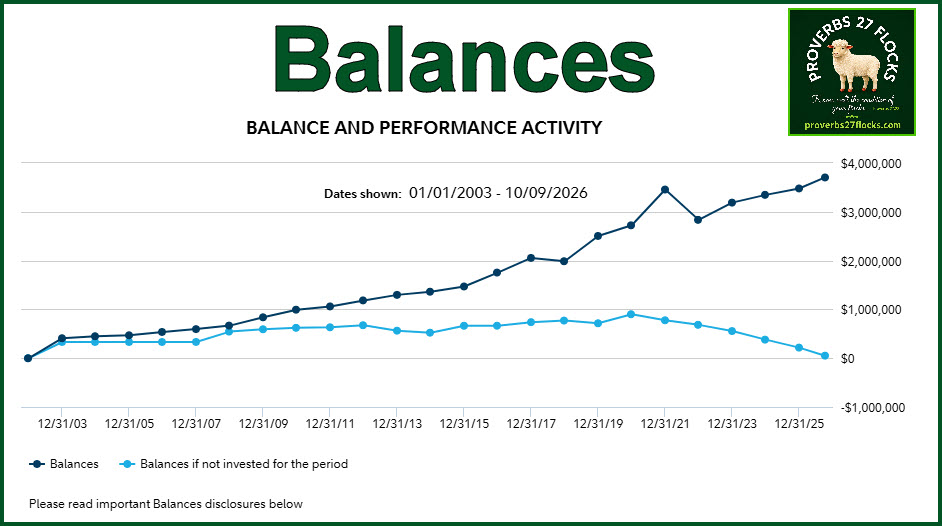
Don’t get hung up on mimicking my holdings or percentages. Rather, look at how your investments are performing. Over time you should see an upward trend. I think average annual returns of 9-10% are more than adequate if you stay invested and don’t overreact to bear markets, wars, Covid-19 scares and the dot.com crash. I doubt that you will get 10% returns if you invest in bonds or bond funds. Annuities are another dead end.
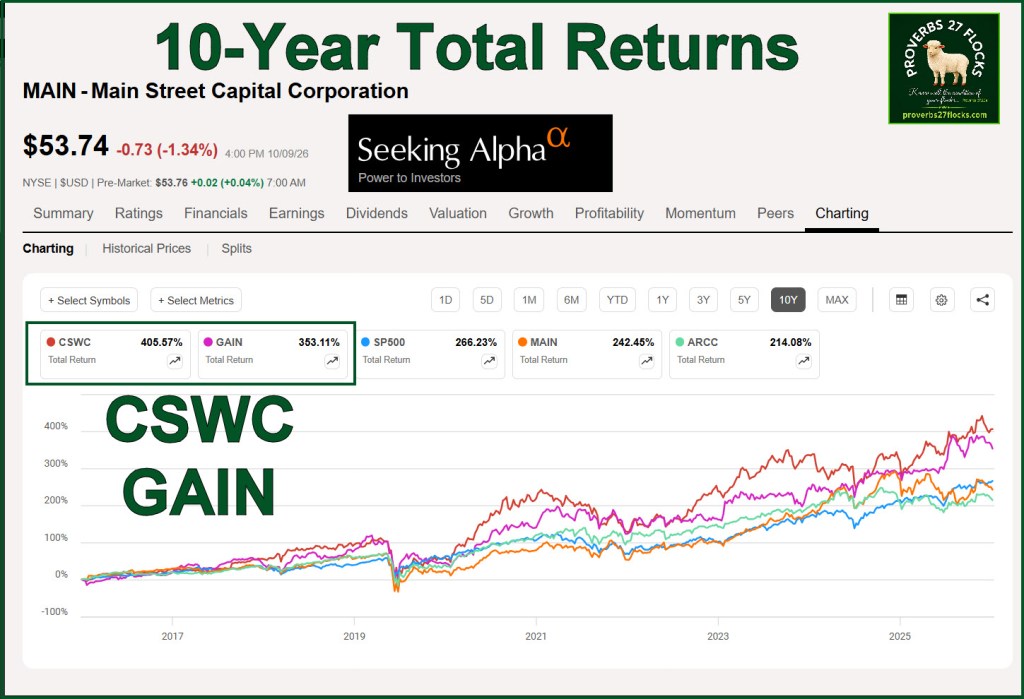
If you look at the total ten-year returns (price appreciation plus dividends) investments like CSWC and GAIN can be very, very attractive. Don’t be greedy. The temptation is to load up on these and not be diversified in your portfolio.
As always, I welcome questions and comments. They help me understand the needs of my readers.
Seeking Alpha Subscription Information
Of all of the resources I use, the most helpful is Seeking Alpha Premium. The Seeking Alpha QUANT rating is a huge factor in my investment success. If you decide to explore a Seeking Alpha subscription, please use the following link. Seeking Alpha

SEEKING ALPHA INFORMATION AND Types of SUBSCRIPTIONS
There are several ways to subscribe to Seeking Alpha services. I use the “Seeking Alpha Premium” service. The other ones are 1) Alpha Picks, 2) Bundle Premium and Alpha Picks, and 3) Quant Growth and Income. The links for the promotions are on each of these four choices. I highly recommend “Seeking Alpha Premium” as a place to start.
You can also scan this QR Code to get the same information about Seeking Alpha Premium.

Past performance does not guarantee future results, Seeking Alpha does not provide personalized advice, and it is not a registered investment adviser.
We accept advertising compensation from companies that appear on our site. This website represents my opinions, which may not reflect those of Seeking Alpha, and does not constitute an investment recommendation or advice.
If you have any questions or problems getting connected to Seeking Alpha, reach out to them with this email address: subscriptions@seekingalpha.com

