
Is Your Investment Advisor Safe?
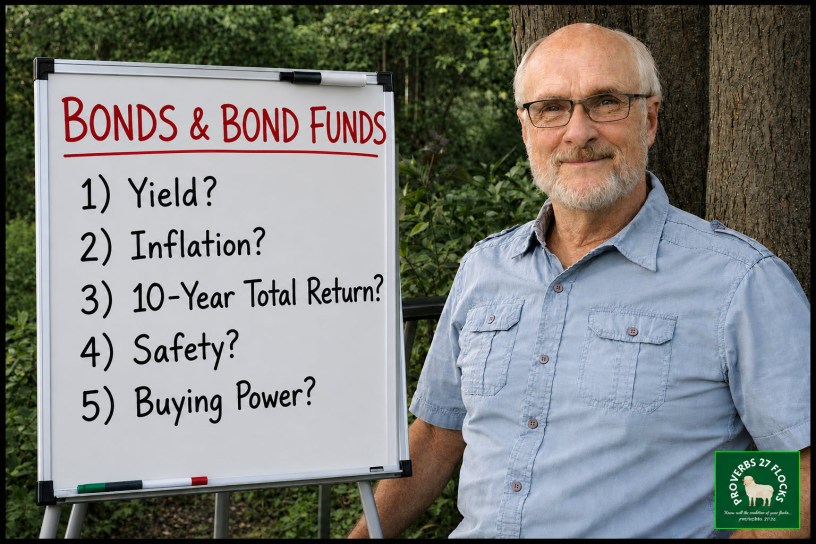
Far too many investors make decisions based on yield. I certainly like dividend yield, but I don’t just look at yield. I want safe, growing dividends. The problem with “safe” when used in the context of investing is that it is often used for assets that I view as full of risk. Some investments might be “conservative” which I view as another way of saying “I’m afraid.” Fear can cause people to do very irrational things. They fear the wrong things for the wrong reasons.
If your financial advisor has a large allocation of bonds in your investment accounts you should understand something about the so-called safety of bonds. There is no such thing. If you are really wanting to preserve your capital, you are far better off just buying CDs. Bonds lose by any metric that I have ever seen. They are not victorious when you consider inflation, and you can lose money with bonds. The yield of some bonds is certainly attractive, but even that is an illusion. If your bonds underperform inflation then you lose buying power.
So when you evaluate your investments, be careful to consider inflation (buying power over time) and 10-Year Total Returns.
Two Bond Funds: AGG and VSDB
AGG (iShares Core US Aggregate Bond ETF) and VSDB (Vanguard Short Duration Bond ETF) are worthy of some analysis. What are the real returns?
The ten-year returns for the Bloomberg U.S. Aggregate Bond Index
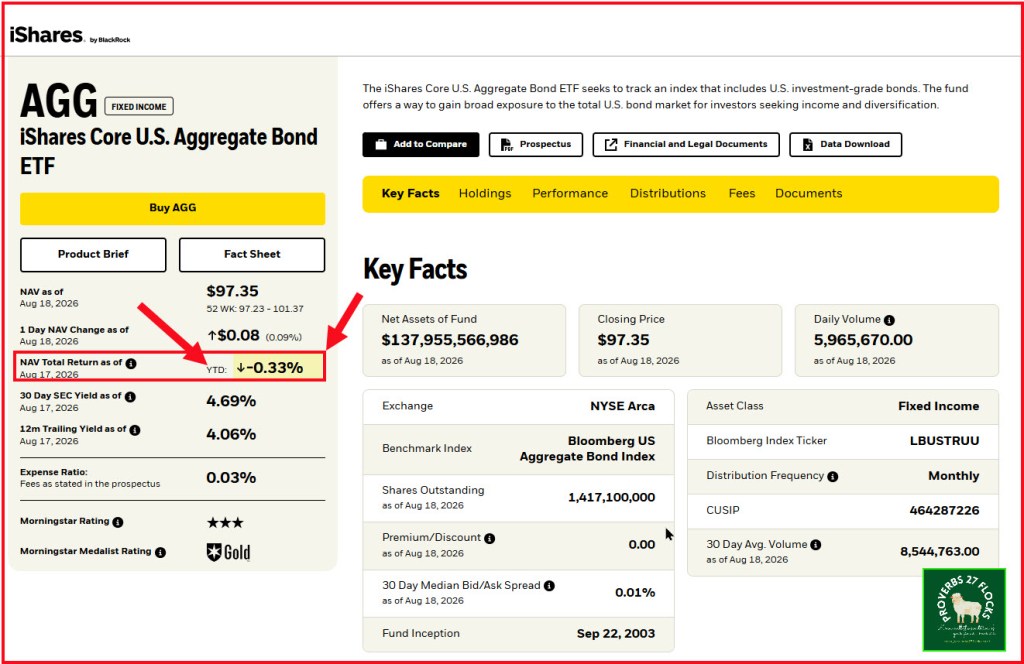
This index is widely used. A close proxy is the ETF that tracks it, iShares Core U.S. Aggregate Bond ETF (AGG). On BlackRock’s page for a fund benchmarked to the Bloomberg US Aggregate Bond Index, the 10-year Total Return shown is ~1.20% (average annual) as of Jul 31, 2026.
What are the 10-year annualized returns for the iShares Core U.S. Aggregate Bond ETF (AGG)?
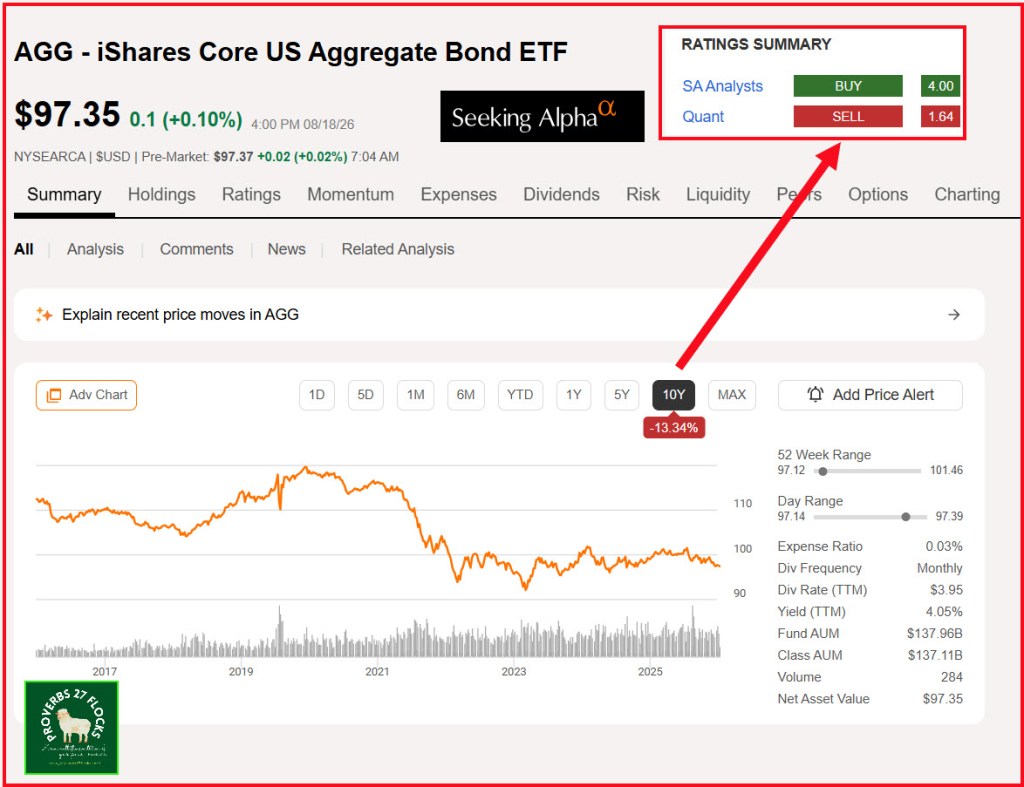
On BlackRock’s iShares product page for AGG, the 10-year total return (average annual / annualized) is 1.52% (as of the page’s “as of” date of Jul 31, 2026). Look at 1.52% and then think about your buying power after ten years of inflation. Is AGG safe? Yes, you still have your original investment, but at what cost?
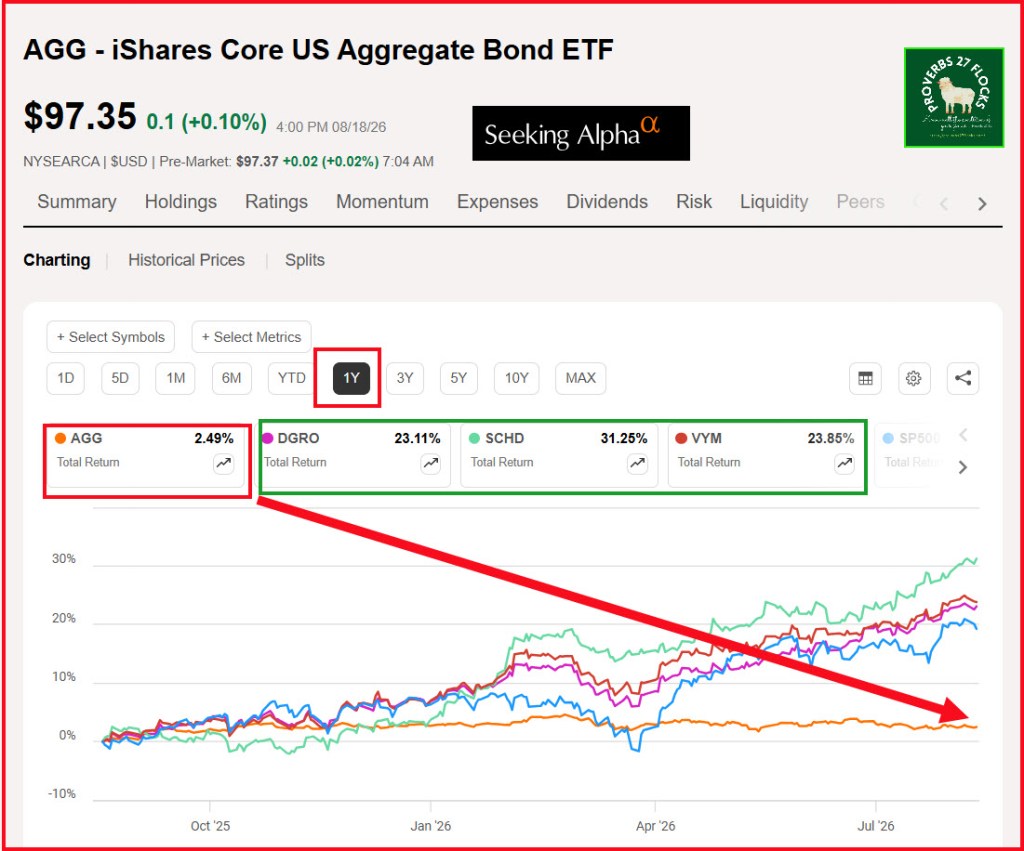
Are bonds really “safe”?

Bonds are “safer” than stocks in the sense that they’re generally less likely (but not guaranteed) to lose 100% of principal, especially government bonds from developed countries. But they’re not risk-free—“safe” mainly depends on which risk you care about:
Price (interest-rate) risk: If market yields rise, existing bond prices fall. This can easily create a negative return even if the issuer doesn’t default.
Inflation risk: Inflation can reduce the real (purchasing power) value of fixed coupon payments (unless you hold inflation-protected bonds like TIPS).
Credit / default risk: For U.S. Treasuries, this is typically the smallest concern; for other countries’ governments it can matter more.
Reinvestment/liquidity risk: You may have to reinvest at worse yields, and some bonds can be harder/costlier to trade.
A simple way to think about it:
Treasuries held to maturity are designed to reduce price risk (you lock in the yield), but you still face inflation risk. Treasuries sold before maturity are exposed to interest-rate driven price swings.
Seeking Alpha’s Bond ETF Ranking
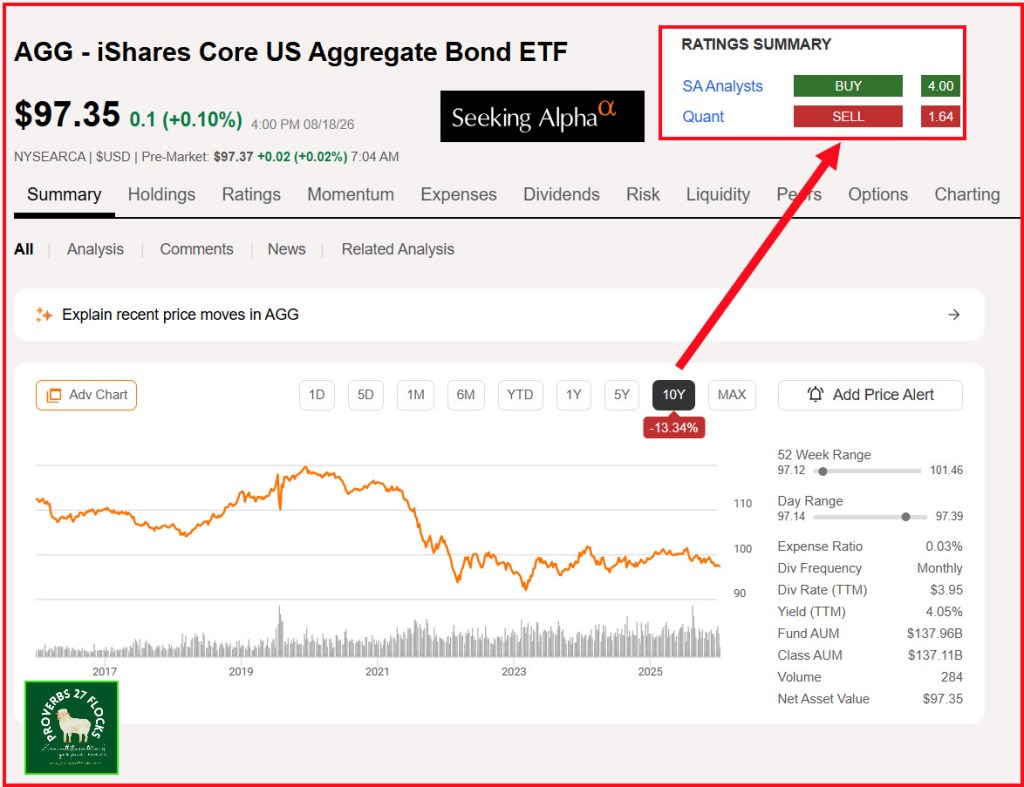
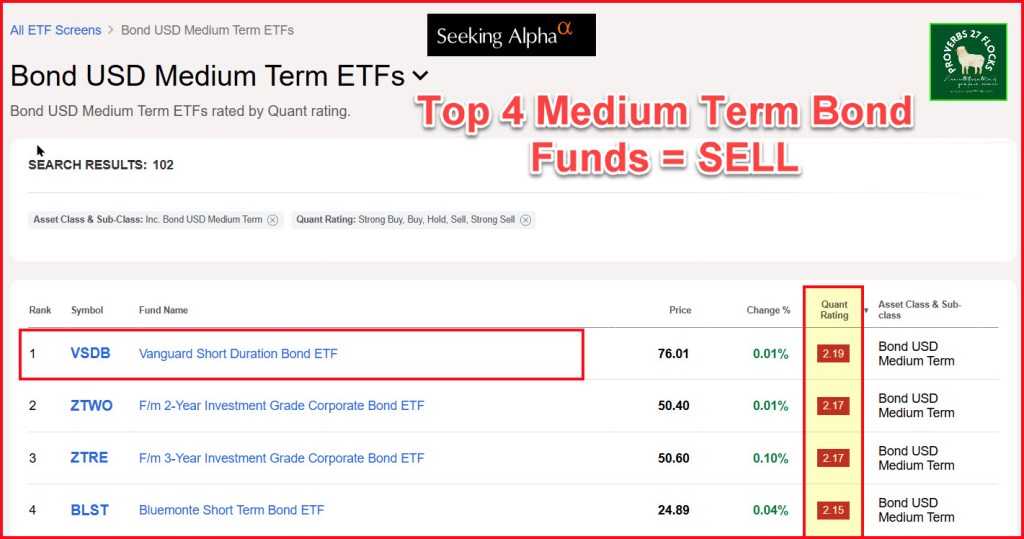
AGG is not the top medium term bond fund in the universe of 102 funds. It is 54 out of the 102. The sad thing is that the number one bond fund, VSDB is also rated as a “SELL.” There are no bond funds rated as a HOLD and certainly none are a BUY.
Conclusion
If you think bonds are “conservative” and “safe” then perhaps you don’t understand the big picture. What percentage of your total assets are in bonds? Do you own any “target date” or “retirement date” funds? If you do, please understand that you are invested in bonds and the bond allocation may be hindering the growth of the value of your retirement assets.
Seeking Alpha Subscription Information
Of all of the resources I use, the most helpful is Seeking Alpha. The Seeking Alpha QUANT rating is a huge factor in my investment success. If you decide to explore a Seeking Alpha subscription, please use the following link. Seeking Alpha
SEEKING ALPHA INFORMATION AND SUBSCRIPTION

You can also scan this QR Code to get the same information.

Past performance does not guarantee future results, Seeking Alpha does not provide personalized advice, and it is not a registered investment adviser.
We accept advertising compensation from companies that appear on our site. This website represents my opinions, which may not reflect those of Seeking Alpha, and does not constitute an investment recommendation or advice.
If you have any questions or problems getting connected to Seeking Alpha, reach out to them with this email address: subscriptions@seekingalpha.com

