
What is the Optimal Age for Social Security Income?
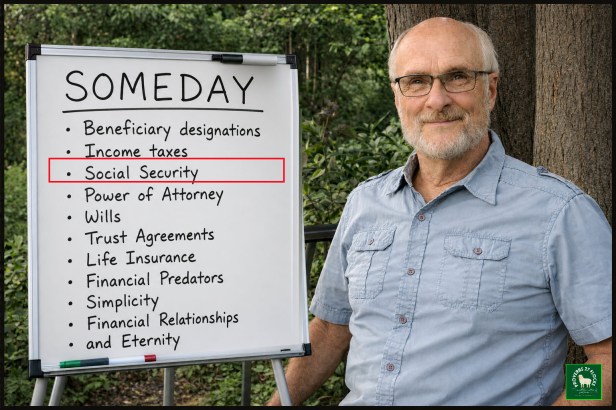
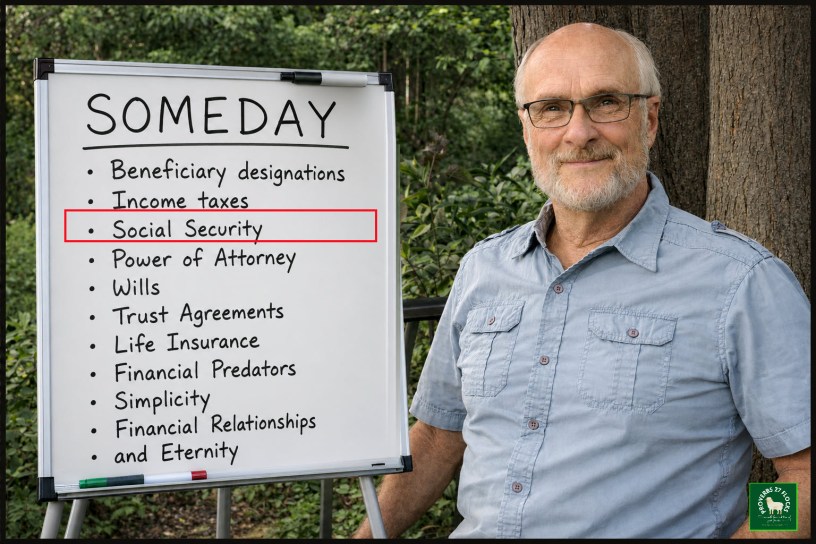
In this series I am exploring preparedness. One thing most people don’t do well is prepare for the day they will start taking Social Security benefits. It isn’t as simple and straightforward as many believe. There are a few things you should think about and do before the day arrives.
Most people are told they should wait until age 70 or at least age 67 before claiming benefits. That makes sense only if you live that long. I started receiving benefits when I was 63 but I could have started at age 62. In this article I explain my reasoning.
Using the U.S. government’s Social Security Administration (SSA) period life table (2023), the expected number of survivors out of 100,000 born still alive at age 70 for men is 71,916. For women you have a better chance: 82,374 are still alive at age 70. So the number who die before reaching that wonderful age is 28,084 men out of 100,000 and 17,626 women. Dying before you reach your “retirement” is a big win for someone, but it isn’t you.
Full Disclosure About My Decision
I received my first payment of $2,002 on 3/6/2014. At that point I was 63 years old. I have received about $319,000 in benefits (after Medicare tax deductions) since that time. One could argue that if I lived until age “xx” I would ultimately make more if I had waited until age 70. It is true that my monthly benefit would be more. The real question, I believe, is the potential “break-even” date. Also, will I live to “xx”? Yes, I made it to age 75, so I am getting close to the potential break-even date.
What is the typical break-even date for those who take Social Security at age 70? The answer is not an absolute number. According to Thrivent, “a commonly cited range for the break-even age when comparing claiming at 70 vs. earlier claiming is the early 80s, often around 78–81.” So would you at least like to break even? Then don’t die until you are at least 80. Then ask this question: “If I have investment income, why not take Social Security early and use it to enjoy life while you are “younger” and “stronger.” More income at age 80 has very little appeal to the prudent investor.
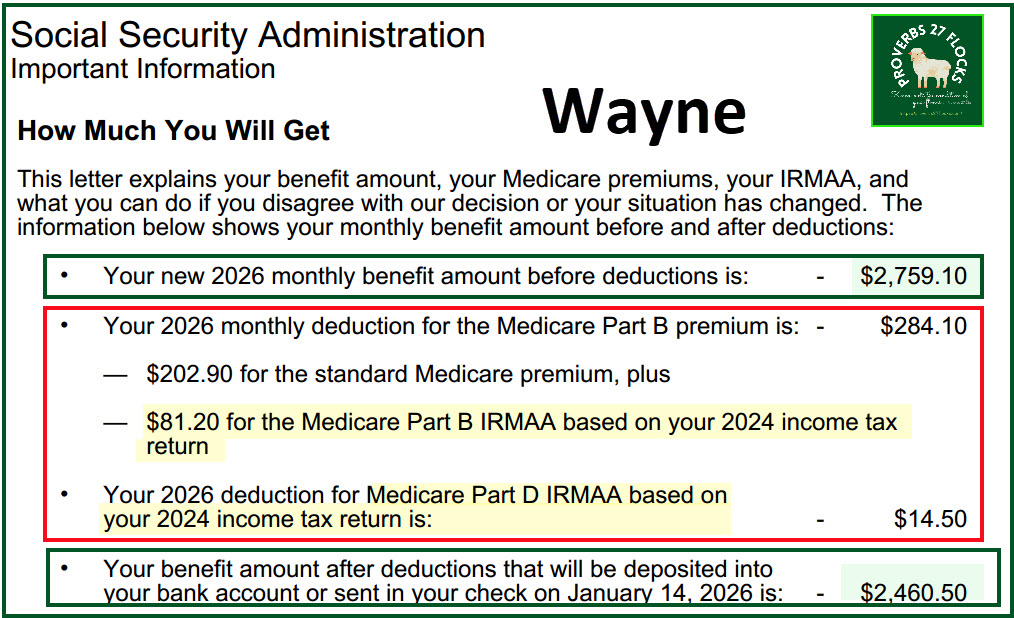
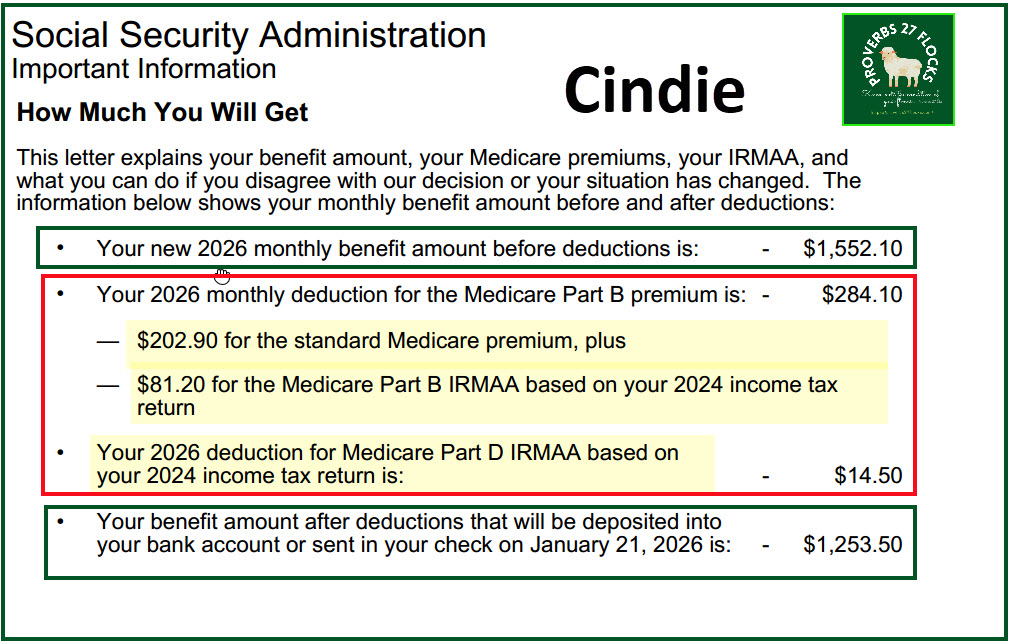
My current Social Security income after Medicare taxes and IRMAA is $2,460.50. Cindie’s is $1,253.50. That isn’t unusual. Many women receive far less than a man. One single lady I know receives $1,496 per month. I have helped other ladies who receive just over $1,000 per month. I look at it this way: a bird in my hand is worth many thousands of birds in the government’s hands.
Do You Know Your Social Security Retirement Income Estimate?
If you don’t have an online Social Security account, you should set one up now. Don’t wait until you retire. Everything is online and you definitely don’t want to work on this through a local Social Security office. I can tell you from experience that you want to avoid that red tape.
According to Investopedia, you can see the income spreads in their article: “How Many Retirees Live on Less Than $2,000 a Month? The numbers should wake up many workers. “Half of retired workers received less than $2,000 a month from Social Security in December 2025. But many retirees also draw income from pensions, retirement accounts, other savings, or part-time work. About 22% of households headed by someone 65 or older lived on less than $25,000 in 2024.” – Investopedia.
Let those numbers sink in. Don’t join the 22% club.
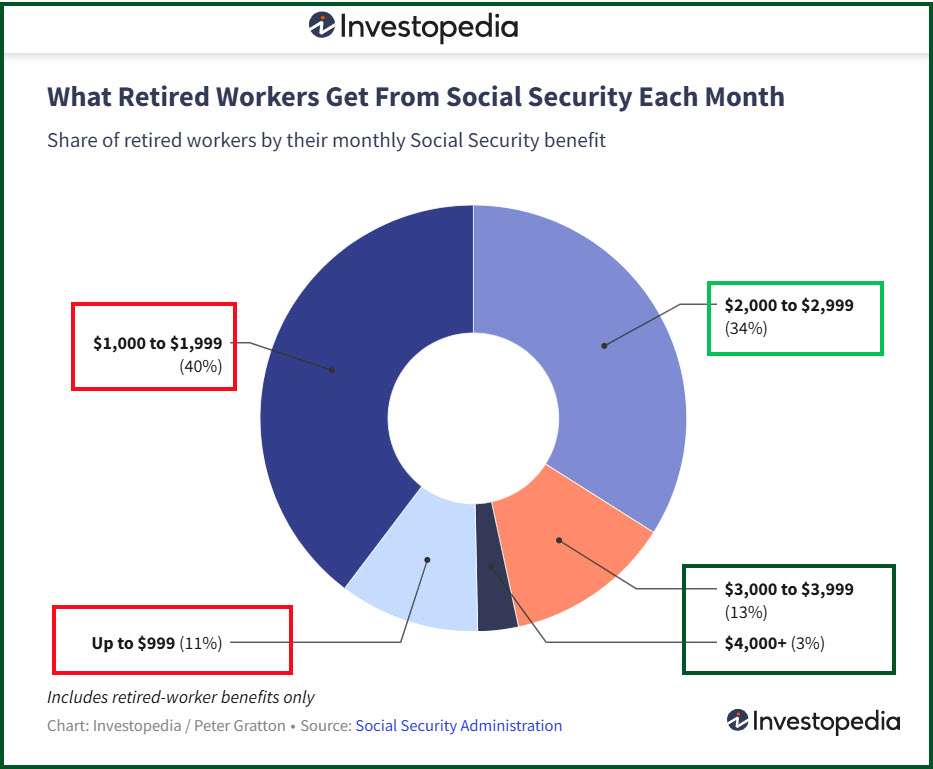
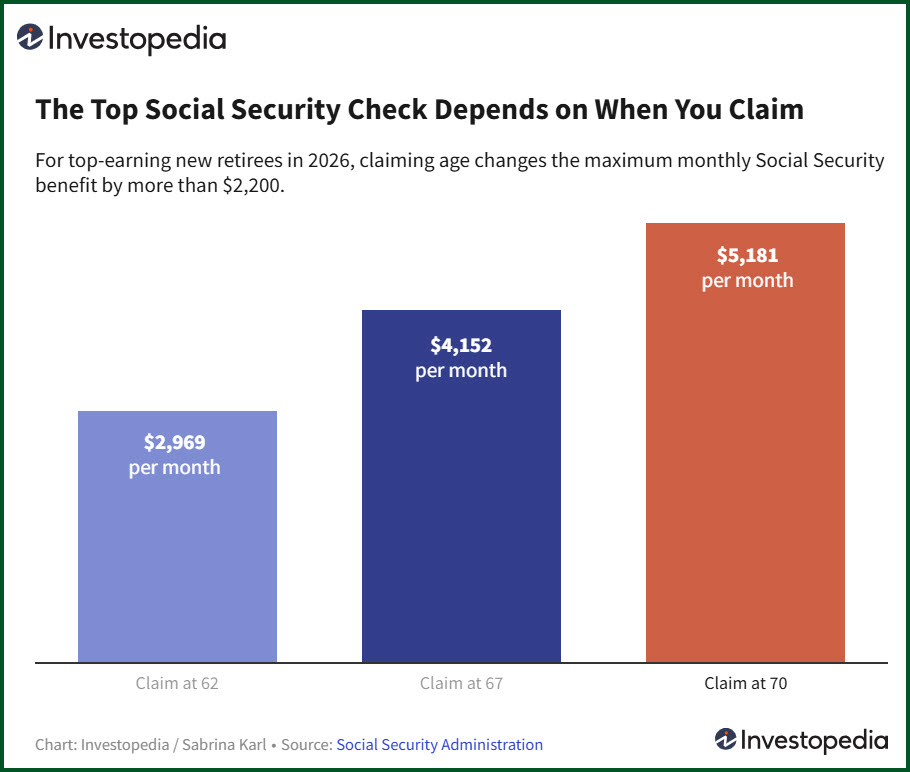
Another Investopedia article explores this: “Why So Few Retirees Qualify for Social Security’s Biggest Possible Monthly Check.” “Very few retirees are able to qualify for Social Security’s maximum check—not because the formula is hidden, but because clearing the bar takes decades of high pay, as well as patience. The top check a new retiree can claim in 2026 is $5,181 a month, payable to someone who waited until age 70 to start. The typical retired worker meanwhile gets about $2,071, or about 60% less.”
To put this in perspective, rather than $5,181 a month from Social Security, we average $33,500 per month so far this year in dividends and options income. Even if we only look at dividends we easily beat the Social Security number with average monthly income of $16,000.
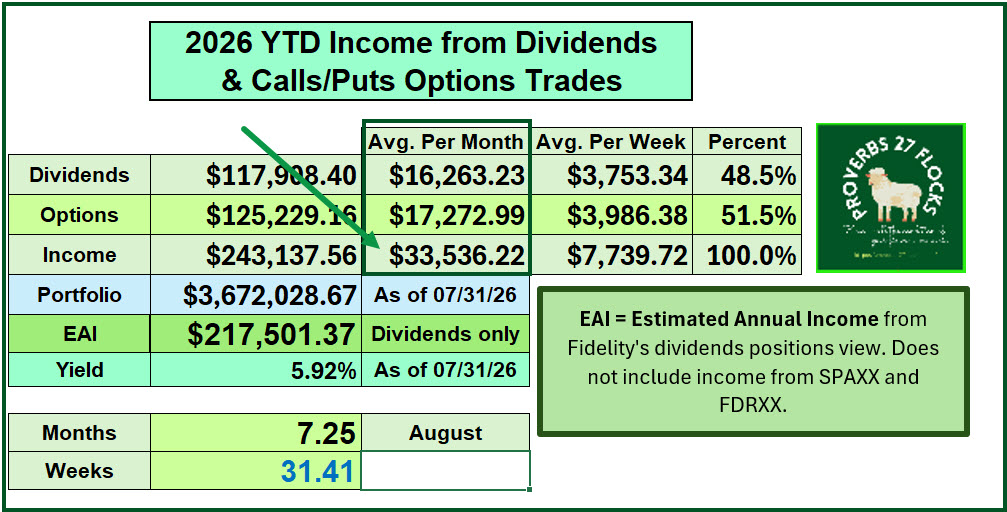
The lesson should be clear. “Preparing for Someday” means you leverage Social Security as soon as you can (in my opinion) and you invest in quality investments that pay growing dividends. That is what I choose to call “Easy Income.”
Why This Matters – Your Action Today
While Social Security is a nice piece of the income puzzle, it is insufficient for 99% of the working population. You should be saving and investing at least ten percent of every dollar you earn. When you receive additional income, a bonus, an inheritance, or an increase in your wages you should become more generous with your investment deposits.
You can use several tools to look at the total returns of an investment. I challenge you to do that with the investments in your portfolio. The tool I use is Seeking Alpha.
Taxes on Social Security
The nature of your accounts can dramatically impact your income tax liability. Of course, if you have a higher income in retirement than what you need, then you might not be concerned with income taxes. I prefer to pay as little as possible so that our “spending” power is maximized. Higher adjusted gross incomes can trigger unexpected Medicare IRMAA tax increases. I don’t mind paying a slightly higher IRMAA tax on our Social Security income because the benefits of ROTH conversions far outweigh the minimal cost of the tax.
Action Items

- If you don’t have an online Social Security account, get started on that today. Here is the link: Social Security Website
- Think carefully and critically about the age you might start taking Social Security. I personally think waiting until age 70 is less than prudent. I can see the logic of waiting longer than I did, but only if you didn’t do a good job saving in a retirement investment account.
- Review your annual Social Security statement. It tells you a story you will want to read. Like many other statements, many just ignore them. Ignorance is not bliss.
Seeking Alpha Subscription Information
Of all of the resources I use, the most helpful is Seeking Alpha. The Seeking Alpha QUANT rating is a huge factor in my investment success. If you decide to explore a Seeking Alpha subscription, please use the following link. Seeking Alpha

SEEKING ALPHA INFORMATION AND SUBSCRIPTION
You can also scan this QR Code to get the same information.

Past performance does not guarantee future results, Seeking Alpha does not provide personalized advice, and it is not a registered investment adviser.
We accept advertising compensation from companies that appear on our site. This website represents my opinions, which may not reflect those of Seeking Alpha, and does not constitute an investment recommendation or advice.
If you have any questions or problems getting connected to Seeking Alpha, reach out to them with this email address: subscriptions@seekingalpha.com

