
Do You Understand Your 10-Year Returns and the Rule of 72?
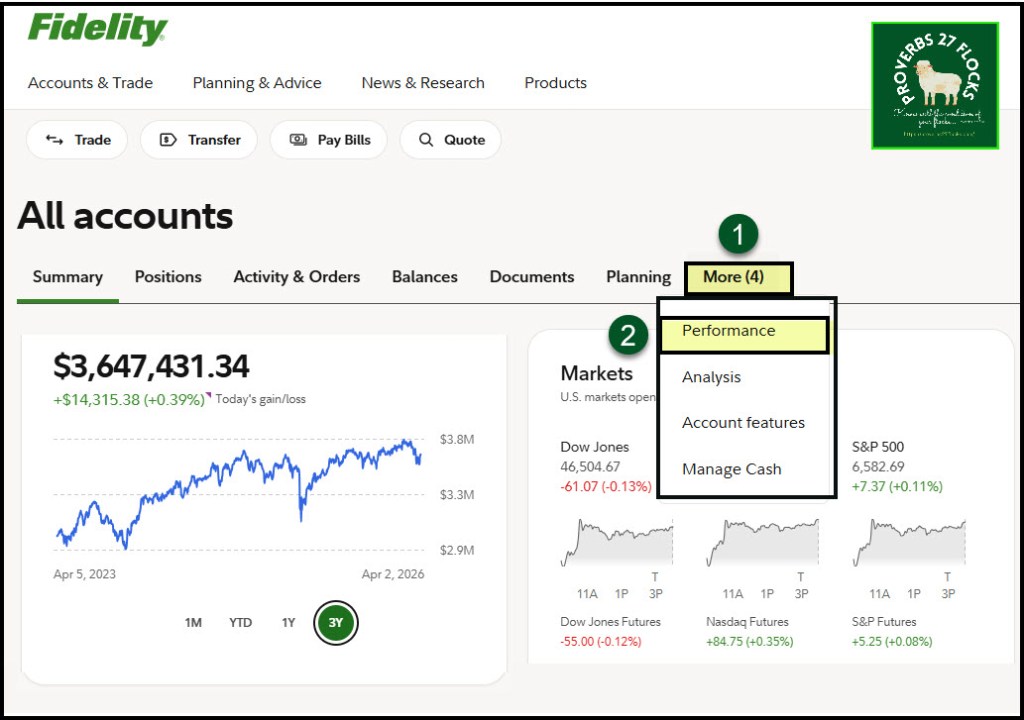
Most people heading towards some future retirement have no idea what their investment returns are in total or by account. Fidelity Investments makes it relatively easy to review that information on their website. You can see your returns by going to “More” and then to “Performance.”
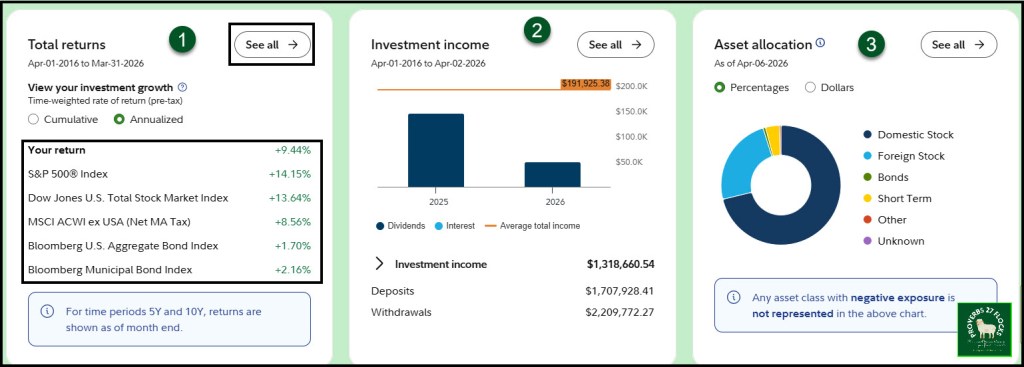
If you use another broker, they should be able to show you similar information. Once you have a sense as to your 10-year returns, you can estimate how long it will take for your retirement account(s) to double in value. Any total return that is less than nine percent should be considered substandard. A nine percent annualized return means your account should double in size in eight years. That is how our account values have grown as they have. (Rule of 72 calculation: 72/9 = 8)
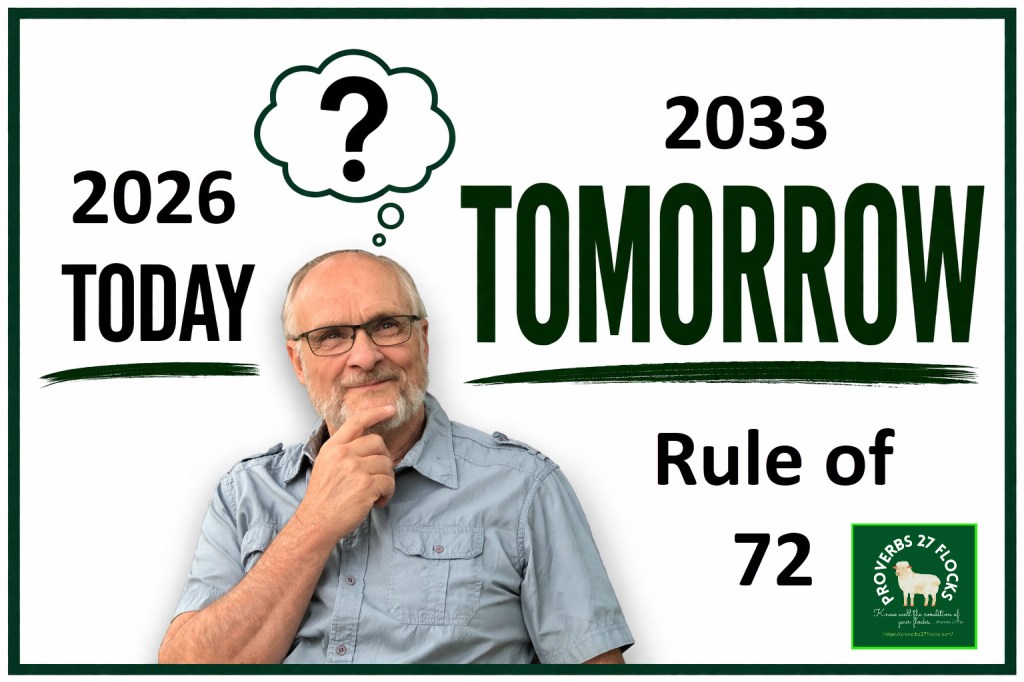
Therefore, if you current account balance is $500,000 at the beginning of 2026, it should be at least $1,000,000 by the end of 2033. That should be true even if you never add another dollar to your 401(k) or IRA, or any other investment account. Bear in mind that the dollars in ROTH accounts are worth more when it comes to withdrawals, as there are no income taxes on that future income.
What Hurts 10-Year Returns?
There are many factors, but three common ones are 1) high costs charged by those who manage your investments (and the costs of the mutual funds they recommend), 2) bonds and bond funds and 3) any “blended mutual funds” or “target retirement date funds.” The reason number three is dangerous is that they generally incorporate bond investments in their “safe” strategy.
If you are a youngster (under age 70), then I think bonds are a headwind that you don’t need or want if you understand the impacts of inflation and the poor growth history of bonds.
Why Are My Returns 9.44%?
One of the things that makes the S&P 500 attractive is the potential returns from the top ten stocks in the stock market. Therefore, because of the tremendous growth of the technology sector, just about any index that is heavily weighted to technology has fared very well in the last ten years.
Over 30% of the S&P 500 is in technology-related companies. The top three companies, by market capitalization are NVDA, MSFT, and AAPL. They are followed by AMZN, GOOG, and AVGO. In good times, the top ten can give you outsize performance. But, as long-time investors realize, what goes up in a mighty way can come down in an equally horrific manner.
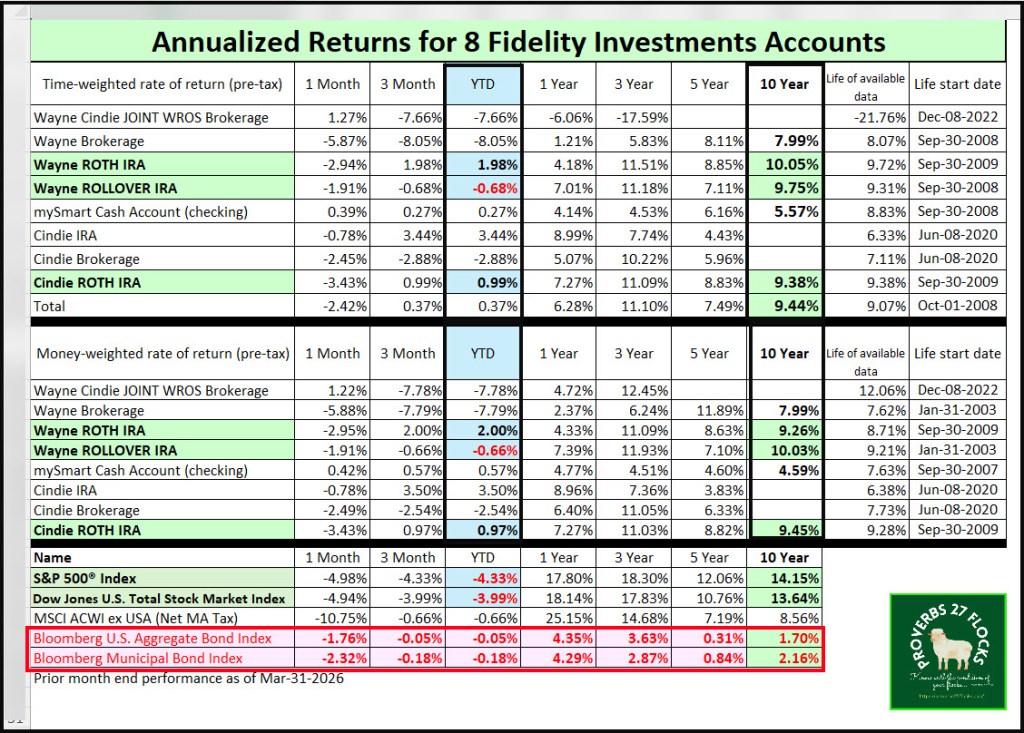
The other thing to remember is that a large chunk of the total return of many good investments are in the form of dividends. Those who focus only on price returns, to the neglect of total returns are not seeing the total returns picture.
Closing Thoughts
Whether you have a financial advisor or prefer to take the DIY approach, you need to look at the performance dashboard. Then, be honest and ask if you are satisfied with your results. If you aren’t then the best day to fix this is the day called “today.”
Seeking Alpha Subscription Information
Of all of the resources I use, the most helpful is Seeking Alpha (SA). One of my favorite features is the ability to quickly see if an investment is likely to make a positive difference in our investment portfolio. The QUANT rating helps me avoid terrible investments and focus on the cream of the crop. Seeking Alpha
SEEKING ALPHA INFORMATION AND SUBSCRIPTION
You can also scan this QR Code to get the same information.

Past performance does not guarantee future results, Seeking Alpha does not provide personalized advice, and it is not a registered investment adviser.
We accept advertising compensation from companies that appear on our site. This website represents my opinions, which may not reflect those of Seeking Alpha, and does not constitute an investment recommendation or advice.
 Know Your Flocks & Herds