

I Like Pie

Anyone who knows me knows I like pie. I’m especially fond of rhubarb pie. When Cindie bakes a rhubarb pie I love the smell. Of course, even better is eating the pie.
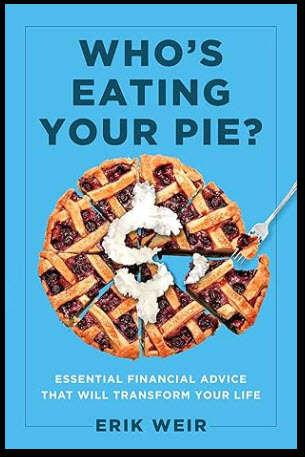
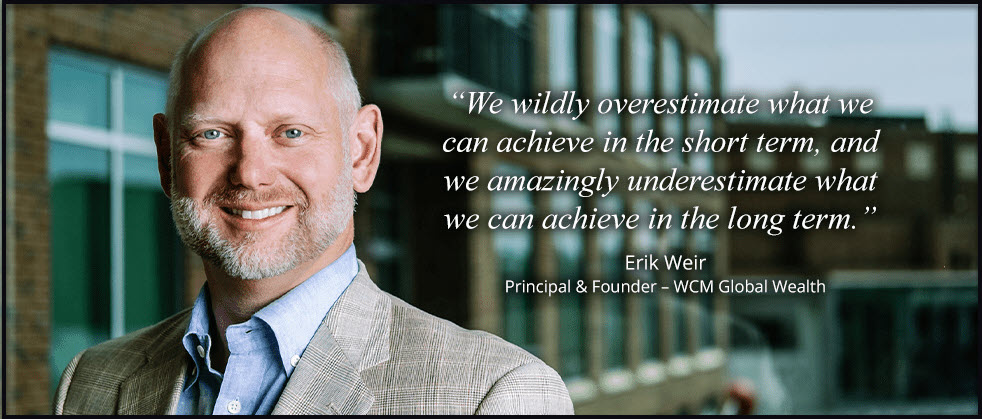
Erik Weir wrote a book that uses a pie for illustrative purposes. The book is: “Who’s Eating Your Pie?: Essential Financial Advice that Will Transform Your Life.” To his credit, he covers some important topics. They include the following questions.
Can anyone build wealth, no matter where they’re starting from?
Is it moral for me to want to build wealth?
What does it mean to be “rich”?
How can I build real wealth as a salaried employee?
How can I build wealth for myself and others as an entrepreneur?
What steps should I take each day to ensure I’m moving forward toward my wealth-building goals?
What is the stock market and how does it work?
Can I get rich with just a 401(k)?
How does real estate investing work?
Where does philanthropic giving fit into my wealth-building plan?
A Quick Review
Before you rush to buy a copy, let me share a few insights. Much of what Mr. Erik Weir shares of a practical nature by way of actionable items is very limited. His ideas have more to do with the way you think and behavioral problems that many people have.
The book is divided into three sections: Section 1 covers “Understanding Financial Success.” Sadly, many do not understand this concept. Section 2 covers “Planning Financial Success.” The seventh chapter deals with the importance of “The Power of Clarity and Planning.” Section 3 is “Activating Financial Success.” This section is skewed towards investing in real estate, but he does cover some other investment basics. Most of what he covers are really just the basics about investing that many others have already said. Don’t buy this book expecting too many wonderful ideas.
The One Percent
Perhaps the most useful pages are found near the beginning of Weir’s book. On page 30 he has a section “Growing The Pie 1 Percent At A Time.” He shares some non-investing illustrations about the power of 1% in dieting, exercise, education and other life areas where the final goal looks daunting unless you look at it in one percent increments. He then explains the “Rule of 72” on page 32.
If you make a one percent change today, it won’t make much of a difference. However, if you repeat that one percent on a consistent basis (daily, weekly, and/or monthly) the cumulative impact is significant. For example, if I cut my spending by one percent per week and invest that one percent in quality investments, the end result, if you use the Rule of 72 as a benchmark for the investments you select can be amazing.
Education Matters
While I don’t think I would suggest this book as my number one pick for those who want actionable ideas, it is a good general purpose book to understand some concepts that most do not understand and even more do not practice. One good source for learning more about investing is Investopedia. I also learn quite a bit from reading Seeking Alpha articles and the opinions of other investors.
Seeking Alpha Subscription Information

Of all of the resources I use, the most helpful is Seeking Alpha. If you decide to explore a Seeking Alpha subscription, please use the following link. Seeking Alpha
SEEKING ALPHA INFORMATION AND SUBSCRIPTION
You can also scan this QR Code to get the same information.

Past performance does not guarantee future results, Seeking Alpha does not provide personalized advice, and it is not a registered investment adviser.
We accept advertising compensation from companies that appear on our site. This website represents my opinions, which may not reflect those of Seeking Alpha, and does not constitute an investment recommendation or advice.
If you have any questions or problems getting connected to Seeking Alpha, reach out to them with this email address: subscriptions@seekingalpha.com
 Know Your Flocks & Herds