
“How Wayne Gets Things Done”
This is the second of a four-part series to answer a question Bill asked. His question was: “How you decide which stocks to add for contracts?” That is an excellent question, as there are some investments that aren’t suitable for options investing. For example, mutual funds are of zero value for options trading. However, some ETFs and stocks are perfect for this extra income stream.
Update Regarding Expiring Contracts
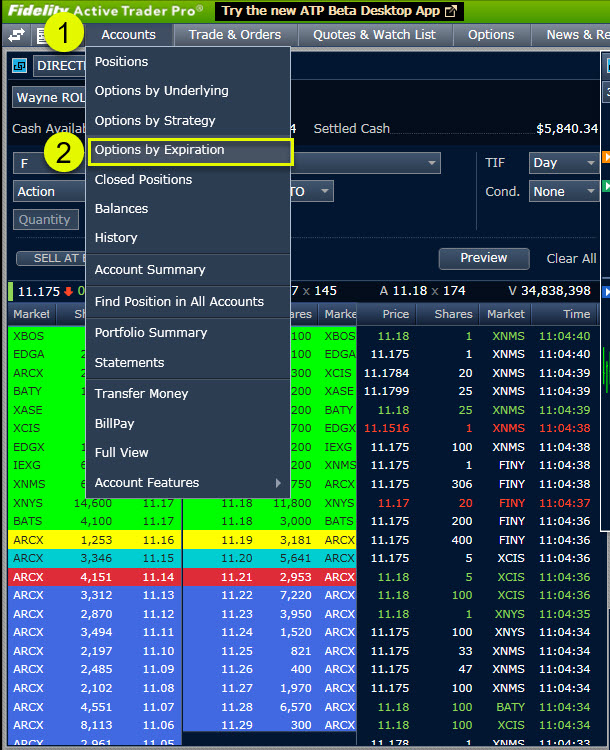
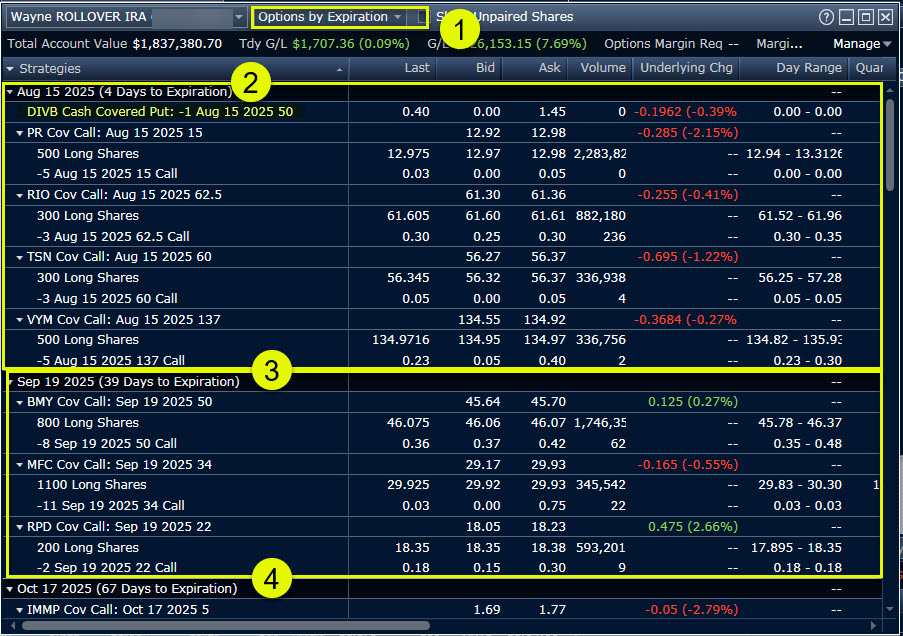
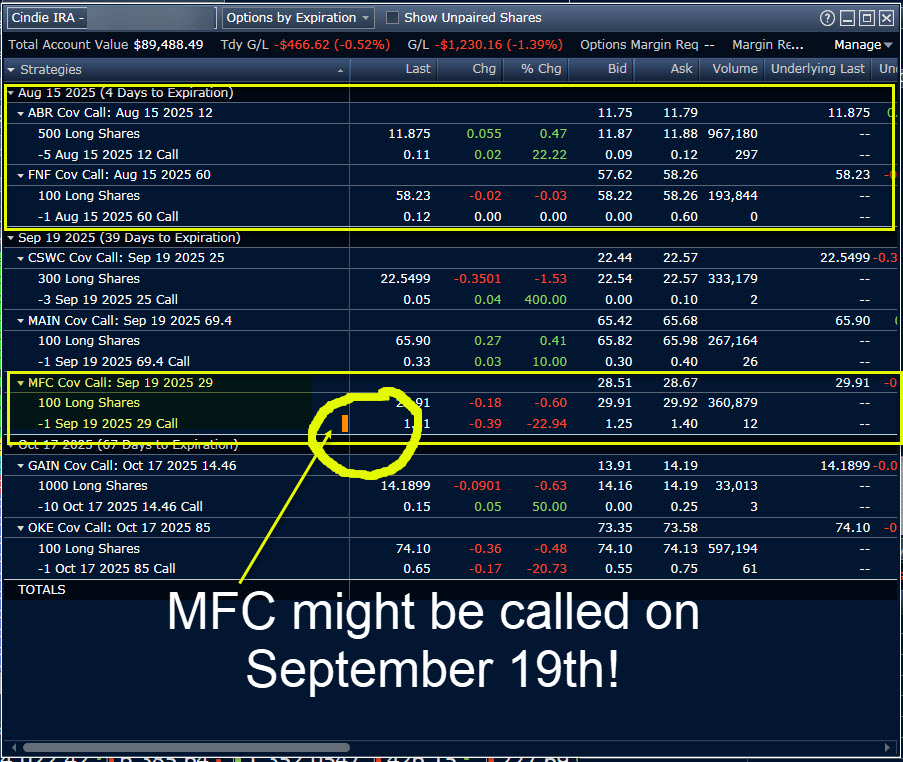
I spoke about using StockRover and a “Portfolio Events” section on the Fidelity website but I neglected to mention another valuable tool that requires very little time or effort. The other way is to check for expiring contracts within Fidelity’s Active Trader Pro (ATP). The only downside is that it is only one account at a time. The upside is that options that might be called are highlighted with an orange rectangle next to the option contract. Here are some images to help you navigate to this functionality.
How I decide which Stocks (and ETFs) to add for Contracts
Here are the basics.
1. Quantity Matters. First of all, you need to have at least 100 shares of any investment (stock or ETF) to trade a single option. So if you want to buy a stock that costs $300 per share, and you don’t have $30,000 in cash to buy the shares, then it probably isn’t a good fit for your options strategy. For beginners I normally suggest starting with a low-cost stock like Ford (F) or an ETF like SCHD. Try to stay under $3,000 in total cost if your portfolio is at least $50K. As a general rule of thumb it is too risky to have any single stock be more than five percent of your total investment portfolio.
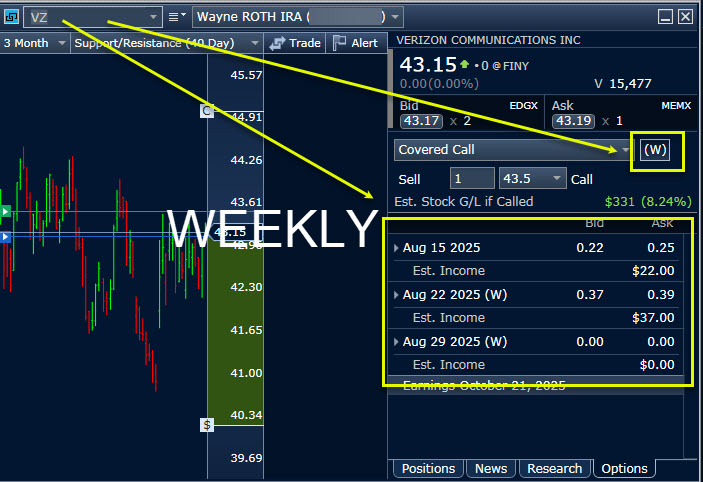
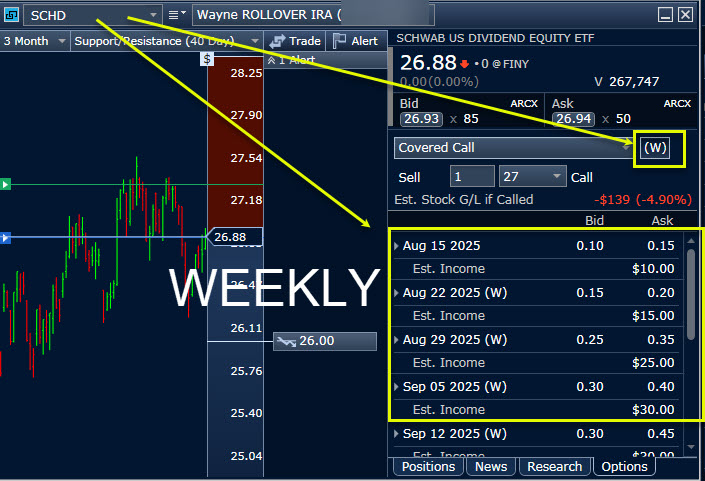
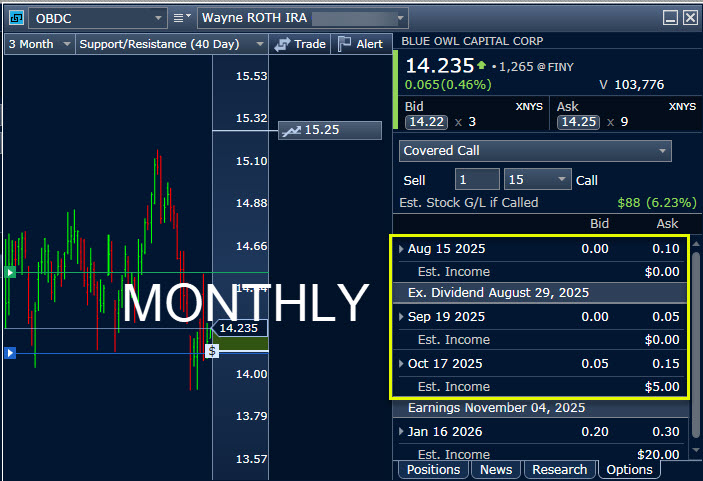
2. Weekly Options! Secondly, it is best to pick stocks and ETFs that have weekly options. Some only have monthly options that expire on the third Friday of each month. So, for example, SCHD is an ETF that trades weekly options. However, DGRO only trades monthly options. The more trades you can do (weekly) the more potential income you can receive. Stocks like VZ (Verizon) have weekly options but investments like OBDC (Blue Owl Capital) only have monthly options.
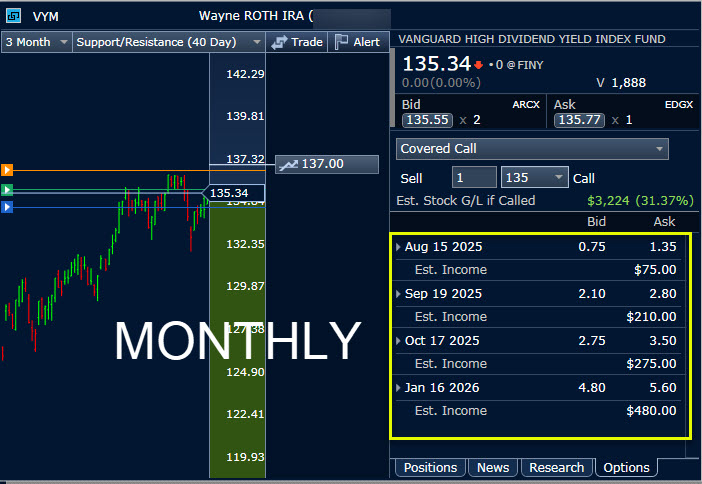
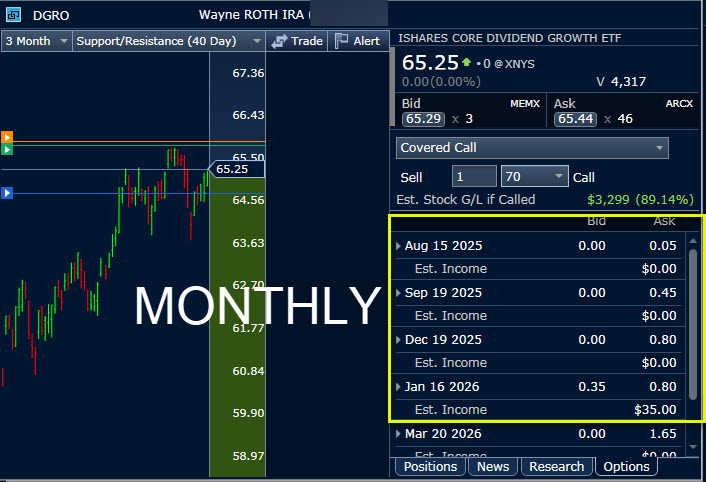
3. Double the Income: I prefer to have dividend-growth investments as I want the double-power of both dividends and synthetic dividends. However, I do trade options on non-dividend stocks. The reality, however, is that a very small portion of our portfolio is in non-dividend investments.
4. Growth Matters. For non-dividend stocks, I prefer to have only those with weekly options and that have a high potential for an increase in the stock price.
5. Quality Matters. I’m interested in the Seeking Alpha QUANT rating. For the most part, a HOLD rating or better is desired. You don’t want to start with stocks that have a SELL rating. That is like entering a burning house to retrieve the trash. Only enter a burning house to get family out. In other words, think about what is important and act accordingly.
Recommendation: Options For Investing Doers
Start small. Pick one stock or ETF that has weekly options contracts. Try to make $5 on your first trade. Don’t shoot for $50 or $100. Learn the basics before you dive in.
For next time:
1. How you log your trades, and then after that: 2. If I’ve noticed certain days or conditions that work best for executing strategies.”
As always, don’t hesitate to ask questions.
Seeking Alpha Subscription Information
Of all of the resources I use, the most helpful is Seeking Alpha. If you decide to explore a Seeking Alpha subscription, please use the following link. Seeking Alpha

SEEKING ALPHA INFORMATION AND SUBSCRIPTION
You can also scan this QR Code to get the same information.

Past performance does not guarantee future results, Seeking Alpha does not provide personalized advice, and it is not a registered investment adviser.
We accept advertising compensation from companies that appear on our site. This website represents my opinions, which may not reflect those of Seeking Alpha, and does not constitute an investment recommendation or advice.
 Know Your Flocks & Herds