
Idleness is Common But Preventable
Have you saved enough for “retirement?” I don’t have a one-size-fits-all answer to that question. Perhaps a better goal is to think about whether we will, by our own poor choices, become a burden rather than a blessing during the final years of our lives. There is no neutral territory. Those who are not a blessing are a burden by not being a blessing.
It is likely that most of us will have some time in “retirement.” We often think of this as giving up on work to focus on travel, unending rest, and a self-centered focus. There are certainly more opportunities for travel and for doing something different, but to become idle can cause you or me to become a burden rather than a blessing. Perhaps it is time to think about the future differently.
Thinking and Planning Before Arrival
When Cindie and I travel, we think about both the journey and the destination. I often pick the hotels, the churches, and some of the activities. This requires some work. I have to think about the journey and plan accordingly.
In the same way, we should think of our final years before we get to them. While we don’t know when the final day is, we should strive to be a blessing in the lives of our family and beyond. This means we should desire to reduce the possibility that we will become a burden. That is not usually accomplished by doing nothing.
In 1 Timothy 5:8 (ESV), Paul says this: “But if anyone does not provide for his relatives, and especially for members of his household, he has denied the faith and is worse than an unbeliever.” To provide means to be a blessing, not a burden. It involves active thinking and working. Much has been said about the path of the idle person.
Three Old Preacher Quotes About the Idle
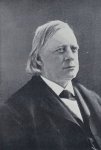
“If you are idle, you are on the road to ruin, and there are few stopping-places upon it. It is rather a precipice than a road.” Henry Ward Beecher (You not only fall off of the precipice, but you probably take someone else with you.)
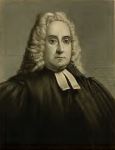
“The slothful desire the gains which the diligent get, but they hate the pains which the diligent take.” Matthew Henry (There is some work; you won’t get there by just desire and hope-so dreaming.)
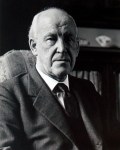
“The man who tries to do something and fails is infinitely better than the man who tries to do nothing and succeeds.” D. Martyn Lloyd-Jones (While there are no guarantees of success, if you do nothing, you dramatically reduce your possibility of success.)
Source: John Blanchard, The Complete Gathered Gold: A Treasury of Quotations for Christians (Webster, New York; Darlington, England: Evangelical Press, 2006).
Perhaps a bit of wisdom from a living preacher is in order. He answers the retirement question differently from the common responses I have seen. A link to his suggestions is included below with a brief summary for those who don’t have time to read what he says.
How Much Money Do I Need to Retire?
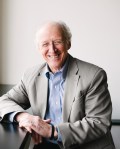
On October 17, 2024, John Piper responded to a question from one of his listeners: “How Much Money Do I Need to Retire?” Her question is a good one for people who understand “The Treasure Principle.”
“Pastor John, hello. Can you share any wisdom for thinking about how much money I should be putting away for retirement? I’m trying to balance being responsible in providing for my future, while walking in faith, and giving generously towards mission, beyond my tithe. I’m a natural saver but also have a tendency towards hoarding money that can be easily provoked when I read that I need to have $1.5 million dollars saved or invested before I can retire. I’ll never reach that level. What would you say to an American in my situation, about seven years from retirement age?”
Piper responded with a great suggestion he called Self-Sustaining Principle. He said this: “Perhaps the most basic principle about supporting ourselves during the last quarter of our lives is that, inasmuch as possible, we should seek by God’s grace to be self-sustaining.”
He also proposed the Caregiving Principle and the Ministry Principle. Both are about being a blessing, rather than a burden.
Ask yourself this question: Am I working on being a burden to others, or have a set a goal to be a blessing when I am “retired?” Perhaps an even better question is, “Am I a blessing today?”
 Know Your Flocks & Herds