
A Video is Worth a Thousand Words

No matter how many times I say that investing is “easy”, I’m certain that some of the things I say and write sound difficult. Tuesday afternoon I recorded a short video to show how I rolled an existing covered call option for 200 shares of AVGO to a later date.
The original contract was scheduled to expire (or be called) this coming Friday, October 11. It became obvious that I might have to sell my shares. However, I think the shares are fairly priced at $180, and I don’t necessarily want to be greedy. If I can get $180 per share for 200 shares, I will have $36,000 more cash in my traditional IRA.
What if, however, I was willing to wait one more week to get the $36,000? This of course assumes that shares continue upwards and the close on Friday October 18 is above $180. While I wait, I would like some more income from my AVGO shares. This was done by doing a “roll out” at the same price of $180 but with an expiration date for next Friday.
This video illustrates the little time I had to use to create another $382.70 of income on my shares. I also did some rolls of my GEN shares, earning $805.50 and a roll of my IBM shares generating another $1,222.20. The YouTube video (LINK) focuses on the AVGO roll.
Fidelity Explains the Different Types of Rolls

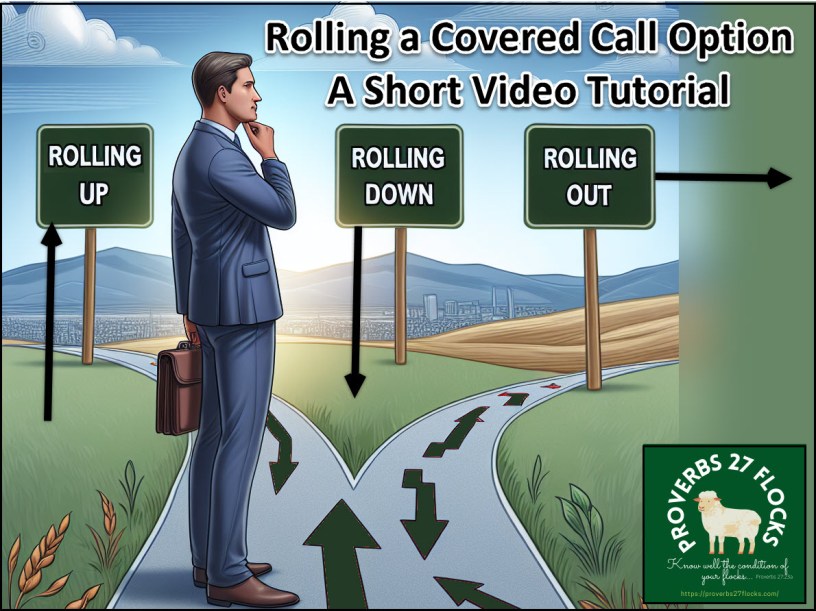
Rolling up: Rolling up involves buying to close an existing covered call and simultaneously selling another covered call on the same stock and with the same expiration date but with a higher strike price.
Rolling down: Rolling down involves buying to close an existing covered call and simultaneously selling another covered call on the same stock and with the same expiration date but with a lower strike price.
Rolling out: Rolling out involves buying to close an existing covered call and simultaneously selling another covered call on the same stock and with the same strike price but with a later expiration date. This is what I did with the AVGO shares.

Rolling up and out: Rolling up and out involves buying to close an existing covered call and simultaneously selling another covered call on the same stock but with a higher strike price and a later expiration date. This is what I did with the GEN and IBM contracts.
Rolling down and out: Rolling down and out involves buying to close an existing covered call and simultaneously selling another covered call on the same stock but with a lower strike price and a later expiration date.
Some Final Thoughts
The reality is that no one knows what will happen with AVGO’s stock price. Generally speaking, either result I receive is satisfactory. If the shares trade at or above $180 on expiration date, I get my $36,000. If they don’t, the contract expires and I can do another covered call contract on 200 shares on Monday, October 21. In any event, I still get to keep the $382.70 I already received.
Investors who use covered calls should know about the basic rolling techniques in case they are ever needed. There is no right or wrong method of rolling a covered call. The decision to roll is a subjective one that every investor must make individually. I usually like doing the “roll up” with a future expiration date. However, if I think the stock has reached a fair price, a roll out is just fine.
Active Trade Pro makes it easy to do this. Rolling a covered call using ATP involves a two-part trade in which the covered call sold initially is closed out (with a buy-to-close order) and another covered call is sold to replace it. In other words, the old contract is repurchased, and a new contract is issued to give me net income.
Some other resources…
https://www.optionsplaybook.com/managing-positions/rolling-covered-calls
https://www.investopedia.com/articles/optioninvestor/08/covered-call.asp
 Know Your Flocks & Herds