

Yield and Growth and Ratios

There are usually four things I consider when I want to build some new positions. These include dividend growth, followed by the payout ratio, the dividend yield, and the history of dividend growth and dividend payments.
Most of my readers know that I have technology, healthcare, BDCs, REITs, and the financial sector as my primary focus. I tend to avoid most energy investments and all utilities. Of course, because I own shares of VYM and SCHD, I don’t entirely avoid utilities. I also tend to dislike the Communication Services sector and companies like Verizon and AT&T. However, I do sometimes buy shares of VZ for both the dividend and for opportunities to trade covered calls on my shares.
Recent Buys
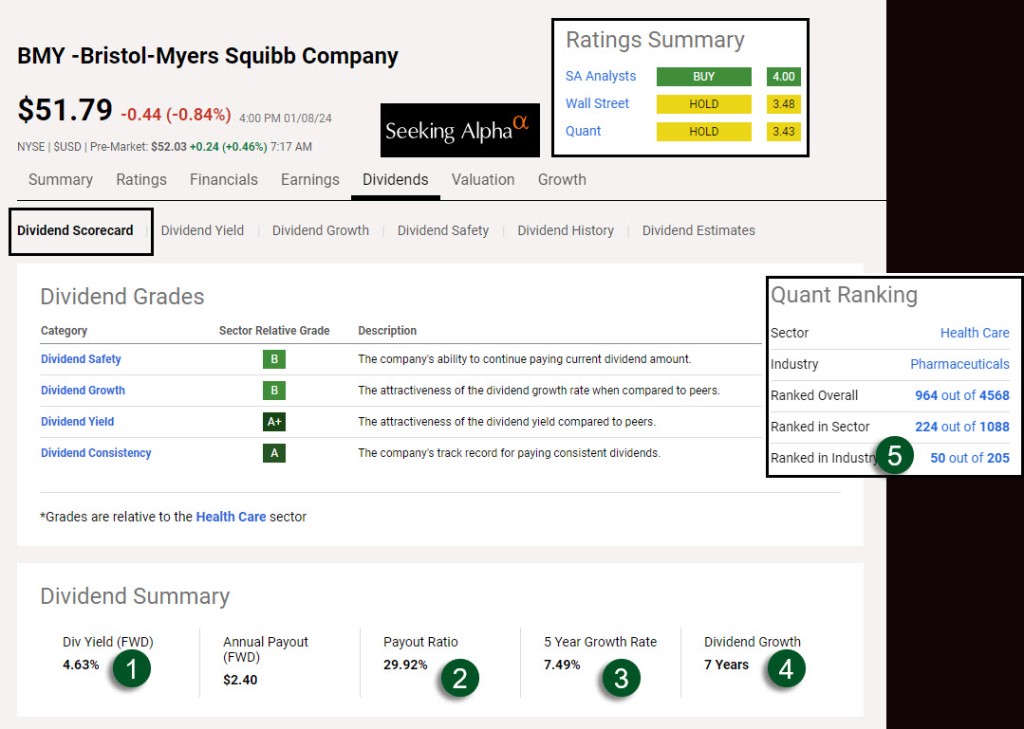
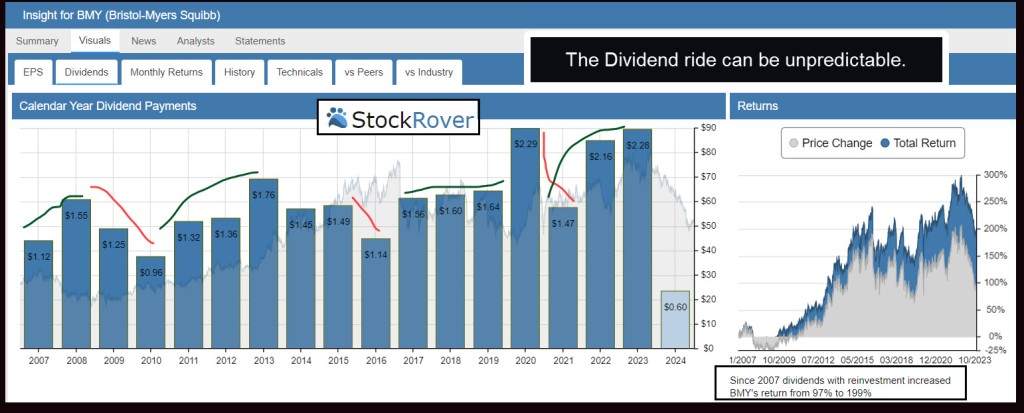
Since the beginning of 2024 I have purchased 200 shares of BMY and 200 shares of VZ. Both have a history of increasing their dividends and both have a rational dividend payout ratio. BMY has increased their dividend for the last seven years and it has a five-year dividend growth rate of 7.49%. The yield is 4.63%, which is just slightly less than current CD rate.
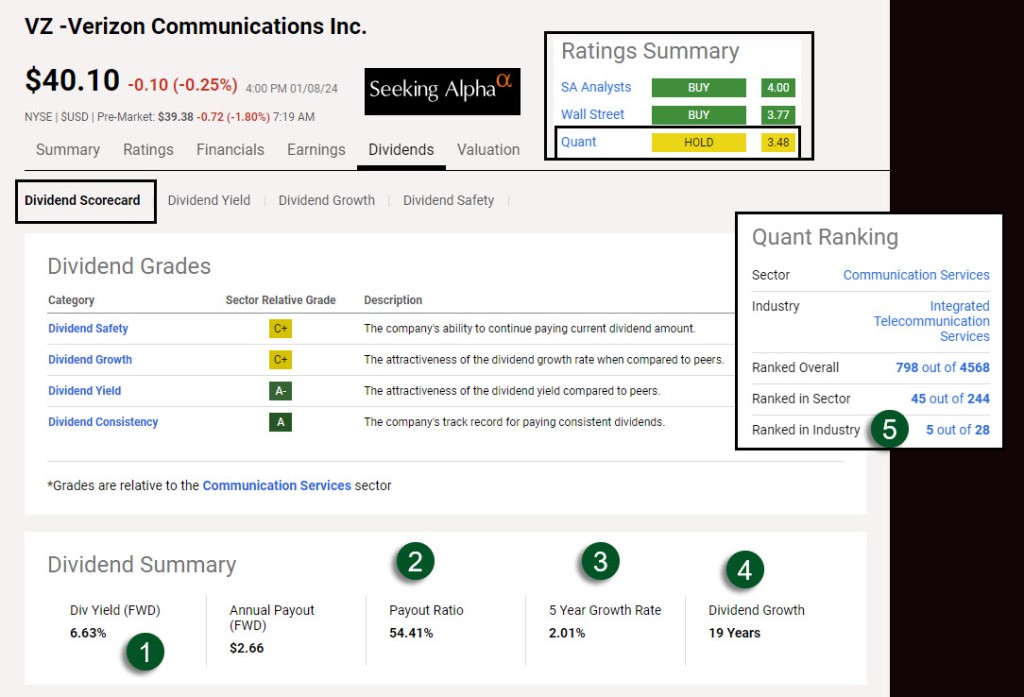
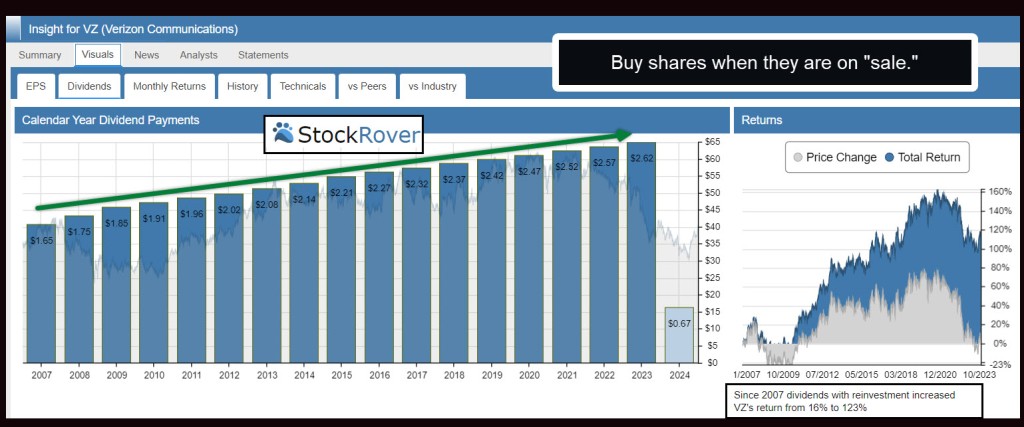
VZ, in contrast, has had dividend growth over the last 19 years and a five-year growth rate of around 2%. However, the dividend yield is a very nice 6.63% and the payout ratio is a sensible 54.41%.
Slow and Steady Growth in Mature Companies
It is highly unlikely that either of these will have spectacular earnings growth. But one thing I have learned over the years is that I would rather buy the slow and steady turtle companies than the rushing ahead rabbit investments. In the end, I like the plodding forward progress and the income that comes with it.
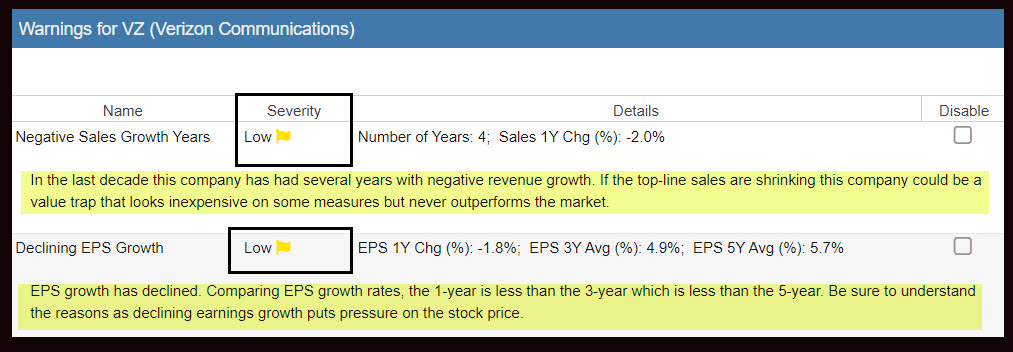
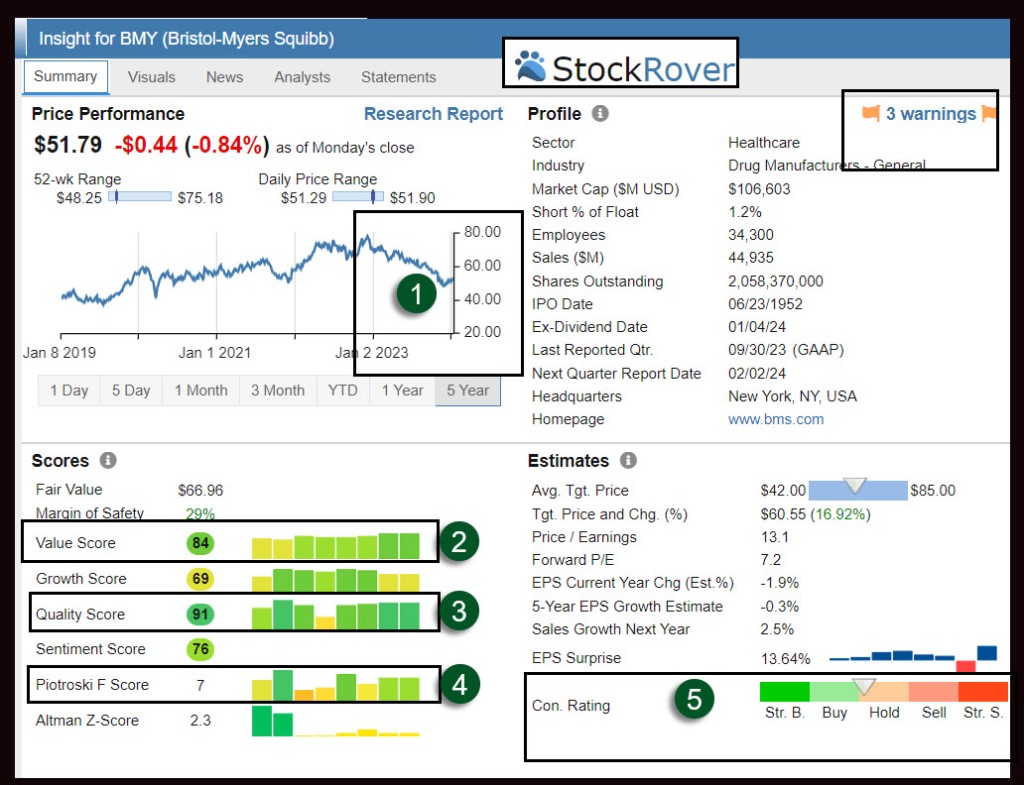
Images from StockRover Help Understand the Investments
I usually look at Seeking Alpha and StockRover when evaluating new positions. Both offer helpful views in table and graph formats.
Bristol-Myers Squibb Company
Bristol-Myers Squibb Company discovers, develops, licenses, manufactures, markets, distributes, and sells biopharmaceutical products worldwide. It offers products for hematology, oncology, cardiovascular, immunology, fibrotic, and neuroscience diseases. The company’s products include Eliquis, an oral inhibitor for reduction in risk of stroke/systemic embolism in NVAF, and for the treatment of DVT/PE; Opdivo for anti-cancer indications; Pomalyst/Imnovid indicated for patients with multiple myeloma; Orencia for adult patients with active RA and psoriatic arthritis; and Sprycel for the treatment of Philadelphia chromosome-positive chronic myeloid leukemia. It also provides Yervoy for the treatment of patients with unresectable or metastatic melanoma; Empliciti for the treatment of multiple myeloma; Abecma for the treatment of relapsed or refractory multiple myeloma; Reblozyl for the treatment of anemia in adult patients with beta thalassemia; Opdualag for the treatment of unresectable or metastatic melanoma; and Zeposia to treat relapsing forms of multiple sclerosis. In addition, the company offers Breyanzi, a CD19-directed genetically modified autologous T cell immunotherapy for the treatment of adult patients with relapsed or refractory large B-cell lymphoma; Onureg for the treatment of adult patients with AML; Inrebic, an oral kinase inhibitor indicated for the treatment of myelofibrosis; Camzyos for the treatment of adults with symptomatic obstructive HCM to enhance functional capacity and symptoms; Sotyktu for the treatment of adults with moderate-to-severe plaque psoriasis; Revlimid, an oral immunomodulatory drug for the treatment of multiple myeloma; and Abraxane, a protein-bound chemotherapy product. It sells products to wholesalers, distributors, pharmacies, retailers, hospitals, clinics, and government agencies. The company was formerly known as Bristol-Myers Company. The company was founded in 1887 and is headquartered in New York, New York.
Verizon Communications Inc

Verizon Communications Inc., through its subsidiaries, provides communications, technology, information, and entertainment products and services to consumers, businesses, and governmental entities worldwide. It operates in two segments, Verizon Consumer Group (Consumer) and Verizon Business Group (Business). The Consumer segment provides wireless services across the wireless networks in the United States under the Verizon and TracFone brands and through wholesale and other arrangements; and fixed wireless access (FWA) broadband through its wireless networks. It also offers wireline services in the Mid-Atlantic and Northeastern United States, as well as Washington D.C. through its fiber-optic network, Verizon Fios product portfolio, and a copper-based network. The Business segment provides wireless and wireline communications services and products, including data, video, conferencing, corporate networking, security and managed network, local and long-distance voice, network access, and various IoT services and products, as well as FWA broadband through its wireless networks. The company was formerly known as Bell Atlantic Corporation and changed its name to Verizon Communications Inc. in June 2000. Verizon Communications Inc. was incorporated in 1983 and is headquartered in New York, New York.
 Know Your Flocks & Herds