

A Walk Down Memory Lane
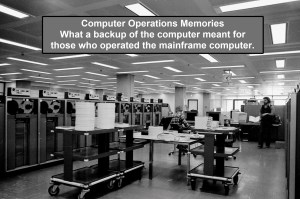
There are a couple of Facebook groups that I enjoy. One of the recent ones I discovered is called “Mainframers.” I joined it because I started seeing some interesting pictures. Sadly, back when I was in the mainframe days from 1976-1992 or so, I did not think to take many pictures. However, some of the members of this Facebook group have some great pictures. The stir up memories of the “good old days” of computing. Only the priests and priestesses could enter the presence of the computer. Mere mortals had to stay outside with the exception of the payroll manager who was present to print W-2s. He didn’t want just anyone looking at just anyone’s income.
Backing Up and Restoring Data
Not only were mainframe computers huge, and they required big air conditioners and lots of electricity, but their old-fashioned disk drives were prone to failure. Therefore, we were constantly backing data up to tapes after every production run of Accounts Payable, Accounts Receivable, Payroll, Order Entry and Month End processing.
Today I can copy the files from my laptop to a solid-state drive that fits in my pocket. It takes less than thirty minutes. The copy process of files from the mainframe took far longer for far less information. After each tape was filled up, the drive would automatically rewind, and the computer would ask the operator to mount the next tape on the keyboard typewriter. That continued until the requested files were on the backup set of tapes.
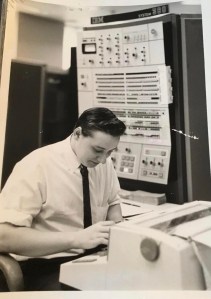
Universal Foods Corporation (UFC) in Milwaukee Wisconsin
I was employed by UFC from 1976 through 1999. I started as a “Control Clerk” and I was paid $600 per month (about $3.50 per hour) to do the menial jobs in the computer room. I wasn’t operating the computer, but I was learning from the other operators as time went on. Eventually I was promoted to computer operator, then to Operations Supervisor, and then to Operations Manager. Each promotion meant that I had others in my team getting the jobs done. This included Data Entry, where information was punched into 80-column cards that we loaded into the computer. We also had key-to-tape machines so that we could load data from tape to the mainframe’s disk files.
Even after we left the mainframe era behind and switched to using IBM’s AS/400 midrange computers, we were still backing up our data using tape drives. There was no “cloud” and there were no non-mechanical ways to save information for disaster recover purposes.
I remember loading IBM 3480 tape drives like the ones in the cover picture in the late 1970’s and early 80’s. We had JCL (Job Control Language) to tell the computer where to find the drive. Each drive had a name. We had to have a stack of tapes ready to do every backup and that could take minutes for some jobs, and hours for others. Nothing was automated. We hand-write labels for each tape so that we knew what was on each tape. One of my first jobs was keeping track of the tapes and taking the most important ones to the M&I bank.
Stubborn Tape Drives
Sometimes a drive would be stubborn and wouldn’t load the tape, so we had to trim the tape, put a new beginning of tape reflector on the tape and reinitialize it before we could use it. There were special tools for cutting the end so that it would feed smoothly into the drive.
Some operators who worked for me came to me from time to time to tell me a needed tape “wouldn’t load.” I would come, push the same sequence of drive buttons, and it would load. They thought I had a special touch. It was almost as if my fingers were magical.
A Safe Place to Store the Tapes
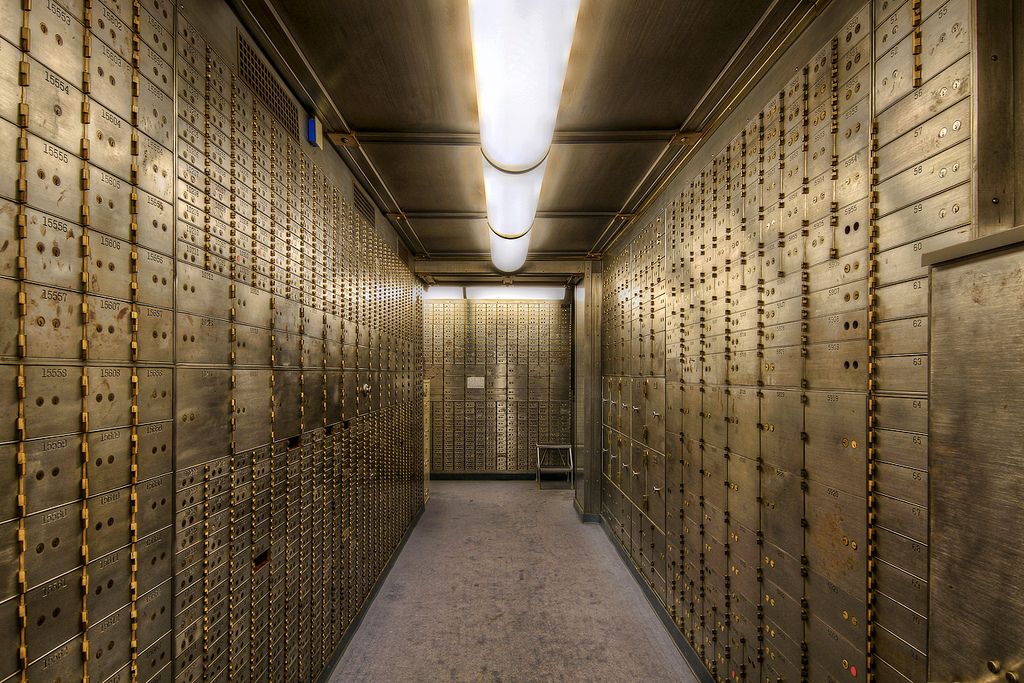
Then, so that the data would be safe, I would load them into carrying cases, put them on one of the carts shown here, and take them several blocks down Wisconsin Avenue in Milwaukee to store them in a bank’s safety deposit vault. That was fun in the summer. Not so much fun in the winter.
Today I have files stored on thumb drives and in the cloud. Those who know nothing else can’t imagine what it used to be like.
 Know Your Flocks & Herds