
When Diversification is Your Enemy
There is a lot of emphasis on investment diversification. One might think it is the best thing to have and the more you have the better your investment success and returns. I believe it is possible to pursue diversification in ways harmful to your investment portfolio, returns, and income. There are many different types of diversification, and a thoughtless approach causes you to lose focus.
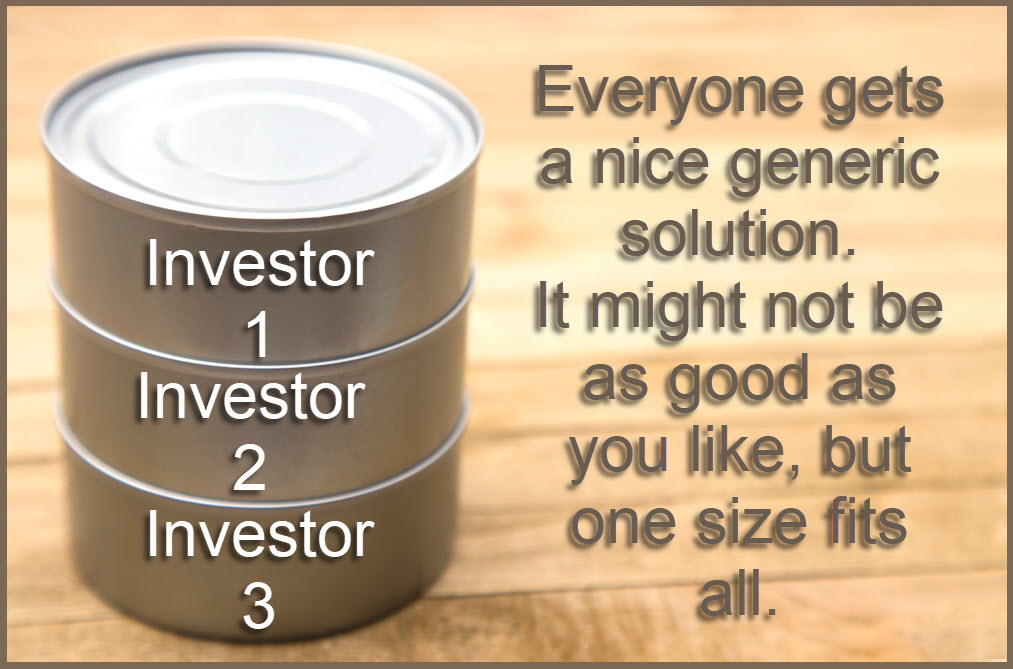
Part of the problem is that most investors (and investment advisors) don’t have a goal or focus. As a result, they create a generic mix of investments offered to just about everyone. Sadly, you can and often do pay extra for generic. When I have looked at the investments of friends with the same broker, the contents of the different portfolios were often the same, regardless of the investor being served. To make matters worse, the costs for creating and maintaining the generic product mix were nothing short of authorized robbery.
Insidious Overlaps
If having one bond fund is good, then having five different bond funds is better. No, that isn’t true. If having one large cap stock fund is good, then having a mix of stock funds is better. No, that is rarely true. Part of the problem is the overlap between funds, even funds that don’t sound like they would overlap. For example, VOO (Vanguard S&P 500 ETF) has Apple Inc, Microsoft Corp, Amazon.com Inc, NVIDIA Corp, Alphabet Inc, and Tesla Inc as the top six investments. The top ten investments in VOO make up 30% of the total assets of the fund with 508 investments. That is lopsided. Also, there are some bad investments in the S&P 500. They are both big and awful.
VTI (Vanguard Total Stock Market Index Fund ETF Shares) sounds like it would improve your diversification, and in a sense it does. The top ten of the 3,827 investments make up 26% of the total investments in this ETF. Can you guess what the top six investments are? They are Apple Inc, Microsoft Corp, Amazon.com Inc, NVIDIA Corp, Alphabet Inc, and Tesla Inc.
Therefore, even though both have the same expense ratio and dividend yield, having both funds would rarely make sense unless you want to be top-heavy with the same six big companies. That is an insidious overlap. To make things worse, the more investments in a mutual fund or ETF, the more it is likely you have garbage in the mix.
Quality Dilution

VTI has 3,827 investments. Ask yourself a question: “If you were picking investments out of a pool of 4,000 stocks, what percentage of the investments would be the best for growth, dividends, dividend growth, and long-term success?” The reality is that I have rarely seen quality in even one hundred stocks within an ETF of 300-400 companies. That means there are some scrawny chickens in the coop. The goal, then, is to find ETFs with a strategy that matches your thinking and that are aligned with your goal.
More is Not Always Better
There are many examples of this. For example, having more choices can bring confusion or lead to indecision and delay. Too many choices overwhelm the average person. A lack of focus can cause a person to add more investments to their mix of investments with little additional benefit. In fact, more often leads to less when it comes to both income and returns. For example, while bonds may appeal to some investors, the common logic and recommendation of many experts is to add more bonds to your portfolio as you age. I won’t repeat what I have said in other posts on this topic, but increasing your bond holdings as you get older is rarely a good idea. When interest rates rise, the value of most bond holdings drop.
International Investing Doesn’t Mean Much
Every time I look at international funds, either ETFs or mutual funds, I come away thinking they are less desirable than one might imagine. For example, VEA (Vanguard FTSE Developed Markets Index Fund ETF Shares) has a decent expense ratio and a dividend yield of 3.19%. However, the 5 Year Growth Rate for dividends is a meager 1.49%. In addition, although the fund has over 4,000 holdings, including well known names like Nestle SA, Novo Nordisk, Samsung Electronics Co Ltd, and Toyota Motor Corp, the ten-year returns on this ETF are 5.95%. You would be better off with CD’s or a bond fund. You might also be better off with an annuity – and I can hardly believe I just said that.
Asset Class Diversification Problems
There are three major, traditional asset classes: Equities (stocks), Fixed income (bonds), and cash and cash equivalents. There are also alternatives like precious metals, commodities, real estate and art. Insurance policies, rare automobiles, and other collectibles are also available. The problem with many asset classes is a supply and demand unknown. If you have ever watched Antique Roadshow, you have seen how something worth $10,000 ten years ago is now worth $5,000.
In addition, many investments do not provide income. You have to sell them to get cash to use for purchases or living expenses. That is one reason why I don’t invest in gold, silver, or diamonds. I also want investments to have a two-pronged approach. They should grow in value or provide hefty dividend payments over the long haul.
Summary and Recommendation
Diversification is important. But too much or the wrong kind of diversification is hazardous to your investment health. Start with a goal statement. For example, my goal statement focuses on growing income that will cover the RMDs I must take from my traditional IRA as I age. The goal further states that I want this to work in such a way that I don’t have to sell investments to cover the RMD.
Therefore, equities that have a history of growing dividends or ETFs like VYM, DGRO, and SCHD that have a history of growing dividends, are my primary choices. The last twenty years of investing this way has proven to be a good model for the long-term investor.
 Know Your Flocks & Herds