

It Probably Is Not 3.2%

There are several problems with the way numbers are reported by many different governmental and investment news sources. If you read that Social Security is increasing by 3.2%, realize that there is only a measure of truth in that announcement. If you are retired, this matters. If you aren’t retired, but plan to draw Social Security someday, then this matters for your expectations.
The Social Security Website Declares 3.2%

What they say is “true” in that if you are currently receiving, lets say, $2,000 per month in 2023, you should receive $2,064 on paper. Now, if you are between the ages of 62-65, you can expect to receive an additional $64 per month. However, most Social Security recipients will be on Medicare starting at age 65. As such, they also have a Medicare monthly premium that is deducted from their Social Security benefit before they even see it in their checking account. (I used $2K to keep the calculations simple. Your Social Security income might be more or less than this amount.)
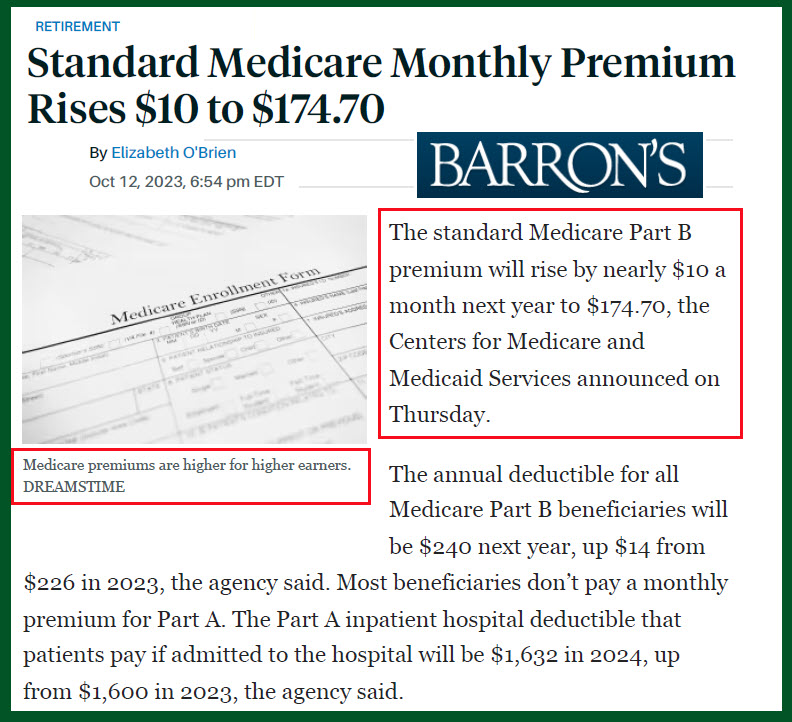
Medicare’s 2024 Base Premium Increased $10
Assuming you fall in the income bracket below $206,000 (married filing jointly) or $103,000 for single income tax filers, then your premium is increasing by $10 in 2024. That means your real income increase per month in 2024 will be $54 per month. As the following illustrates, your COLA is really only 2.7% assuming your 2023 Social Security income was $2,000.


The Way Inflation is Calculated
There is another problem with the 3.2% inflation “cost of living adjustment.” The adjustment is based on what the government calls inflation and what they choose to exclude from their calculations. The costs of someone in retirement are typically different from those who are still in their working years. Of course, I believe the government chooses the numbers they like best, not the ones that match the reality of retirees.

A Word to the Wise
As I often repeat, Social Security is a nice annuity. However, it is certainly rarely enough to cover the real costs of living in retirement. I believe it is wise to save around 10% of your income during your working years so that you can live off of your investment income when you are no longer working full-time for yourself or an employer.
 Know Your Flocks & Herds