
Three Fundamentals
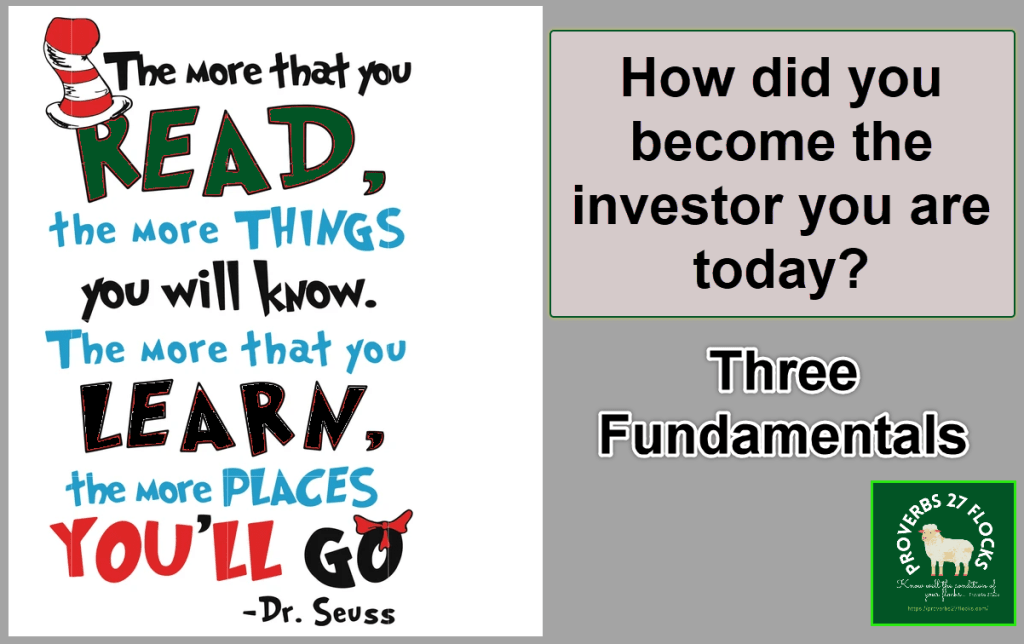
Theodor Seuss Geisel is famous for works such as Green Eggs and Ham, The Cat in the Hat, and The Lorax. You know him as Dr. Seuss. After he studied English, philosophy, and literature, he started work as an illustrator and then became a political cartoonist. He then became known as the author and illustrator of the Dr. Seuss books for children. One of his statements holds true for today’s piece about investing.
“The more that you read, the more things you will know. The more that you learn, the more places you’ll go.” – I Can Read With My Eyes Shut!
Success Without Reading?
I know it is possible to have success in some things, like baseball, singing, and similar skills that can be taught or caught over time. However, most gardeners have to read, as do carpenters, sign painters, and actors. I would argue that just about any occupation or task can be done better as the result of reading (or by watching a YouTube video.) When it comes to investing, reading helped me achieve the success I have had as an investor.
A Fidelity Investor Community forum leader recently asked this question: “How Did You Become the Investor You Are Today?” As I thought about it, I realized most of the things that contribute to my success fall into three categories.
First of all, I decided my broker was over-charging for the work he was doing and under-delivering when it came to results. Then the following started to happen.
Reading
- I started reading some good books about investing, including books by John Bogle, James Cloonan, and Geraldine Weiss. A vital starting point is Bogle’s The Little Book of Common-Sense Investing. Bogle started Vanguard and he contributed much to the success of many investors.
- Early in my investing journey I read Barron’s (and sometimes the Wall Street Journal) to see what was happening in the world of investing. Later on I switched to subscriptions like Weiss Ratings (no longer subscribed), Seeking Alpha, and Stock Rover. Each of these helped me be more careful and thoughtful about my investment choices and decisions.
- As I became more confident, I read extensively about investing in options, especially covered calls and cash covered puts. Then I experimented with small options trades until I was confident in my approach.
Think: Set a Goal and have a Plan
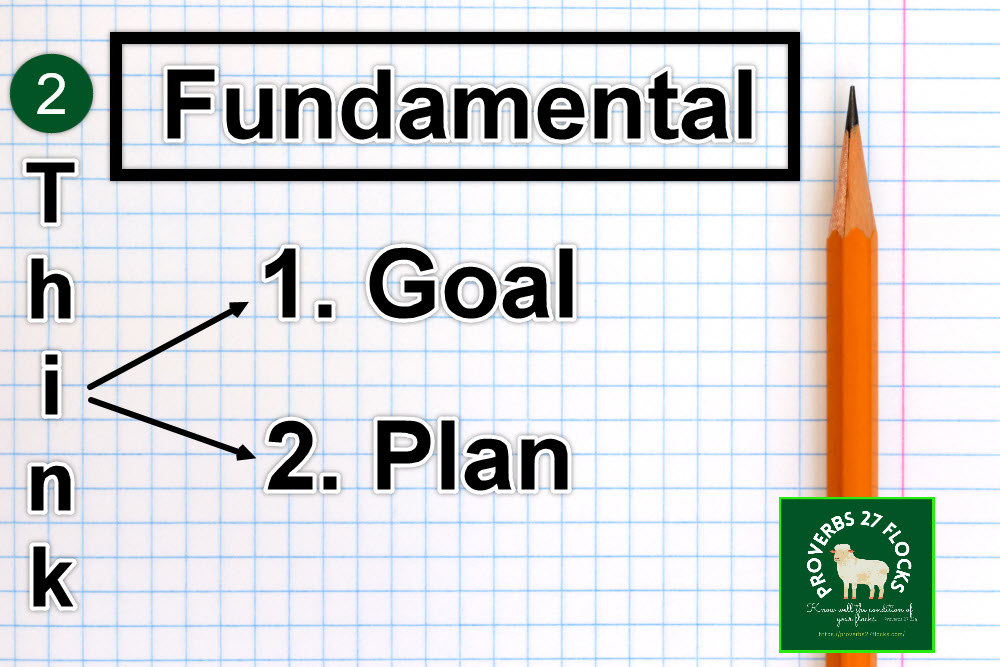
I wrote an investment plan based on a stated goal. This was vital. I wanted to know where I was going and how I could get there. This is like creating a blueprint or laying out a route on a roadmap. This requires thinking about the things I had read and then putting them into a framework that could inform my decisions going forward.
The goal is not “I want a million dollars.” It has to be stated in such a way that you know where you want to be when you reach retirement or whatever other objective(s) you might have. It also should have a target date. That is one reason “Target Date” funds are so popular. I dislike those funds, but they identify a key element of a good goal and plan.
My reading convinced me that there was great value in a dividend growth approach. It also seemed wise to buy investments gradually and pay attention to diversification into key sectors like the financials, technology, healthcare, real estate, and energy. Finally, I wanted dividend income from the IRA investments to be sufficient to cover the annual IRA RMD (Required Minimum Distribution) at age 73.
Apply the Plan to Decisions
Changes were needed for the types of investments I would include and exclude from my portfolio. I made the changes and stuck to my “rules” for what I would buy, when I would buy, how I would buy and why/how/when I would sell. I sold all of the mutual funds and started to carefully buy dividend growth stocks and dividend growth ETFs. I stopped investing in bonds and bond funds.
As the dividends rolled into the accounts, I reinvested them.
But there is one other powerful way that I became successful: I helped others. This was a effective way for me to learn new things. They asked good questions, and this caused me to do some digging so that I could answer them with something more than just a good guess or my long-held opinions. I also started writing a blog, which forced me to continue to read, to examine my investments, and to expand my horizons. The things I wrote resulted in questions from my readers that translated into more learning.
Perhaps there are other ways to become a successful investor. But I believe most successful investors are readers who set goals and have a plan. In summary, I suggest that I never want to stop learning and I want to stick to my plan.
“The more that you read, the more things you will know. The more that you learn, the more places you’ll go.” – Dr. Seuss
 Know Your Flocks & Herds